
Team of ENT Surgeons under Prof. Dr. Sriprakash Vinnakota provides advanced ENT, Head & Neck care at the following locations.

Team of ENT Surgeons under Prof. Dr. Sriprakash Vinnakota provides advanced ENT, Head & Neck care at the following locations.
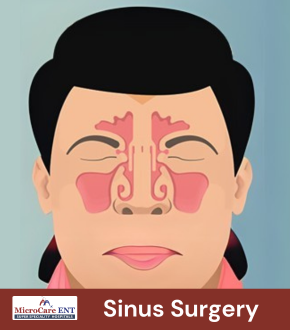
Chronic sinusitis, nasal polyps and a persistently blocked nose are diagnosed with nasal endoscopy and CT before treatment is planned. Where medication is enough we start there; where surgery is needed, FESS is done through the nostrils with no external cuts and same-day or next-day discharge.
See a specialist if nasal blockage, facial pressure or a dulled sense of smell has lasted beyond twelve weeks, if antibiotics keep being needed, or if headaches worsen when you bend forward. Assessment covers the septum, turbinates and the sinus drainage pathways together, because a structural cause left in place is the usual reason symptoms come back after treatment.
Constant sneezing, a runny or blocked nose and itchy eyes are usually allergic rather than infective. Triggers are identified with skin prick testing and blood panels, then managed through avoidance, medication and immunotherapy where appropriate. Allergic rhinitis often sits behind recurring sinusitis, so treating it changes more than one problem.
Allergy is worth testing for rather than guessing at, particularly when symptoms run most of the year, disturb sleep, or force daily antihistamines. Testing separates dust mite, mould, pollen and animal dander triggers from non-allergic rhinitis, which is managed differently. Children with year-round nasal blockage are also checked for adenoid enlargement, since the two frequently occur together.
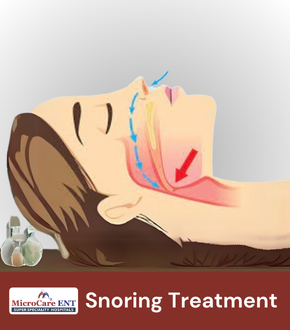
Loud snoring with daytime tiredness or pauses in breathing at night can point to obstructive sleep apnea. A sleep study and airway examination show where the blockage sits — nose, palate, tonsils or tongue base — and treatment follows from that: CPAP therapy, positional guidance or targeted airway surgery.
Sleep apnea matters well beyond the noise. Left untreated it is associated with raised blood pressure, poorer glucose control and daytime drowsiness at the wheel. Witnessed breathing pauses, waking unrefreshed, morning headaches and nodding off during the day are the signs worth acting on. Weight, nasal airway, palate, tonsil size and jaw position are all assessed, since the right treatment depends entirely on where the obstruction is.
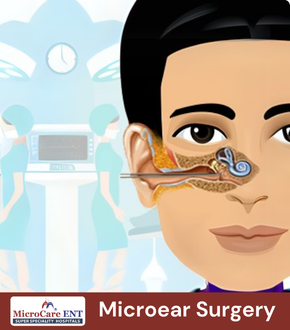
Discharging ears, a perforated eardrum, hearing loss, tinnitus and vertigo are assessed with audiometry, tympanometry and microscopic examination. Options include tympanoplasty, mastoidectomy for chronic infection, stapes surgery for otosclerosis and endoscopic ear procedures that avoid a behind-the-ear incision.
Ear discharge that keeps returning is not a minor issue. Long-standing middle ear disease can erode bone and involve the facial nerve or inner ear, so it is investigated properly rather than treated with repeated courses of drops. Sudden hearing loss in one ear is urgent and should be seen within days, not weeks. Hearing is tested in both ears even when only one is troubling you.
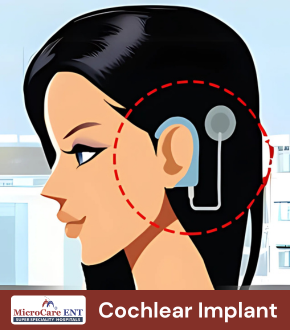
For children and adults with severe to profound hearing loss who get little benefit from hearing aids, a cochlear implant restores access to sound. Candidacy is decided jointly by ENT surgeon, audiologist and speech therapist, using audiometry, a hearing aid trial and CT and MRI imaging.
Timing matters most in children — the earlier a profoundly deaf child is implanted and enrolled in therapy, the more closely speech development tends to follow normal milestones. Adults who lost hearing after learning to speak usually adapt faster. Switch-on, mapping sessions and auditory-verbal therapy continue for months after surgery, and that rehabilitation commitment is discussed openly before anyone decides.
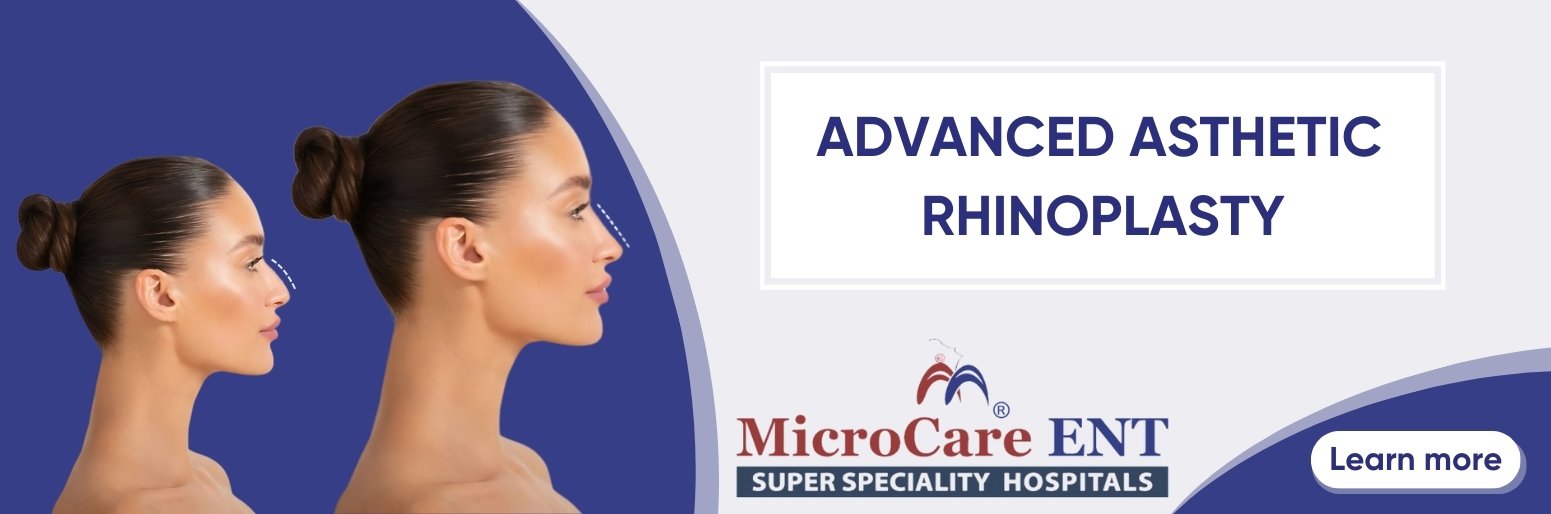
Rhinoplasty here is performed by an ENT surgeon, so breathing is treated as seriously as appearance. A dorsal hump, crooked nose, drooping tip or a nose deformed after injury can be corrected, and a deviated septum straightened in the same sitting as a septorhinoplasty.
A large share of people who come in about the shape of their nose also have an airway blockage they have stopped noticing — both are examined at the first consultation. Surgery is planned only once the nose has fully matured, and previously operated or injured noses may need cartilage grafting. Swelling settles gradually, with the tip taking its final shape last, over several months.
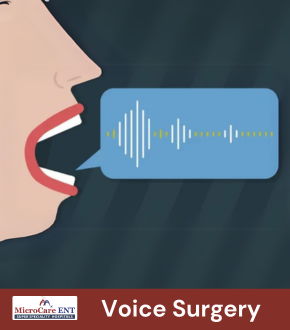
Hoarseness lasting more than three weeks needs examination, not waiting. Video laryngoscopy and stroboscopy show the vocal cords in motion and reveal nodules, polyps, cysts, paralysis or early changes needing biopsy. Microlaryngeal surgery is combined with voice therapy — often the more important half.
Persistent hoarseness in an adult who smokes is investigated with early laryngeal cancer specifically in mind. Professional voice users — teachers, singers, call centre staff, clergy — tend to develop nodules and muscle tension patterns that respond better to structured therapy than to surgery. Reflux and dehydration are checked as well, since both are common and reversible contributors.
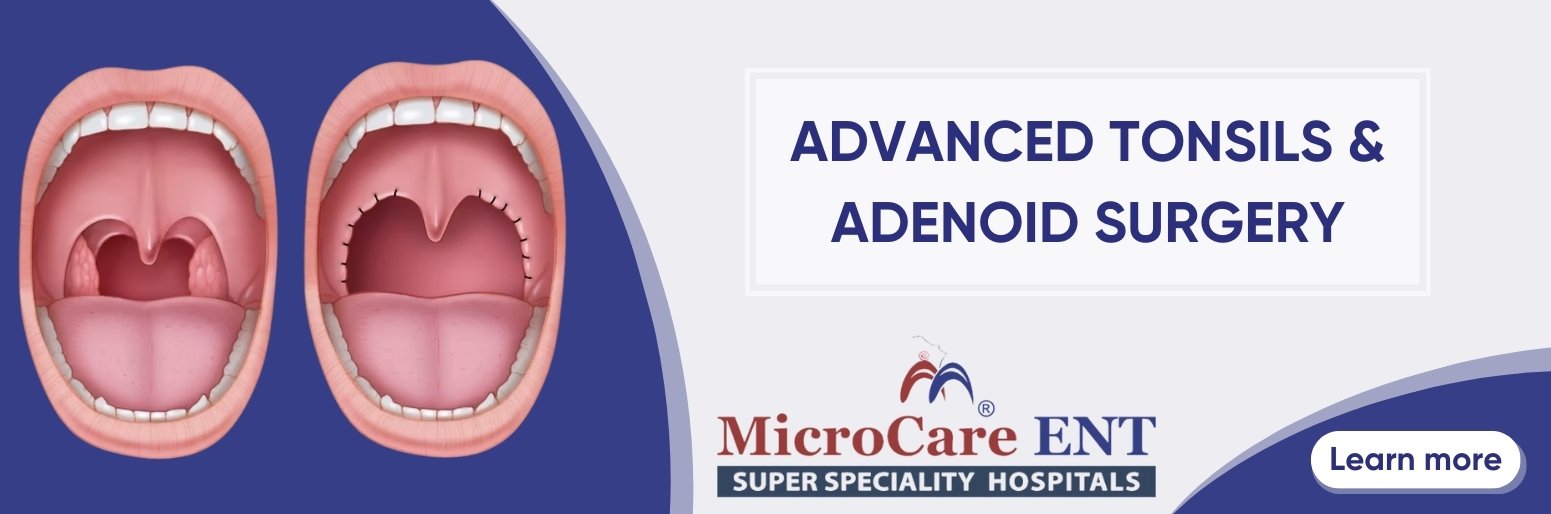
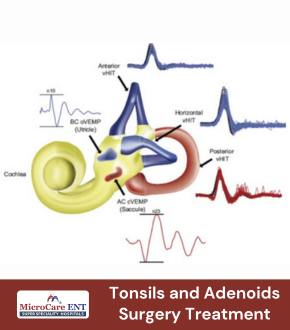
Repeated throat infections, enlarged tonsils, mouth breathing and snoring in children are assessed before surgery is suggested — many cases settle medically. Where tonsillectomy or adenoidectomy is indicated, coblation reduces bleeding and pain, and most children eat normally within days.
Surgery is generally considered when infections are frequent and documented across a year or more, when tonsils are large enough to obstruct breathing during sleep, or after a peritonsillar abscess. Snoring, restless sleep, mouth breathing and daytime irritability in a child are taken as seriously as sore throats. Adenoids cannot be seen through the mouth, so endoscopy or an X-ray is used to size them.
A neck lump, a mouth ulcer that will not heal, difficulty swallowing or a changed voice should be evaluated early. Endoscopy, imaging and FNAC or biopsy establish exactly what is present before anything is planned. Surgery preserves speech, swallowing and appearance, coordinated with oncology where needed.
Everything in this group is treated as time-sensitive. A painless neck lump lasting beyond three weeks, an unhealed mouth ulcer, unexplained voice change, blood-stained saliva or difficulty swallowing all warrant prompt assessment. Tobacco and areca nut use raise the risk substantially. Early-stage disease is generally manageable with far less extensive surgery than advanced disease, which is exactly why the delay matters.
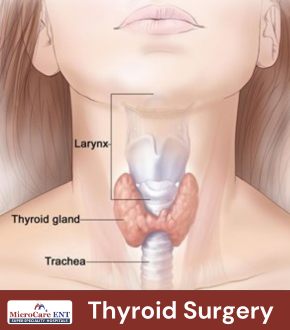
Goitre, thyroid nodules and suspected thyroid cancer are evaluated with high-resolution ultrasound, thyroid function tests and ultrasound-guided FNAC. Not every nodule needs surgery — the scan and cytology decide. When it is indicated, surgery is done with nerve monitoring to protect the voice.
Most thyroid nodules turn out to be benign, and many need nothing more than periodic ultrasound monitoring. Features that prompt further testing include rapid growth, a hard fixed lump, hoarseness, difficulty swallowing, or nodules found alongside enlarged neck nodes. Gland function is assessed separately, since an overactive or underactive thyroid is managed medically rather than surgically.
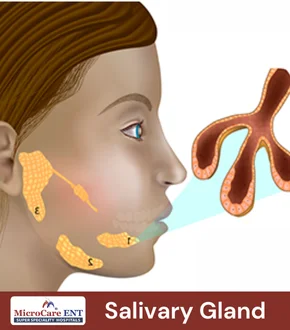
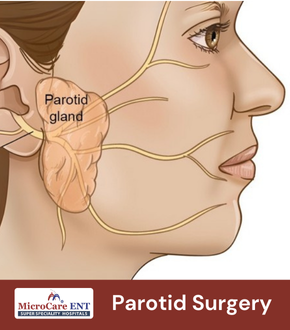
A swelling in front of or below the ear, gland swelling that worsens while eating, or a stone in the salivary duct all fall under salivary gland care. Parotid surgery is done with facial nerve identification and monitoring throughout, since that nerve runs directly through the gland.
A painless parotid swelling is most often a benign tumour, but it does not resolve on its own and enlarges slowly over years, becoming harder to remove safely the longer it is left. Swelling that comes and goes around mealtimes points instead to a duct stone. Facial weakness, rapid growth or pain are features that change the plan and need urgent assessment.
Tumours and lesions at the anterior skull base — pituitary adenomas, CSF leaks, sinonasal tumours extending upwards — can often be reached endoscopically through the nose rather than by opening the skull, planned jointly with neurosurgery where the lesion crosses into the cranial cavity.
The symptoms are frequently indirect: clear watery fluid dripping from one nostril, worsening vision or loss of peripheral field, persistent one-sided nasal blockage, or hormonal changes caused by a pituitary tumour. These cases are worked up with dedicated imaging and, where relevant, endocrine and ophthalmology input. The endoscopic route avoids brain retraction, which is the main reason recovery differs from open surgery.
Choose the hospital closest to you.
KPHB Colony+91 94949 40725 ☎ Jubilee Hills+91 96030 24111 ☎MicroCare ENT Super Speciality Hospital is a dedicated ENT hospital in KPHB Colony, Hyderabad, open 9 AM to 9 PM, all seven days.
Led by Prof. Dr. Sriprakash Vinnakota, MBBS, MS (ENT, Head & Neck), the hospital treats sinus and allergy problems, ear disease and hearing loss, voice disorders, tonsils and adenoids, snoring and sleep apnoea, and nose conditions including rhinoplasty. It has 50 beds, four laminar-flow operation theatres, an ICU, a cochleo-vestibular lab and a voice clinic.
Appointments: +91 94949 40725 · +91 94949 40726
Road No. 4, KPHB Colony, Kukatpally, Hyderabad 500072
To provide world-class, patient-centered ENT care through advanced technology, expert specialists
To emerge as a global leader in ENT care, advancing standards in innovation, research, and patient support
+91 94 94 94 0725



Advanced care for chronic sinus infections and congestion
Comprehensive care for dust and nasal allergies
Advanced treatments for snoring and sleep apnea relief
Enhancing nasal structure for aesthetic and functional
Precision ear surgeries for improved hearing
Advanced cochlear implants for enhanced hearing performance
Customized hearing aids designed for clear, natural sound
Expert care for swollen tonsils and adenoid-related issues







Countless patients rely on us for skilled ENT care, delivering cutting-edge solutions for ear, nose, and throat issues with dedicated and tailored support
We ensure a seamless and comfortable experience from consultation to treatment. Our expert team is dedicated to personalized care
Schedule an appointment with our specialists for a thorough diagnosis
Receive a tailored treatment plan designed to meet your health needs
Benefit from advanced treatments and compassionate medical support

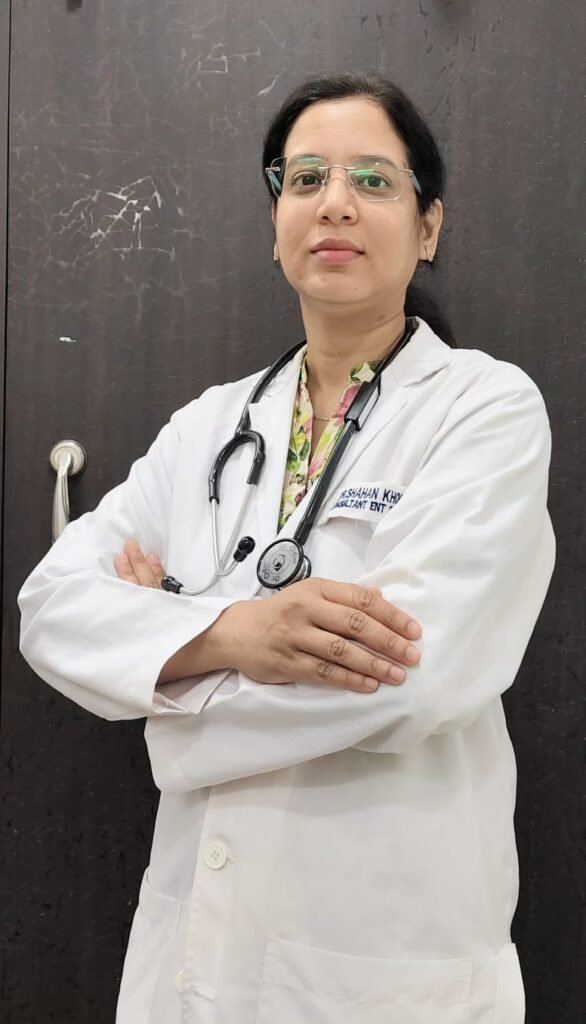
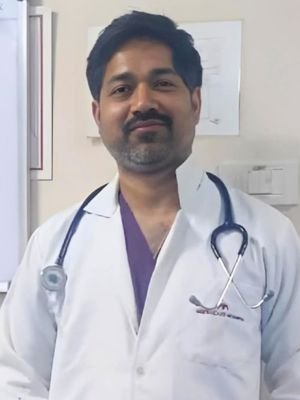
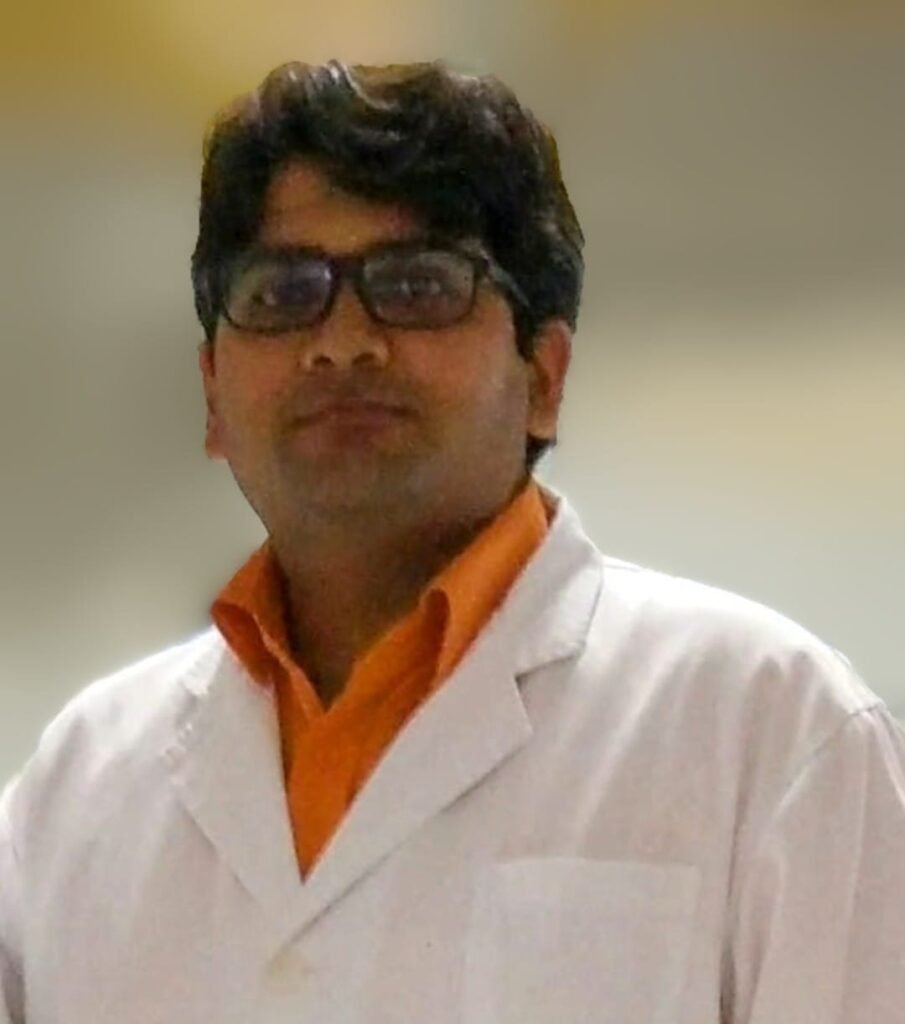
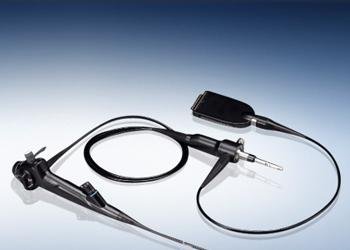


Rhinoplasty at MicroCare is performed by an ENT surgeon, so your breathing is assessed along with the shape of your nose. A dorsal hump, a crooked nose or a drooping tip can be corrected, and a deviated septum straightened in the same operation (septorhinoplasty).
Every plan starts with a nasal endoscopy and an honest discussion of what nose reshaping can and cannot change. Prof. Dr. Sriprakash Vinnakota, MS (ENT, Head & Neck), leads the rhinoplasty surgery in Hyderabad team at our KPHB hospital.
Receive expert ENT care with advanced, result-focused treatments. At the best ENT hospital in Hyderabad, our specialists provide accurate diagnosis and tailor-made solutions to support your complete well-being
MicroCare ENT Hospitals is considered one of the best ENT hospitals in Hyderabad, offering advanced treatments, experienced specialists, and modern facilities for all ear, nose, and throat conditions.
Look for ENT surgeons with a postgraduate ENT qualification (MS or DNB in ENT), in-house tests such as nasal endoscopy and hearing and balance testing, operation theatres for day-care and inpatient surgery, and clear pricing before treatment. MicroCare ENT in KPHB has 50 beds, six outpatient clinics, four laminar-flow operation theatres, an ICU, a cochleo-vestibular lab and a voice clinic under one roof.
The hospital is led by Prof. Dr. Sriprakash Vinnakota, MBBS, MS (ENT, Head & Neck), Chief Consultant ENT Specialist, microsurgeon and rhinoplasty surgeon, with more than 26 years of experience. He works with a team of ENT consultants, maxillofacial surgeons, an anaesthesiologist, audiologists and speech therapists.
The consultation fee is ₹650. Procedure costs depend on the diagnosis and the type of surgery and are explained after evaluation; indicative prices are on the pricing page.
See an ENT specialist if nasal blockage, facial pressure or a reduced sense of smell lasts beyond 12 weeks; if you keep needing antibiotics for sinus or throat infections; if you have ear pain, ear discharge or hearing loss; if hoarseness lasts more than three weeks; or if loud snoring comes with daytime sleepiness. Sudden hearing loss in one ear should be checked by an ENT urgently, ideally within 24 hours.
Chronic sinusitis is first assessed with nasal endoscopy and a CT scan, and treatment starts with medicines where they are enough. If symptoms continue despite medical treatment, the surgeon may advise functional endoscopic sinus surgery (FESS), which is done through the nostrils with no external cuts and usually allows same-day or next-day discharge.

Contact us
Team of ENT Surgeons under Prof. Dr. Sriprakash Vinnakota provides
advanced ENT, Head & Neck care at the following locations.