

Team of ENT Surgeons under Prof. Dr. Sriprakash Vinnakota provides advanced ENT, Head & Neck care at the following locations.

Team of ENT Surgeons under Prof. Dr. Sriprakash Vinnakota provides advanced ENT, Head & Neck care at the following locations.
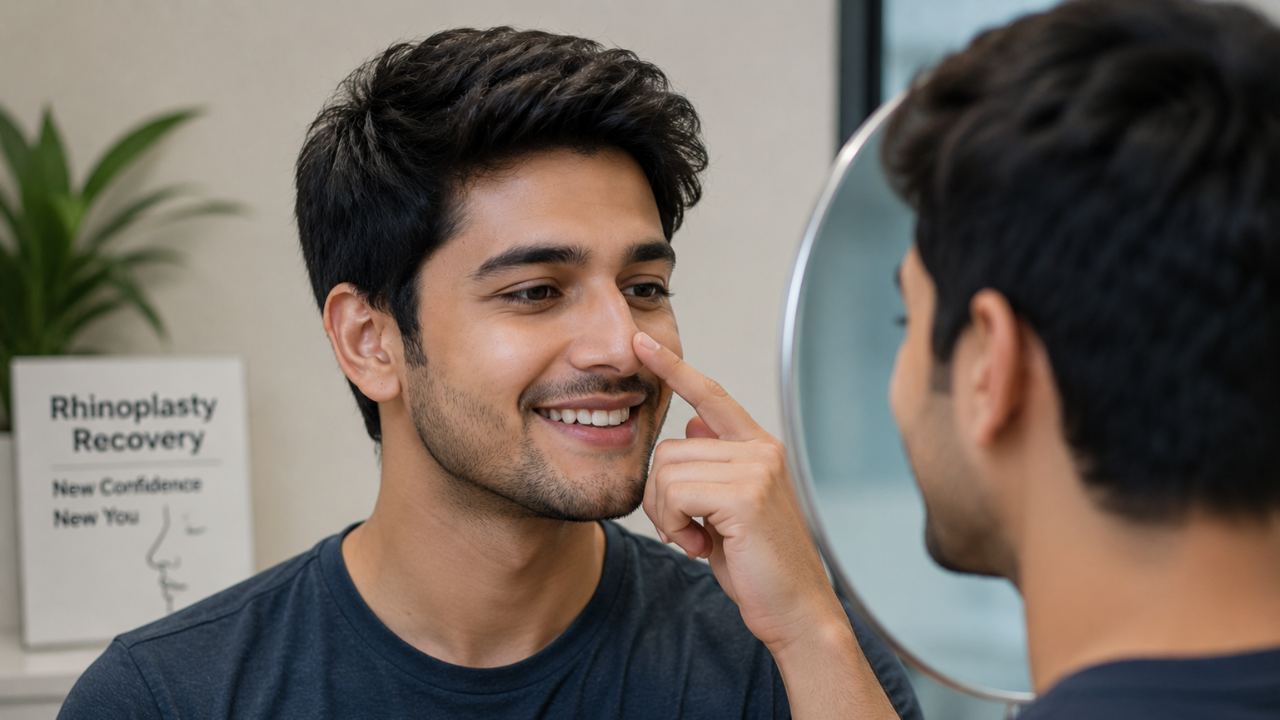
Rhinoplasty, commonly known as a nose reshaping surgery, is one of the most popular facial procedures performed for both cosmetic and functional reasons. Whether you’re undergoing rhinoplasty to improve your appearance, correct a nasal deformity, or enhance breathing, understanding the recovery process is essential.
Many patients are concerned about how long recovery takes, when swelling subsides, and when they can return to normal activities. Knowing what to expect after surgery can help you prepare for a smoother healing journey.
At MicroCare ENT Hospital & Research Institute, Hyderabad, advanced rhinoplasty procedures are performed with a focus on both aesthetics and nasal function.
Published By microcareenthospitals.com / Updated: May 29, 2026
After surgery, patients are usually monitored for a few hours before being discharged.
You may experience:
These symptoms are normal and gradually improve over time.
1. First Week
The first week is the most important phase of recovery.
Common experiences include:
Most patients return for a follow-up visit after 5–7 days to remove the splint.
2. Second Week
By the second week:
Many people return to work or college during this period.
3. First Month
During the first month:
Strenuous activities should still be avoided.
4. Three to Six Months
Most visible swelling improves significantly.
Patients usually notice:
5. One Year
Final rhinoplasty results become visible as the nose completely heals and settles into its new shape.
1. Swelling
Swelling is the most common part of rhinoplasty recovery. While major swelling improves within weeks, minor swelling may take several months to disappear.
2. Bruising Around the Eyes
Temporary bruising around the eyes is common and usually resolves within 1–2 weeks.
3. Nasal Congestion
Many patients feel like they have a blocked nose after surgery due to internal swelling.
4. Mild Discomfort
Pain is usually manageable with prescribed medications.
1. Follow Your Doctor’s Instructions
Post-operative care instructions play a major role in healing.
2. Sleep With Your Head Elevated
Keeping your head elevated reduces swelling and improves comfort.
3. Avoid Touching the Nose
Avoid pressure or accidental injury to the healing nose.
4. Stay Hydrated
Drinking plenty of water supports tissue healing.
5. Avoid Smoking and Alcohol
Smoking can delay healing and increase complications.
During recovery, avoid:
Your surgeon will advise when it is safe to resume normal activities.
Seek medical attention if you experience:
Prompt evaluation helps prevent complications.
Many patients choose rhinoplasty to:
Patients in Kukatpally, KPHB, and Hyderabad increasingly seek rhinoplasty for both cosmetic and functional improvements.
👨⚕️ Prof. Dr. Sriprakash Vinnakota
MBBS, MS (ENT, Head & Neck Surgery)
Chief Consultant ENT Specialist & Microsurgeon
Expertise in Rhinoplasty, Septoplasty, and Advanced Nasal Surgery
Specialized care for cosmetic and functional nose correction
Rhinoplasty recovery is a gradual process, but with proper care and realistic expectations, patients can achieve excellent results. Understanding the healing stages helps reduce anxiety and ensures a smoother recovery experience.
If you’re considering nose reshaping surgery or have questions about recovery, consult an experienced ENT specialist for personalized guidance.
Most patients recover within 2–4 weeks, but complete healing and final results may take up to one year.
Most patients experience mild discomfort rather than severe pain, which can be managed with medications.
Many patients return to work within 1–2 weeks, depending on their recovery progress.
Major swelling improves within a few weeks, while minor swelling can take several months to fully resolve.
Yes. Functional rhinoplasty can correct structural issues that cause nasal obstruction and breathing difficulties.
Sign up for free and stay up to date on research advancements, health tips, current health topics, and expertise on managing health.
MicroCare ENT Hospital & Research Institute
📍 KPHB Colony, Kukatpally | Jubilee Hills
📲 9494940725 / 26
🌐 https://microcareenthospitals.com/sinusitis-treatment-hyderabad/
To learn more about ENT, visit our page MicroCare ENT.
Road No 4, KPHB Colony, Hyderabad-500033, Telangana
Road No.36, Jubilee Hills Beside Peddamma Temple Kaman


Contact us