

Team of ENT Surgeons under Prof. Dr. Sriprakash Vinnakota provides advanced ENT, Head & Neck care at the following locations.
Team of ENT Surgeons under Prof. Dr. Sriprakash Vinnakota provides advanced ENT, Head & Neck care at the following locations.
Do you constantly struggle with a blocked nose, difficulty breathing, frequent sinus infections, or snoring? The cause could be a deviated septum, a common condition that affects millions of people worldwide.
While some people live comfortably with a mildly deviated septum, others experience significant breathing problems that impact their quality of life. In such cases, surgery may be the most effective solution.
At MicroCare ENT Hospital & Research Institute, Hyderabad, we offer advanced diagnosis and treatment for deviated septum and other nasal disorders.
Published By microcareenthospitals.com / Updated: June 01, 2026
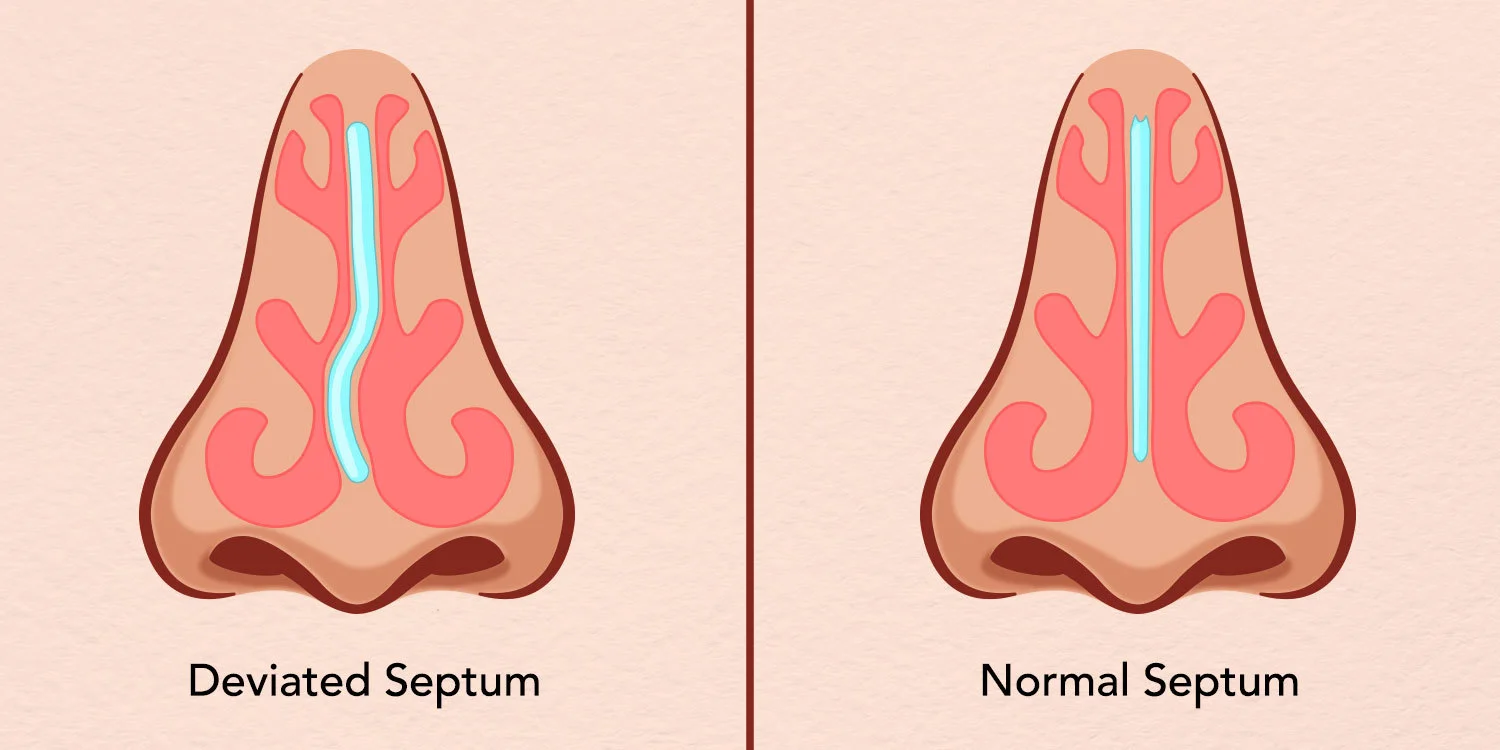
The nasal septum is the thin wall of cartilage and bone that separates the two nostrils.
A deviated septum occurs when this wall is displaced to one side, making one nasal passage smaller than the other.
Some people are born with a deviated septum, while others develop it due to:
Many people may not realize they have a deviated septum until symptoms become noticeable.
1. Nasal Blockage
One side of the nose may feel constantly blocked, making breathing difficult.
2. Difficulty Breathing Through the Nose
Patients often complain of reduced airflow, especially during exercise or sleep.
3. Frequent Sinus Infections
Poor drainage can increase the risk of chronic sinusitis.
4. Snoring and Sleep Problems
A deviated septum may contribute to snoring and disturbed sleep.
5. Nosebleeds
Dryness caused by uneven airflow can increase nosebleed risk.
6. Facial Pain or Headaches
Some patients experience facial pressure and recurrent headaches.
Not every deviated septum requires surgery. However, surgery may be recommended if symptoms significantly affect daily life.
1. Persistent Nasal Obstruction
If medications fail to improve breathing, surgery may be necessary.
2. Chronic Sinus Infections
Repeated sinus infections caused by poor nasal drainage are a common reason for surgical correction.
3. Severe Snoring or Sleep Issues
A blocked airway can contribute to sleep disturbances and sleep apnea symptoms.
4. Frequent Nosebleeds
Persistent nosebleeds caused by septal deviation may require treatment.
5. Reduced Quality of Life
If breathing difficulties affect work, exercise, or sleep, surgery can provide long-term relief.
Septoplasty is the surgical procedure used to correct a deviated septum.
The procedure involves:
Septoplasty is one of the most common ENT surgeries and is generally performed as a day-care procedure.
1. Better Breathing
Improved airflow through both nostrils.
2. Reduced Sinus Problems
Better drainage helps prevent recurring sinus infections.
3. Improved Sleep Quality
Many patients experience reduced snoring and better sleep.
4. Fewer Nosebleeds
Correcting airflow reduces nasal dryness and irritation.
5. Enhanced Quality of Life
Patients often report significant improvement in daily comfort and physical activity.
Most patients recover quickly after surgery.
1. First Few Days
2. After One Week
3. Within a Few Weeks
Your ENT specialist will provide specific recovery instructions for optimal healing.
At MicroCare ENT Hospital, diagnosis may include:
Accurate diagnosis helps determine whether surgery is necessary.
👨⚕️ Prof. Dr. Sriprakash Vinnakota
MBBS, MS (ENT, Head & Neck Surgery)
Chief Consultant ENT Specialist & Microsurgeon
Expertise in Rhinoplasty, Septoplasty, and Advanced Nasal Surgery
Specialized care for both cosmetic and functional nose correction
Dr. Sriprakash provides personalized rhinoplasty solutions that focus on both appearance and breathing improvement.
A deviated septum can cause more than just a blocked nose. It can affect breathing, sleep quality, and overall well-being. If symptoms persist despite medical treatment, septoplasty may offer long-lasting relief.
Consult an experienced ENT specialist to determine the best treatment option for your condition.
No. A deviated septum usually does not correct itself without treatment.
Most patients experience only mild discomfort, which can be managed with medications.
Most patients recover within 1–2 weeks, with breathing continuing to improve over time.
Yes. Nasal blockage from a deviated septum can contribute to snoring and sleep issues.
In many cases, septoplasty performed for medical reasons may be covered by health insurance policies.
Sign up for free and stay up to date on research advancements, health tips, current health topics, and expertise on managing health.
👨⚕️ Dr. Sriprakash Vinnakota (26+ Years of Experience)
Where Dr. Sriprakash Vinnakota Practices
Team of ENT Surgeons under Prof. Dr. Sriprakash Vinnakota provides advanced ENT, Head & Neck care at the following locations.
📍 MicroCare ENT Hospital – KPHB Colony, Kukatpally
Road No. 4, KPHB Colony, Hyderabad – 500072, Telangana, India
📍 Apollo Hospitals – Financial District
Financial District, Nanakramguda, Serilingampally, Hyderabad – 500032
📞 Book your appointment today: 9494940725 / 26
🌐 www.microcareenthospitals.com
Road No 4, KPHB Colony, Hyderabad-500033, Telangana
Road No.36, Jubilee Hills Beside Peddamma Temple Kaman


Contact us