

Team of ENT Surgeons under Prof. Dr. Sriprakash Vinnakota provides advanced ENT, Head & Neck care at the following locations.

Team of ENT Surgeons under Prof. Dr. Sriprakash Vinnakota provides advanced ENT, Head & Neck care at the following locations.
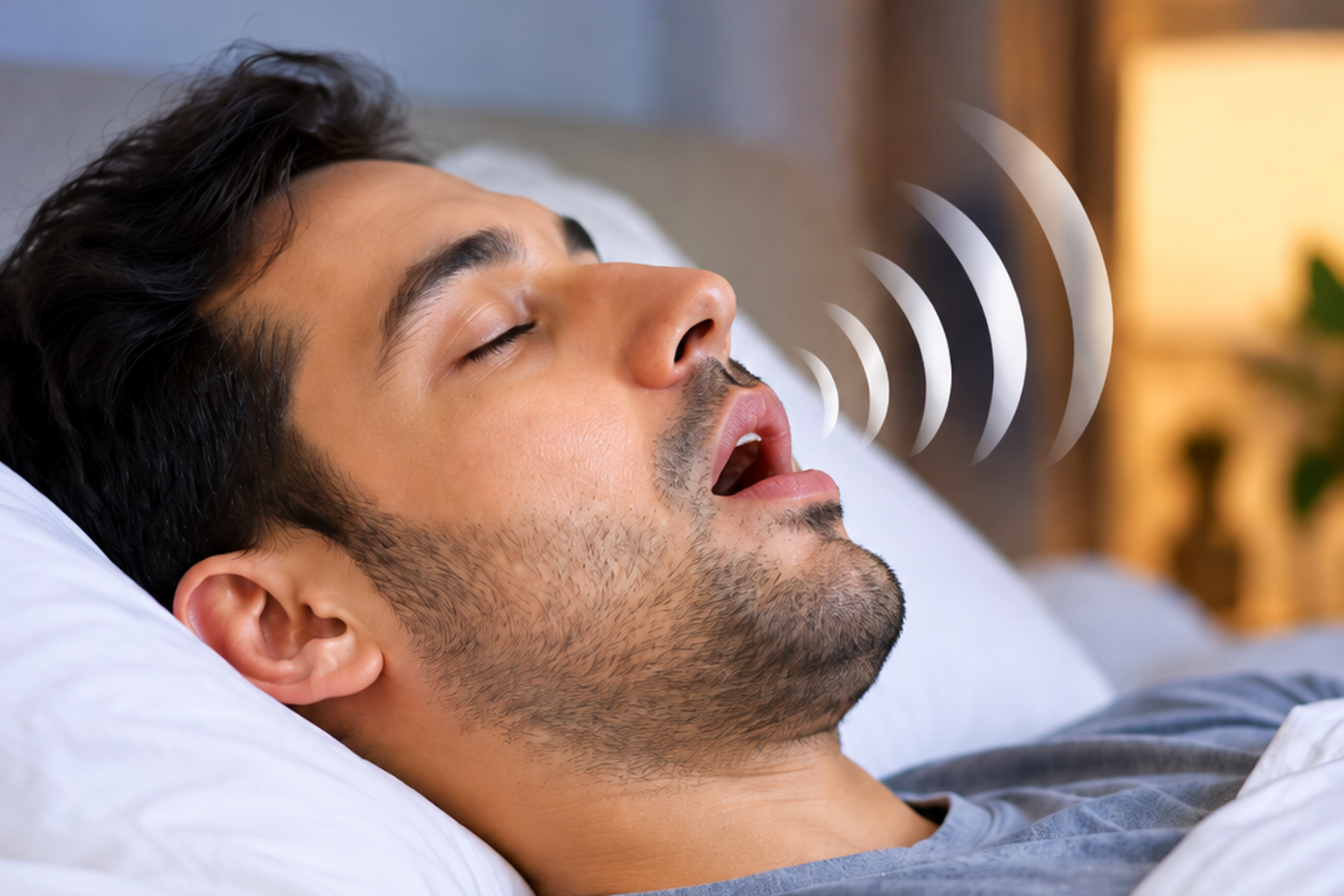
Snoring happens when air cannot flow freely through the nose and throat during sleep, so the soft tissues vibrate. Treatment depends on where the blockage is. An ENT surgeon finds the cause with a nasal and throat examination, a nasal endoscopy and, if needed, a sleep study. Options range from weight and sleep-position changes to nasal sprays, oral devices, CPAP, and minimally invasive nose or throat procedures. Loud snoring with gasping, choking or daytime sleepiness can mean obstructive sleep apnoea and should be checked.
Many of our patients come in because a spouse can no longer sleep in the same room. Others come because they wake up tired after eight hours in bed. Both are good reasons to get checked.
Published By microcareenthospitals.com / Updated: Oct 05, 2026
Snoring almost always comes from a narrowing somewhere between the tip of the nose and the voice box. Finding that exact spot is the key to treating it.
Where the blockage is | Common causes | Typical clue |
|---|---|---|
Nose | Deviated septum, swollen turbinates, nasal polyps, allergies, sinusitis | Blocked nose, mouth breathing, worse during a cold or allergy season |
Back of the nose (children) | Enlarged adenoids | Child snores, breathes through the mouth, restless sleep |
Throat | Large tonsils, long soft palate or uvula, extra tissue from weight gain | Loud snoring on the back, quieter on the side |
Tongue base | Tongue falling back during deep sleep | Snoring worse after alcohol or sedatives |
Some things make any snoring worse: weight gain around the neck, alcohol in the evening, sleeping pills, smoking, sleeping flat on the back, and simple tiredness.
Snoring with pauses in breathing is not just noise. It can be obstructive sleep apnoea (OSA), where the airway closes again and again through the night and oxygen levels dip. Untreated OSA is linked to high blood pressure, heart disease, diabetes and road accidents from drowsy driving.
See an ENT doctor soon if you or your partner notice any of these:
If any of these apply, a sleep study is usually the next step.
A first visit takes about 30 to 45 minutes and most tests are done the same day. Bring your partner if you can; they often know your snoring better than you do.
At the end of the visit you will know where the snoring comes from and which treatments suit you.
The Snoring treatment depends on where the blockage is and whether sleep apnoea is present. Most people start with the simplest step that fits their cause.
If the nose is blocked, the mouth opens and snoring gets worse.
A custom mouth guard (mandibular advancement device) holds the lower jaw slightly forward during sleep. It suits simple snoring and mild to moderate sleep apnoea.
A CPAP machine blows gentle air through a mask to keep the airway open. It is the standard treatment for moderate to severe sleep apnoea and stops snoring the first night it is used well.
Most nasal and palate procedures are day-care or need a one-night stay. Surgery works best when the blockage is clearly identified first, which is why we test before we treat.
In many people, yes. When the cause is a single fixable problem, such as a deviated septum or large tonsils, treating it can stop snoring for good. When weight or age is a factor, snoring can return if weight goes back up.
An ENT (ear, nose and throat) surgeon. An ENT can examine the nose and throat directly, perform endoscopy, arrange a sleep study and offer both medical and surgical treatment.
Nose procedures cause mild discomfort for a few days. Throat and palate surgery is more sore, usually for 7 to 10 days, and is managed with painkillers and soft foods.
They can help if the snoring comes from the nose. They do little for snoring from the throat or tongue, and they do not treat sleep apnoea.
Occasional snoring during a cold is normal. Snoring most nights is not. It is often caused by enlarged tonsils or adenoids and can affect growth, behaviour and school performance.
It depends on the cause. Medicines and lifestyle changes cost little; a sleep study, CPAP or surgery cost more. We give you a clear estimate after the first assessment.
If snoring is disturbing your sleep, your partner’s sleep or your energy during the day, get it checked. At MicroCare ENT Super Speciality Hospital in KPHB, Kukatpally, we find the cause first and then recommend the simplest treatment that will work. We see patients from Kukatpally, KPHB, Miyapur, Bachupally, Kompally and across Hyderabad.
Call [9494940725] or book online to schedule your visit.
Sign up for free and stay up to date on research advancements, health tips, current health topics, and expertise on managing health.
👨⚕️ Dr. Sriprakash Vinnakota (26+ Years of Experience)
Where Dr. Sriprakash Vinnakota Practices
Team of ENT Surgeons under Prof. Dr. Sriprakash Vinnakota provides advanced ENT, Head & Neck care at the following locations.
📍 MicroCare ENT Hospital – KPHB Colony, Kukatpally
Road No. 4, KPHB Colony, Hyderabad – 500072, Telangana, India
📍 Apollo Hospitals – Financial District
Financial District, Nanakramguda, Serilingampally, Hyderabad – 500032
📞 Book your appointment today: 9494940725 / 26
🌐 www.microcareenthospitals.com
Road No 4, KPHB Colony, Hyderabad-500072, Telangana
Road No.36, Jubilee Hills Beside Peddamma Temple Kaman
Contact us