

Team of ENT Surgeons under Prof. Dr. Sriprakash Vinnakota provides advanced ENT, Head & Neck care at the following locations.
Team of ENT Surgeons under Prof. Dr. Sriprakash Vinnakota provides advanced ENT, Head & Neck care at the following locations.
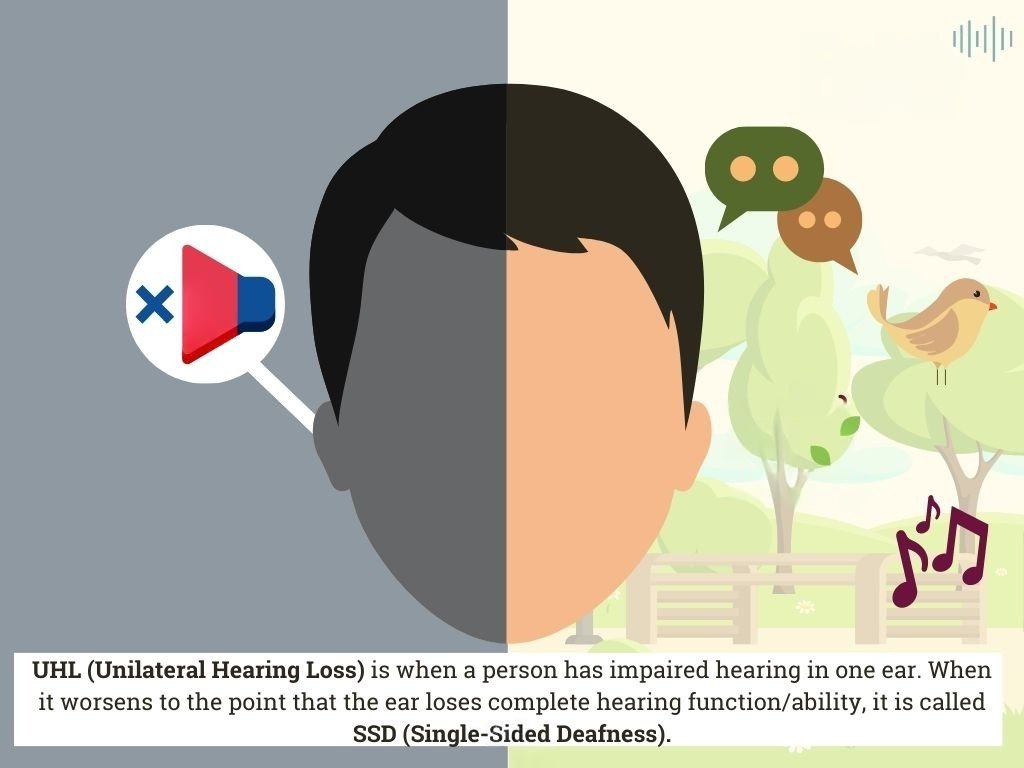
Hearing with one ear can seem “good enough” at first. However, many people with Single-Sided Deafness (SSD) struggle in noisy places, feel exhausted after conversations, and find it difficult to locate where sounds are coming from. That is why patients often search for answers like: “Can a cochlear implant help single-sided deafness?”
At MicroCare ENT Hospitals in Hyderabad, our ENT and hearing specialists evaluate SSD, identify the cause, and guide you toward the most effective hearing solution—whether that’s observation, hearing devices, or a cochlear implant for SSD.
In this blog, you’ll learn what SSD is, why it happens, how it affects daily life, and when cochlear implants can help.
Published By microcareenthospitals.com / Updated: Dec 09, 2025
Single-Sided Deafness (SSD) means you have severe-to-profound hearing loss in one ear, while the other ear has normal or near-normal hearing. Although one ear hears well, the brain loses the ability to combine sound from both sides.
As a result, SSD can cause real challenges, including:
Difficulty understanding speech in crowds
Trouble locating sound direction
Reduced hearing confidence in meetings
Increased listening fatigue
Therefore, SSD is not “minor”—it can strongly affect work, safety, and quality of life.
Common signs include:
Hearing “fine” in quiet rooms but struggling in noisy places
Frequently turning the good ear toward sound
Difficulty hearing people speaking from the deaf side
Trouble identifying where a sound is coming from (sound localization)
Ringing in the affected ear (tinnitus)
Feeling tired after long conversations
If these symptoms match you, it’s time to consult an ENT specialist in Hyderabad for a complete hearing evaluation.
SSD can happen suddenly or gradually. The most common causes include:
Sudden Sensorineural Hearing Loss (SSNHL)
A sudden drop in hearing in one ear—often treated as an ENT emergency.
Viral Infections
Some viruses can affect the inner ear and hearing nerve.
Inner Ear Disorders
Conditions like Ménière’s disease may lead to fluctuating or progressive loss.
Acoustic Neuroma (Vestibular Schwannoma)
A benign tumor that can affect hearing and balance.
Head Injury / Trauma
Damage to inner ear structures can cause one-sided loss.
6Long-Standing Ear Disease
Chronic ear infections or middle ear damage can contribute in select cases.
Because causes vary, accurate diagnosis is essential—especially before deciding on SSD treatments.
With SSD, the brain loses “two-ear advantages,” such as:
Binaural hearing: hearing with both ears together
Better speech clarity in noise
Sound localization: knowing where sound comes from
That is why many SSD patients feel unsafe crossing roads, riding bikes, or working in noisy environments.
Yes—in many suitable cases, cochlear implants can help SSD by providing sound input to the deaf ear. Unlike solutions that “route sound to the good ear,” a cochlear implant aims to restore access to sound on the affected side, which can improve:
Speech understanding in noise (for many patients)
Sound awareness from the deaf side
Tinnitus relief in some SSD cases
Listening comfort and reduced fatigue
However, cochlear implants are not for everyone. Candidacy depends on hearing tests, duration of deafness, inner ear health, and patient goals.
CROS Hearing Aid
Routes sound from the deaf side to the good ear. Helpful for awareness, but does not restore true two-ear hearing.
Bone Conduction Devices (BAHA/BCI)
Also routes sound vibrations to the better ear. Useful in some cases, especially when ear anatomy or middle ear issues exist.
Option 3: Cochlear Implant for SSD
Provides direct stimulation to the hearing nerve of the deaf ear, supporting more natural sound input on that side.
At MicroCare ENT Hospitals, we recommend the best solution based on testing—not assumptions.
You may be a candidate if:
One ear has severe-to-profound sensorineural hearing loss
The other ear has normal/near-normal hearing
Speech understanding is poor in the affected ear
SSD affects daily life, work, safety, or confidence
You have tried other solutions (or they did not help enough)
A detailed evaluation is the best way to confirm if a cochlear implant for SSD in Hyderabad is right for you.
Cochlear implants require a period of adaptation. Over time, the brain learns to interpret the new signals.
Many patients experience gradual improvement in:
Sound awareness on the deaf side
Confidence in conversations
Comfort in noisy places
Reduced strain and listening fatigue
Rehabilitation, mapping sessions, and follow-up are key parts of success.
Single-Sided Deafness can quietly impact communication, safety, and quality of life. The good news is that modern hearing solutions—including cochlear implants for SSD—can offer meaningful improvement for many patients.
If you’re searching for Single-Sided Deafness treatment in Hyderabad, hearing loss treatment in Hyderabad, or the Best ENT Hospital in Telangana, visit MicroCare ENT Hospitals for expert SSD evaluation and personalized guidance.
Sign up for free and stay up to date on research advancements, health tips, current health topics, and expertise on managing health.
Call us: +91- 94 94 94 0725
appointments@microcareenthospitals.com
www.microcareenthospitals.com
To learn more about ent, visit our page on MicroCare ENT hospital
Road No 4, KPHB Colony, Hyderabad-500033, Telangana
Road No.36, Jubilee Hills Beside Peddamma Temple Kaman


Contact us