




Speech Therapy for Stuttering in Adults | MicroCare ENT Hospitals Hyderabad

nagarjuna

Speech therapy for adult stuttering at MicroCare ENT Hospitals in Hyderabad Telangana

Stuttering in adulthood can feel frustrating and emotionally exhausting. Many adults avoid phone calls, meetings, interviews, or speaking in public because they fear getting stuck on words. However, the good news is this: speech therapy for adult stuttering can improve communication, reduce anxiety, and build long-term confidence.

At MicroCare ENT Hospitals in Hyderabad, our speech therapists and ENT specialists support adults who stutter with personalized therapy programs. In this blog, you’ll learn what adult stuttering is, why it happens, and how speech therapy can help.

Published By microcareenthospitals.com / Updated: Jan 01, 2025

Understanding Adult Stuttering (Stammering)

Stuttering (also called stammering) is a speech fluency disorder where the flow of speech breaks unexpectedly. This may include repeating sounds, stretching words, or feeling stuck. While many people start stuttering in childhood, some continue into adulthood.

Adult stuttering can also become more noticeable when stress, anxiety, fatigue, or pressure increases.

Common Signs of Stuttering in Adults

Adult stuttering may look different for different people. Common signs include:

  • Repeating sounds or syllables (ex: “b-b-because”)

  • Stretching a sound (ex: “ssssorry”)

  • Silent blocks (unable to start a word)

  • Facial tension, blinking, or jaw tightness

  • Avoiding certain words

  • Fear of speaking situations

  • Reduced confidence in communication

If these are affecting your work or personal life, seeking help from a speech therapist in Hyderabad can make a real difference.

Why Do Adults Stutter?

Adult stuttering does not happen because of “weak intelligence” or “lack of confidence.” It is often influenced by a combination of factors such as:

1. Brain and Speech Coordination

In people who stutter, speech timing and coordination may be less smooth, which affects fluency.

2. Genetic Factors

Stuttering can run in families. So, a family history may increase risk.

3. Stress and Emotional Triggers

Anxiety, pressure, or fear can worsen stuttering symptoms.

4. Habit and Avoidance Cycle

When adults avoid speaking, it increases fear, which can worsen stuttering later.

5. Rare Causes (Neurogenic Stuttering)

Some adults may develop stuttering after stroke, injury, or neurological conditions. That requires medical evaluation too.

Emotional Impact of Adult Stuttering (Very Common)

Adult stuttering can affect:

  • Self-confidence

  • Work performance

  • Social life

  • Relationships

  • Mental well-being

Many adults feel embarrassment or fear of being judged. Because of this, therapy must focus on both speech techniques and emotional support.

At MicroCare ENT Hospitals Hyderabad, therapy programs are designed to improve both fluency and communication confidence.

How Speech Therapy Helps Adult Stuttering Speech therapy does not promise “perfect speech overnight.” Inst

  • Improve speech flowReduce struggle and tension
  • Handle stuttering moments calmly
  • Build confidence during conversations
  • Reduce anxiety and speaking fear
    Improve communication skills for real-life situations

This is why stuttering treatment in Hyderabad works best when therapy is consistent and personalized.

Adult Stuttering Evaluation: What Happens First?

Before starting therapy, your speech therapist will assess your stuttering pattern through:

  • Your stuttering history (when it started, triggers)

  • Speech samples (conversation, reading, phone-style speaking)

  • Severity and frequency assessment

  • Emotional and social impact review

  • Your goals (interviews, meetings, public speaking, etc.)

After this, you receive a tailored therapy plan.

Best Speech Therapy Techniques for Adult Stuttering

Here are the most effective methods used in adult stuttering therapy:

1) Fluency Shaping Techniques

These help create smoother speech patterns such as:

  • Slow speaking rate

  • Gentle voice onset

  • Stretching syllables slightly

  • Relaxed breathing while speaking

2) Stuttering Modification Techniques

Instead of fighting stuttering, these techniques teach control:

  • “Cancellations” (correcting after a stutter)

  • “Pull-outs” (reducing struggle during stutter)

  • “Preparatory sets” (starting calmly before a tough word)

3) Breathing and Relaxation Training

Helps reduce throat tension and improves speech rhythm.

4) Confidence & Communication Training

This includes:

  • Handling phone calls

  • Speaking in meetings

  • Practicing real-life interactions

  • Improving eye contact and body language

5) Anxiety and Mindset Support

Because fear worsens stuttering, therapy often includes:

  • Reducing negative self-talk

  • Building coping strategies

  • Learning to speak confidently even when stuttering happens

At MicroCare ENT Hospitals (Hyderabad, Telangana), we check the nose safely and clearly. We may suggest:

  • Nasal endoscopy to see inside
  • Septum and valve assessment
  • Turbinate swelling evaluation
  • Recovery support plan
  • Functional correction if required

We focus on breathing safety first. Then we help you heal comfortably.

Home Practice Tips for Adults Who Stutter

Daily practice helps the most. Try:

  • Practice reading aloud for 5–10 minutes

  • Slow down speech intentionally

  • Use gentle starts for difficult words

  • Record yourself weekly to track progress

  • Practice speaking in safe environments first

  • Join support groups or practice sessions

Small steps every day lead to big progress over time.

When Should Adults See a Speech Therapist in Hyderabad?

You should consult a specialist if:

  • Stuttering affects confidence or work performance

  • You avoid speaking situations

  • You experience frustration, anxiety, or embarrassment

  • You want help for interviews, presentations, or public speaking

  • You have stuttering after a head injury or stroke

At MicroCare ENT Hospitals in Hyderabad, therapy is designed to be supportive, confidential, and practical.

Conclusion

Adult stuttering can feel challenging, but it does not have to control your life. With the right therapy and consistent support, adults can speak more comfortably and confidently.

If you are looking for speech therapy for adult stuttering, stammering treatment in Hyderabad, or a trusted speech therapist near you, MicroCare ENT Hospitals Hyderabad is here to help.

From MicroCare ENT Hospital to your inbox

Sign up for free and stay up to date on research advancements, health tips, current health topics, and expertise on managing health.

📞 Book Your Consultation Now

Call us: +91- 94 94 94 0725
appointments@microcareenthospitals.com
www.microcareenthospitals.com

To learn more about ent, visit our page on MicroCare ENT hospital

Watch our Related Videos

Viral Videos

Playlist

10 Videos

Breathing Problems After Rhinoplasty: When to See an ENT | MicroCare ENT Hyderabad

nagarjuna

Breathing problems after rhinoplasty evaluation by ENT specialist at MicroCare ENT Hospitals Hyderabad Telangana

Rhinoplasty is also called a nose job. It changes the shape of your nose. Many people choose it for a better look. Some people also want better breathing. Still, after surgery, your nose needs time to heal. Because of this, breathing problems after rhinoplasty can happen.

Most of the time, the breathing issue is temporary. However, in some cases, it can last longer. So, it is important to know what is normal and what is not.

At MicroCare ENT Hospitals in Hyderabad, we help patients who feel blocked after nose surgery. We also guide them with safe recovery steps.

Published By microcareenthospitals.com / Updated: Dec 31, 2025

Is It Normal to Have Breathing Problems After Rhinoplasty?

Yes, it is normal in the early weeks.

After surgery, the inside of the nose swells. As a result, the airflow reduces. Also, you may have splints or packing. So, breathing through the nose becomes hard at first.

The good news is that this improves step by step.

Common Reasons for Breathing Difficulty After Rhinoplasty

Many people feel blocked for simple reasons. These include:

  • Swelling inside the nose

  • Dryness and crusting

  • Mucus build-up

  • Healing tissues

  • Splints or packing (temporary support)

Because the nose is healing, these issues are expected. Still, they should improve with time.

How Long Does It Take to Breathe Normally? (Easy Timeline)

Healing is different for each person. However, most people follow a similar pattern.

Right after surgery (Day 1–3)

Breathing is very difficult. This is because swelling is high.

Week 1–2

Packing may be removed. So, breathing feels a little better.

Week 2–4

Swelling starts reducing more. Therefore, airflow improves.

Week 4–6

Most people breathe better. Still, mild congestion may remain.

Week 6–12

Breathing becomes close to normal. Also, inside healing continues.

Month 3–6

Final healing happens. As a result, breathing and shape improve fully.

When Breathing Problems Are NOT Normal

Sometimes breathing stays blocked for too long. In that case, you may have a deeper issue. So, an ENT check is needed.

Possible causes include:

✅ 1. Nasal valve weakness
The valve area is very small. If it becomes weak, the nostril may collapse.

✅ 2. Septum deviation (crooked septum)
If the septum blocks one side, breathing becomes difficult.

✅ 3. Turbinate swelling
Turbinates can enlarge and reduce airflow.

✅ 4. Thick scar tissue
Some people form thick scars inside. Therefore, the airway becomes narrow.

✅ 5. Too much cartilage removal
If the nose support becomes weak, airflow may reduce.

These problems may need ENT care. Sometimes they need revision surgery. So, early evaluation is helpful.

Simple Signs That You Should See an ENT Specialist

Visit an ENT specialist in Hyderabad if you notice:

  • Breathing is still blocked after 8–12 weeks

  • One nostril closes while you inhale

  • You hear a whistling sound while breathing

  • There is severe pain or increasing swelling

  • You get repeated nosebleeds

  • You have fever or foul discharge

  • Your breathing gets worse instead of better

  • You feel panic due to poor airflow

If these happen, don’t wait. Early ENT care prevents long-term problems.

Safe Home Tips to Improve Breathing After Rhinoplasty

These tips can help, especially in the first few weeks:

  • Use saline spray (as advised)

  • Keep a cool-mist humidifier at night

  • Drink enough water daily

  • Sleep with your head slightly raised

  • Avoid dust, smoke, and strong perfumes

  • Rest well and avoid heavy workouts

🚫 Avoid these:

  • Do not blow your nose hard

  • Do not pick inside crusts

  • Do not use medicines without your doctor’s advice

Because healing tissues are delicate, gentle care is best.

How MicroCare ENT Hospitals in Hyderabad Can Help

At MicroCare ENT Hospitals (Hyderabad, Telangana), we check the nose safely and clearly. We may suggest:

✅ Nasal endoscopy to see inside
✅ Septum and valve assessment
✅ Turbinate swelling evaluation
✅ Recovery support plan
✅ Functional correction if required

We focus on breathing safety first. Then we help you heal comfortably.

Conclusion: Get Help at the Right Time

Breathing problems after rhinoplasty are common early on. However, they should improve slowly week by week. If the blockage stays too long, it may need ENT attention.

So, if you have difficulty breathing after rhinoplasty, visit MicroCare ENT Hospitals in Hyderabad for expert care and guidance.

From MicroCare ENT Hospital to your inbox

Sign up for free and stay up to date on research advancements, health tips, current health topics, and expertise on managing health.

📞 Book Your Consultation Now

Call us: +91- 94 94 94 0725
appointments@microcareenthospitals.com
www.microcareenthospitals.com

To learn more about ent, visit our page on MicroCare ENT hospital

Watch our Related Videos

Viral Videos

Playlist

9 Videos

Rhinoplasty Recovery & Swelling: What’s Normal? | Best ENT Hospital in Hyderabad

nagarjuna

microcareenthospitals

Rhinoplasty recovery in Hyderabad is a common concern for people who wish to improve their nose shape or breathing. Many patients from Kukatpally, Jubilee Hills Hyderabad often worry after surgery because of swelling or puffiness. But the truth is — swelling after rhinoplasty is completely normal and part of your body’s healing process.

At MicroCare ENT Super Speciality Hospital, led by Dr. Sriprakash Vinnakota, we guide patients through safe rhinoplasty recovery with expert ENT care and advanced follow-up support. In this blog, we’ll explain why swelling happens, what to expect during recovery, and the best tips to reduce swelling naturally.

Published By microcareenthospitals.com / Updated: Dec 27, 2025

What Happens During Rhinoplasty Recovery?

After rhinoplasty, the nose tissues begin healing immediately. During this healing phase, swelling occurs due to:

  • Minor trauma to nasal tissues during surgery

  • Normal inflammation response of the body

  • Fluid retention and internal healing

  • Changes in nasal cartilage and bone structure

Important Note: Swelling may look more noticeable in the first few days, especially around the eyes and nose bridge. This is completely expected.

Why Swelling After Rhinoplasty Is Normal

Swelling is the body’s natural way of protecting tissues and repairing them. It helps:

  • Increase blood flow to healing tissues

  • Reduce risk of infection

  • Support tissue remodeling over time

If you’ve had rhinoplasty in Hyderabad, Kukatpally, or Jubilee Hills, don’t panic if your nose looks larger initially. The final shape takes time to settle.

Symptoms You May Notice After Rhinoplasty

During recovery, patients commonly report:

  • Puffy nose tip or bridge swelling

  • Mild bruising under eyes

  • Nasal blockage or congestion

  • Mild pain or tightness

  • Slight bleeding or discharge (first 24–48 hrs)

  • Reduced smell temporarily

These are normal healing signs. However, severe pain, fever, or heavy bleeding should be evaluated immediately by an ENT specialist.

Rhinoplasty Swelling Timeline: What to Expect

Healing differs from patient to patient, but in general:

First 1–3 Days

  • Maximum swelling and facial puffiness

  • Bruising around eyes may appear

  • Nose feels stiff or tight

1–2 Weeks

  • Bruising reduces significantly

  • Major swelling starts decreasing

  • Splint removal is usually done

1–3 Months

  • Nose looks more defined

  • Swelling reduces gradually, especially at the tip

  • Breathing improves progressively

6–12 Months

  • Final rhinoplasty results become visible

  • Nose tip swelling fully settles slowly

  • Subtle refinement continues naturally

Most patients see 70–80% improvement in swelling within 4–6 weeks, but complete results can take up to 1 year.

Best ENT Treatment Support for Rhinoplasty Recovery in Hyderabad

At MicroCare ENT Super Speciality Hospital, we ensure rhinoplasty recovery is safe through:

Regular Post-Operative Checkups

We monitor healing closely and ensure the nose shape is settling normally.

Swelling Reduction Guidance

Our ENT team advises proven recovery tips including positioning, ice therapy, and safe medications.

Infection Prevention

If swelling is abnormal, we quickly evaluate for infection or complications.

Breathing & Nasal Care Support

We guide safe nasal cleaning and decongestion methods without harming surgical results.

Do:

  • Sleep with your head elevated

  • Use cold compress (first 48 hours only)

  • Take medicines exactly as prescribed

  • Drink plenty of water

  • Eat soft, low-salt foods

  • Rest and avoid heavy physical activity

Don’t:

  • Blow your nose forcefully

  • Touch or press your nose repeatedly

  • Wear glasses directly on the bridge early

  • Smoke or consume alcohol

  • Eat high-sodium foods (increases swelling)

  • Return to gym too early

If you want safe rhinoplasty recovery guidance in Hyderabad, Kukatpally, or Jubilee Hills, consult a specialist instead of trying home hacks.

Patients choose MicroCare ENT because we provide:

  • Advanced ENT and cosmetic evaluation tools

  • Experienced ENT surgeon – Dr. Sriprakash Vinnakota

  • Safe rhinoplasty recovery support

  • Painless follow-up visits and nasal care

  • Hygienic operation theatre & infection control

  • Trusted by thousands across Hyderabad & Telangana

If you’re looking for the Best ENT Hospital in Telangana for rhinoplasty recovery, MicroCare ENT is your trusted destination.

When Should You See a Doctor?

Visit an ENT specialist in Hyderabad immediately if you notice:

  • Sudden increase in swelling after improvement

  • High fever or chills

  • Severe pain that doesn’t reduce

  • Pus discharge or foul smell from the nose

  • Heavy bleeding

  • Difficulty breathing

These signs may indicate infection or complications that require urgent expert care.

Book Your Appointment Today

If you had rhinoplasty and are worried about swelling or recovery in Hyderabad, Kukatpally, or Jubilee Hills, don’t stress — swelling is normal, but expert guidance matters.

Visit MicroCare ENT Super Speciality Hospital today and get rhinoplasty recovery support from Dr. Sriprakash Vinnakota with safe follow-up care and personalized healing guidance.

From MicroCare ENT Hospital to your inbox

Sign up for free and stay up to date on research advancements, health tips, current health topics, and expertise on managing health.

📞 Book Your Consultation Now

Call us: +91- 94 94 94 0725
appointments@microcareenthospitals.com
www.microcareenthospitals.com

To learn more, visit our page on advanced snoring solutions at MicroCare ENT
learn about  Cochlear Implantation

Watch our Related Videos

Viral Videos

Playlist

9 Videos

Headphone Overuse: How It Affects Hearing Health | MicroCare ENT Hyderabad

nagarjuna

Headphone overuse causing hearing damage explained by ENT specialists at MicroCare ENT Hospital Hyderabad Telangana

Headphones have become a daily essential—used for work calls, online classes, music, gaming, and entertainment. However, excessive headphone use at high volumes can seriously harm your ears. Many people don’t realize the damage until hearing problems begin.

At MicroCare ENT Hospitals in Hyderabad, our ENT specialists frequently treat patients with hearing loss due to headphone overuse. This blog explains how headphones affect hearing, early warning signs, and how to protect your ears.

Published By microcareenthospitals.com / Updated: Dec 20, 2025

How Headphone Overuse Damages Hearing

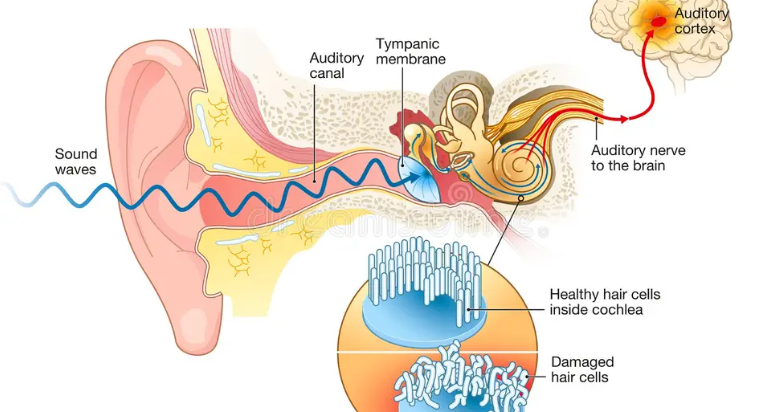
Your inner ear contains tiny hair cells that convert sound waves into signals for the brain. Loud or prolonged noise from headphones can damage these cells. Unfortunately, once damaged, they do not grow back.

Listening at high volume for long hours can cause noise-induced hearing loss, a condition that often develops slowly and painlessly.

Common Hearing Problems Caused by Headphone Overuse

Noise-Induced Hearing Loss

Continuous exposure to loud sound gradually reduces hearing sensitivity.

Tinnitus (Ringing in the Ears)

Buzzing or ringing sounds, especially after using headphones.

Ear Pain or Fullness

Pressure or discomfort after long listening sessions.

Reduced Speech Clarity

Difficulty understanding conversations, particularly in noisy places.

Sound Distortion

Music or speech may sound unclear or muffled.

Warning Signs You Should Not Ignore

Consult an ENT specialist in Hyderabad if you experience:

  • Ringing or buzzing in the ears

  • Ear pain after headphone use

  • Needing higher volume than before

  • Difficulty hearing phone calls

  • Feeling of blocked ears

  • Headaches linked to sound exposure

Early diagnosis can prevent permanent damage.

Who Is at Higher Risk?

  • Students using headphones for online classes

  • Call-center employees and work-from-home professionals

  • Gamers and music lovers

  • Children using headphones for long hours

  • People using earphones while sleeping

Safe Headphone Use: ENT-Recommended Tips

Follow the 60–60 Rule

Listen at 60% volume for no more than 60 minutes at a time.

Use Noise-Cancelling Headphones

They reduce the need to increase volume in noisy environments.

Take Listening Breaks

Give your ears time to recover between sessions.

Avoid Sleeping with Headphones

Continuous sound exposure increases risk of ear damage.

Limit Children’s Headphone Use

Monitor both volume and duration.

When to See an ENT Specialist in Hyderabad

Visit MicroCare ENT Hospital, Hyderabad, if:

  • Hearing issues persist for more than a few days

  • Ringing in the ears becomes frequent

  • Ear pain or pressure worsens

  • You notice sudden hearing reduction

Early ENT evaluation helps preserve long-term hearing health.

How MicroCare ENT Hospitals Diagnose Hearing Damage

Our hearing evaluation includes:

  • Pure Tone Audiometry (PTA)

  • Speech Audiometry

  • Tympanometry

  • Detailed ear examination

Based on results, we provide personalized hearing care.

Treatment Options for Headphone-Related Hearing Problems

Treatment depends on severity and may include:

  • Medical management for inflammation

  • Tinnitus management therapy

  • Hearing protection counseling

  • Hearing aids (if needed)

  • Lifestyle modification guidance

Our goal is to protect remaining hearing and improve quality of life.

Conclusion: Protect Your Hearing Before It’s Too Late

Headphone overuse is a growing cause of hearing problems in both adults and children. The good news is that most damage is preventable with safe listening habits and early ENT care.

If you are concerned about hearing loss due to headphones, consult an ENT specialist in Hyderabad at MicroCare ENT Hospitals for expert advice and care.

From MicroCare ENT Hospital to your inbox

Sign up for free and stay up to date on research advancements, health tips, current health topics, and expertise on managing health.

📞 Book Your Consultation Now

Call us: +91- 94 94 94 0725
appointments@microcareenthospitals.com
www.microcareenthospitals.com

To learn more about ent, visit our page on MicroCare ENT hospital

Watch our Related Videos

Viral Videos

Playlist

9 Videos

Parotid Gland Surgery: What Patients Should Know | MicroCare ENT Hyderabad

nagarjuna

Parotid gland surgery performed by ENT specialists at MicroCare ENT Hospital Hyderabad Telangana

The parotid gland is the largest salivary gland in the human body and is located just in front of each ear. Its main role is to produce saliva, which helps with chewing, swallowing, and digestion. However, when abnormal cell growth occurs, it can lead to parotid gland tumours, requiring medical evaluation and sometimes surgery.

At MicroCare ENT Hospitals in Hyderabad, our ENT specialists provide advanced and safe parotid gland surgery (parotidectomy) with a strong focus on facial nerve protection and faster recovery.

Published By microcareenthospitals.com / Updated: Dec 19, 2025

What Is a Parotid Gland Tumour?

A parotid gland tumour develops when cells in the gland grow abnormally. These tumours can be benign (non-cancerous) or malignant (cancerous). Early diagnosis plays a key role in successful treatment.

Types of Parotid Gland Tumours:

Superficial Lobe Tumour
This tumour develops in the outer portion of the gland and lies above the facial nerve.

Deep Lobe or Total Parotid Tumour
This tumour grows beneath the facial nerve and may involve both lobes of the gland, making surgery more complex.

What Is Parotid Gland Surgery (Parotidectomy)?

Parotid gland surgery, also known as parotidectomy, is a procedure performed to remove part or all of the parotid gland affected by a tumour or chronic disease.

Because the facial nerve passes through the parotid gland, the main goal of surgery is to completely remove the tumour while preserving facial nerve function.

At MicroCare ENT Hospital Hyderabad, surgeries are performed using advanced nerve monitoring techniques for maximum safety.

Causes of Parotid Gland Problems

Several factors can affect the parotid gland, including:

  • Viral infections (mumps, Epstein-Barr virus)

  • Salivary duct blockage

  • Poor oral hygiene

  • Chronic dehydration

  • Autoimmune conditions

  • HIV infection

  • Malnutrition

  • Smoking or radiation exposure

Symptoms of Parotid Gland Tumour

You should consult an ENT specialist in Hyderabad if you notice:

  • A painless or painful lump near the jaw or ear

  • Swelling in front of the ear

  • Pain around the salivary gland area

  • Dry mouth or reduced saliva

  • Facial numbness or muscle weakness

  • Difficulty opening the mouth fully

  • Difficulty chewing or swallowing

  • Foul-tasting discharge into the mouth

  • Fever or persistent pain

Parotidectomy Treatment Procedure

Minimally Invasive Parotid Surgery

Most modern parotid surgeries are performed using minimally invasive techniques:

  • A small incision is made in front of the ear and along the natural skin crease

  • Facial nerve monitoring is used throughout the procedure

  • The tumour is carefully separated from nerve branches

  • Only the affected gland portion is removed whenever possible

  • Skin is closed with cosmetic sutures for minimal scarring

This approach ensures better cosmetic results and faster healing.

Non-Surgical Treatment Options

If surgery is not suitable, especially in advanced cancer cases, doctors may recommend:

  • Radiation therapy

  • Chemotherapy

These treatments help control tumour growth and reduce symptoms.

Benefits of Parotid Gland Surgery

Suitable for all age groups
Low complication rates
Minimal visible scarring
Reduced facial nerve damage risk
Less post-operative pain and swelling
Same-day or short hospital stay
Faster recovery and return to routine life

Possible Risks & Challenges

Like any surgery, parotidectomy has potential risks, such as:

  • Temporary facial weakness

  • Numbness of the tongue or ear

  • Difficulty in chewing or lip movement

  • Frey’s syndrome (sweating while eating)

  • Infection or bleeding

  • Rare permanent facial nerve injury

At MicroCare ENT Hospitals, expert surgical planning significantly reduces these risks.

Cost of Parotid Gland Surgery in Hyderabad

The cost of parotid gland surgery in India generally starts from around ₹1,00,000. The final cost depends on:

  • Size and type of tumour

  • Surgical complexity

  • Hospital stay duration

  • Patient’s overall health conditions

  • Need for additional treatments

A detailed cost estimate is provided after evaluation at MicroCare ENT Hospital, Hyderabad.

When to See an ENT Specialist?

Seek immediate consultation if you have:

  • Rapidly growing facial swelling

  • Facial weakness

  • Persistent jaw pain

  • Difficulty swallowing

  • Recurrent salivary gland infections

Early treatment leads to better outcomes and nerve preservation.

Conclusion

Parotid gland surgery is a delicate but highly successful procedure when performed by experienced ENT surgeons. With modern techniques and facial nerve monitoring, patients can expect safe treatment and excellent recovery.

If you are searching for parotid gland surgery in Hyderabad, parotidectomy treatment, or the Best ENT Hospital in Telangana, MicroCare ENT Hospitals offers expert care with patient-focused outcomes.

From MicroCare ENT Hospital to your inbox

Sign up for free and stay up to date on research advancements, health tips, current health topics, and expertise on managing health.

📞 Book Your Consultation Now

Call us: +91- 94 94 94 0725
appointments@microcareenthospitals.com
www.microcareenthospitals.com

To learn more about ent, visit our page on MicroCare ENT hospital

Watch our Related Videos

Viral Videos

Playlist

9 Videos

Laryngitis Treatment: Symptoms, Causes & Recovery | MicroCare ENT Hyderabad

nagarjuna

Laryngitis treatment and voice care by ENT specialists at MicroCare ENT Hospital Hyderabad Telangana

Laryngitis is a common ENT condition that affects the larynx (voice box) and often leads to hoarseness, voice weakness, or temporary voice loss. While many cases are mild and short-lived, untreated or recurring laryngitis can become chronic and interfere with daily communication.


At MicroCare ENT Hospital in Hyderabad, our ENT specialists provide accurate diagnosis and personalized laryngitis treatment to restore voice health and prevent complications. In this guide, we explain the symptoms, causes, treatment options, and recovery process in a simple, patient-friendly way.

Published By microcareenthospitals.com / Updated: Dec 18, 2025

What Is Laryngitis?

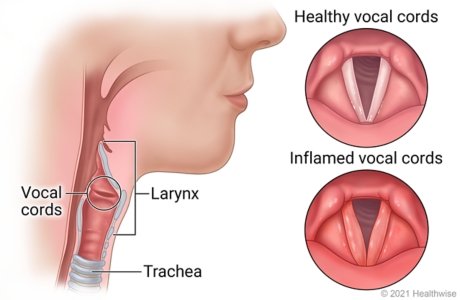
Laryngitis occurs when the vocal cords become inflamed or irritated, affecting how they vibrate during speech. Because the larynx plays a key role in voice production, even mild swelling can significantly alter voice quality.

Laryngitis may be:

Acute – lasting a few days to 2 weeks

Chronic – lasting longer than 3 weeks and requiring medical care

Early ENT evaluation helps prevent long-term voice damage.

What Causes Laryngitis?

Laryngitis can develop due to several reasons. The most common causes include:

Viral Infections

Colds, flu, and respiratory infections are the leading causes of acute laryngitis.

Voice Overuse or Misuse

Excessive talking, shouting, singing, or improper voice use can strain vocal cords.

Acid Reflux (GERD/LPR)

Stomach acid reaching the throat irritates vocal cords and causes chronic inflammation.

Allergies

Dust, pollen, and pollution—common in Hyderabad—can trigger throat irritation.

Smoking & Alcohol

Both dry and irritate the vocal cords, increasing chronic laryngitis risk.

Environmental Irritants

Exposure to chemicals, smoke, or polluted air inflames the larynx.

Laryngitis Symptoms

Symptoms vary based on severity and cause. Common laryngitis symptoms include:

  • Hoarse, raspy, or weak voice

  • Voice loss or difficulty speaking

  • Sore or dry throat

  • Throat irritation or tickling sensation

  • Pain while speaking or swallowing

  • Dry cough

  • Mild fever and fatigue

If symptoms last more than 2–3 weeks, consult an ENT specialist in Hyderabad.

Acute vs Chronic Laryngitis

Acute Laryngitis

  • Sudden onset

  • Often viral

  • Lasts 7–14 days

  • Improves with rest and hydration

Chronic Laryngitis

  • Persists beyond 3 weeks

  • Caused by reflux, smoking, voice misuse, or allergies

  • Needs medical evaluation and targeted treatment

Laryngitis in Children & Infants

In Children

  • Barking cough

  • Fever

  • Swollen glands

  • Breathing difficulty

  • Voice change

In Infants

  • High-pitched breathing (stridor)

  • Feeding difficulty

  • Excessive crying

  • Fever

Because airway size is small, pediatric laryngitis requires immediate medical attention.

How Is Laryngitis Diagnosed at MicroCare ENT Hospital?

At MicroCare ENT Hospital, Hyderabad, diagnosis may include:

  • Detailed ENT examination

  • Voice assessment

  • Laryngoscopy (if needed)

  • Reflux evaluation

  • Allergy screening

Accurate diagnosis ensures faster recovery and prevents recurrence.

Laryngitis Treatment & Recovery

Treatment depends on the cause and duration.

Voice Rest

Avoid speaking loudly, whispering, or singing.

Hydration

Drink warm fluids to soothe vocal cords.

Steam Inhalation

Moistens airways and reduces inflammation.

Medications

  • Anti-inflammatory medicines

  • Antibiotics (only if bacterial infection)

  • Reflux medication if GERD is present

Voice Therapy

Recommended for professionals with repeated voice strain.

Lifestyle Changes

Avoid smoking, alcohol, late-night meals, and spicy foods.

Most patients recover fully with proper care.

When Should You See an ENT Specialist in Hyderabad?

Consult MicroCare ENT Hospital if you have:

  • Hoarseness lasting over 3 weeks

  • Difficulty breathing

  • Severe throat pain

  • Blood in sputum

  • Recurrent voice loss

Early ENT care prevents long-term voice damage.

How to Prevent Laryngitis

  • Stay well hydrated

  • Avoid voice overuse

  • Quit smoking

  • Manage acid reflux

  • Use a humidifier

  • Avoid polluted environments

  • Practice good vocal hygiene

Conclusion

fLaryngitis may seem minor, but ignoring it can lead to chronic voice problems. With early diagnosis and the right treatment, recovery is smooth and complete.

If you are searching for laryngitis treatment in Hyderabad, voice hoarseness treatment, or the best ENT hospital in Telangana, MicroCare ENT Hospital offers expert care for adults and children.

From MicroCare ENT Hospital to your inbox

Sign up for free and stay up to date on research advancements, health tips, current health topics, and expertise on managing health.

📞 Book Your Consultation Now

Call us: +91- 94 94 94 0725
appointments@microcareenthospitals.com
www.microcareenthospitals.com

To learn more about ent, visit our page on MicroCare ENT hospital

Watch our Related Videos

Viral Videos

Playlist

9 Videos

Nosebleeds (Epistaxis): First Aid & ENT Treatment | MicroCare ENT Hyderabad

nagarjuna

Nosebleeds (Epistaxis): First Aid & ENT Treatment | MicroCare ENT Hyderabad

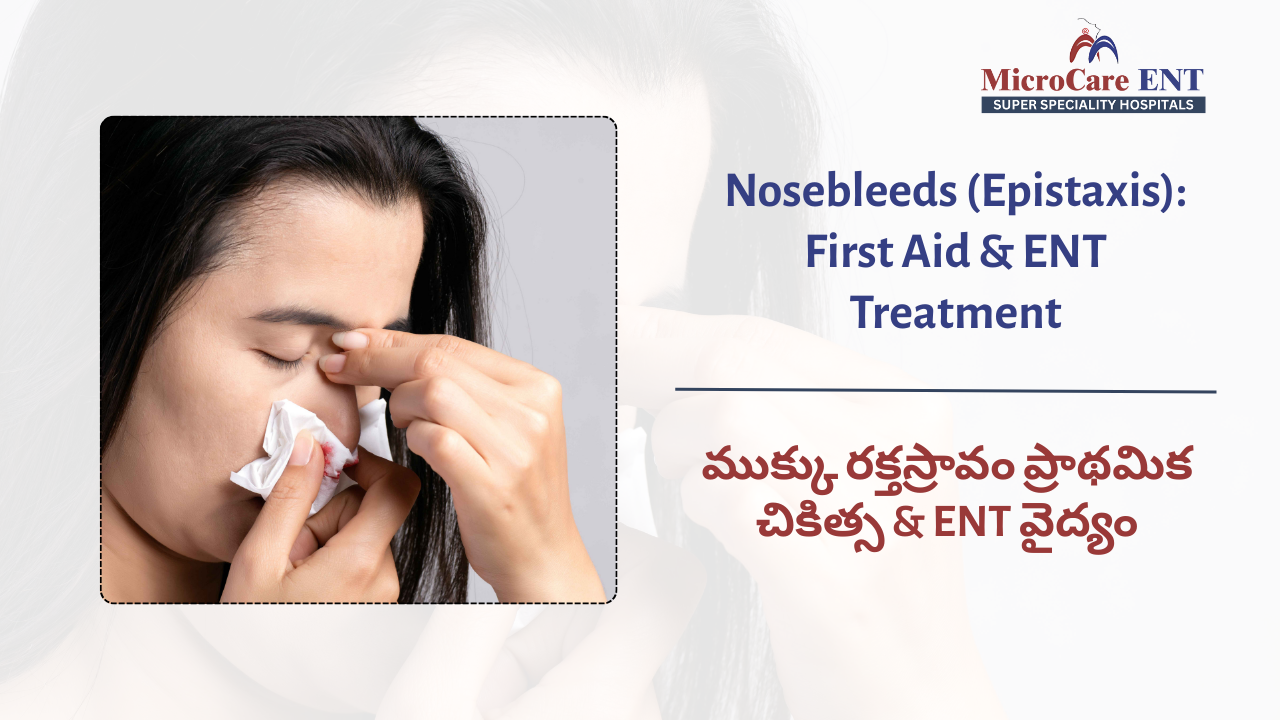
Nosebleeds, also known as epistaxis, are common and usually harmless. However, they can feel frightening, especially when bleeding starts suddenly. In most cases, nosebleeds happen because the blood vessels inside the nose are very delicate. As a result, even minor irritation can cause bleeding.

At MicroCare ENT Hospital, Hyderabad, our ENT specialists frequently treat patients with nosebleeds. In this blog, you will learn why nosebleeds occur, how to manage them safely at home, and when to consult an ENT specialist in Hyderabad.

Published By microcareenthospitals.com / Updated: Dec 17, 2025

What Are Nosebleeds?

A nosebleed occurs when tiny blood vessels inside the nose break. Because the nose has a rich blood supply, bleeding may appear heavy even when the cause is minor.
Most nosebleeds stop on their own. However, repeated or severe bleeding should never be ignored.

Types of Nosebleeds

Nosebleeds are mainly divided into two types based on where the bleeding starts.

Anterior Nosebleeds

Anterior nosebleeds begin at the front of the nose. They are the most common type and usually affect children and young adults.
In most cases, they occur due to dry air, frequent nose blowing, or minor injury. Fortunately, they can be easily controlled with first aid.

Posterior Nosebleeds

Posterior nosebleeds start deeper inside the nose. Although they are less common, they are more serious.
Because larger blood vessels are involved, bleeding may be heavy and continuous. Therefore, posterior nosebleeds usually require ENT treatment in a hospital.

Common Causes of Nosebleeds

Nosebleeds can occur for several reasons. The most common causes include:

  • Dry air, which dries and cracks the nasal lining

  • Allergies, causing irritation and inflammation

  • Frequent nose picking or forceful blowing

  • Injury or trauma to the nose

  • Blood-thinning medicines, such as aspirin

  • High blood pressure or bleeding disorders

  • Structural nasal problems, like a deviated septum

Identifying the cause helps prevent future nosebleeds.

Step-by-Step First Aid for Nosebleeds

If a nosebleed occurs, stay calm and follow these steps:

Sit Upright and Lean Forward

First, sit upright and lean slightly forward. This position prevents blood from flowing into the throat.

Pinch the Soft Part of the Nose

Next, pinch the soft lower part of the nose firmly using your fingers. Hold steady pressure for 10 to 15 minutes without checking.

Breathe Through the Mouth

During this time, breathe calmly through your mouth. Avoid talking or swallowing too much.

Apply a Cold Compress

If available, place a cold compress on the nose bridge or back of the neck. This helps constrict blood vessels.

Rest After Bleeding Stops

Once bleeding stops, avoid blowing or touching the nose for a few hours.

What You Should Avoid During a Nosebleed

To prevent worsening the bleeding:

  • Do not tilt your head backward

  • Do not lie down flat

  • Do not stuff cotton deep into the nose

  • Do not blow your nose immediately after bleeding stops

Instead, remain calm and allow the nose to heal.

Essential First Aid Kit Items for Nosebleeds

Keeping these items handy can help manage nosebleeds effectively:

Sterile gauze pads

Nasal saline spray

Cold compress or ice pack

Soft tissues or clean cloth

Disposable gloves

Cotton swabs (for cleaning only, not packing)

Prevention Tips for Nosebleeds

Keep nasal passages moist with saline spray

Stay well hydrated

Use a humidifier in dry environments

Avoid excessive nose blowing or picking

Control allergies and sinus problems

Manage blood pressure

Conclusion

Although nosebleeds are common, repeated episodes should not be ignored. With proper first aid and timely ENT evaluation, nosebleeds can be safely managed and prevented.

If you are looking for nosebleed treatment in Hyderabad or the best ENT hospital in Telangana, MicroCare ENT Hospital is here to help.

From MicroCare ENT Hospital to your inbox

Sign up for free and stay up to date on research advancements, health tips, current health topics, and expertise on managing health.

📞 Book Your Consultation Now

Call us: +91- 94 94 94 0725
appointments@microcareenthospitals.com
www.microcareenthospitals.com

To learn more about ent, visit our page on MicroCare ENT hospital

Watch our Related Videos

Viral Videos

Playlist

9 Videos

The Dos and Don’ts of Living With Tinnitus | MicroCare ENT Hyderabad

nagarjuna

Living with tinnitus dos and don’ts explained by ENT specialists at MicroCare ENT Hospitals Hyderabad Telangana

Living with tinnitus—often described as ringing, buzzing, hissing, or whistling in the ears—can be frustrating and emotionally draining. While tinnitus itself is not a disease, it is a symptom of an underlying ear or nerve condition. Fortunately, with the right approach, many people learn to manage tinnitus effectively.

At MicroCare ENT Hospitals in Hyderabad, our ENT specialists help patients understand tinnitus triggers, adopt healthy habits, and access advanced tinnitus treatment in Hyderabad when needed. This guide explains the essential dos and don’ts of living with tinnitus to improve daily comfort and quality of life.

Published By microcareenthospitals.com / Updated: Dec 16, 2025

What Is Tinnitus? (Quick Overview)

Tinnitus is the perception of sound without an external source. It may affect one or both ears and can vary in loudness and pitch. Common causes include:

Noise-induced hearing loss

Ear infections or wax buildup

Age-related hearing changes

Stress and anxiety

Certain medications

Inner ear or nerve disorders

Because causes differ, a personalized ENT evaluation is important.

The Dos of Living With Tinnitus

Do Protect Your Ears From Loud Noise

Use ear protection in noisy environments. Loud sound exposure can worsen tinnitus and hearing damage.

Do Manage Stress and Anxiety

Stress can increase tinnitus perception. Relaxation techniques like breathing exercises, yoga, or meditation often help.

Do Maintain Good Sleep Habits

Poor sleep can intensify tinnitus. Use soft background sounds or white noise to make sleep easier.

Do Stay Hydrated and Eat a Balanced Diet

Proper hydration supports inner ear health. Reducing salt may help some people with ear pressure issues.

Do Get Your Hearing Tested

Undiagnosed hearing loss is a common tinnitus trigger. Early testing helps guide treatment.

Do Use Sound Therapy When Needed

Low-level background sounds (fans, nature sounds) can reduce awareness of tinnitus.

Do Follow ENT Advice Consistently

If medication, hearing aids, or therapy are prescribed, use them as directed for best results.

The Don’ts of Living With Tinnitus

Don’t Ignore Persistent Ringing in the Ears

Tinnitus lasting more than a few days should be evaluated by an ENT specialist in Hyderabad.

Don’t Use Cotton Buds or Sharp Objects in the Ear

These can worsen ear damage or push wax deeper, increasing tinnitus.

Don’t Overexpose Yourself to Loud Music

Headphones at high volume can worsen tinnitus permanently.

Don’t Rely on Unverified Home Remedies

Online “quick cures” can be unsafe. Always consult an ENT expert first.

Don’t Panic or Focus Constantly on the Sound

Fixating on tinnitus can make it feel louder. Gradual habituation is possible with guidance.

Don’t Skip Follow-Ups

Regular reviews help track progress and adjust treatment if needed.

When to See an ENT Specialist in Hyderabad

Visit MicroCare ENT Hospitals if you experience:

Tinnitus lasting more than 1–2 weeks

Ringing in one ear only

Sudden hearing loss with tinnitus

Dizziness or balance problems

Tinnitus affecting sleep or mental health

Early evaluation improves tinnitus management outcomes.

Tinnitus Treatment in Hyderabad at MicroCare ENT Hospitals

At MicroCare ENT Hospitals (KPHB / Kukatpally / Jubilee Hills), treatment depends on the cause and may include:

Ear examination and wax removal

Hearing tests and hearing aids

Tinnitus counseling and sound therapy

Medication (if indicated)

Management of underlying ear or nerve conditions

Our goal is not just symptom relief, but long-term comfort and confidence.

Living Well With Tinnitus: Final Thoughts

Living with tinnitus can be challenging, but it does not have to control your life. By following the right dos and avoiding harmful habits, many people experience reduced discomfort and improved quality of life.

If you’re searching for ear ringing treatment in Hyderabad or the Best ENT Hospital in Telangana, consult MicroCare ENT Hospitals for expert tinnitus care and personalized guidance.

From MicroCare ENT Hospital to your inbox

Sign up for free and stay up to date on research advancements, health tips, current health topics, and expertise on managing health.

📞 Book Your Consultation Now

Call us: +91- 94 94 94 0725
appointments@microcareenthospitals.com
www.microcareenthospitals.com

To learn more about ent, visit our page on MicroCare ENT hospital

Watch our Related Videos

Viral Videos

Playlist

9 Videos

13 Tips to Speed Up Rhinoplasty Recovery | MicroCare ENT Hospital Hyderabad

nagarjuna

Rhinoplasty recovery tips explained by ENT specialists at MicroCare ENT Hospital in Hyderabad Telangana

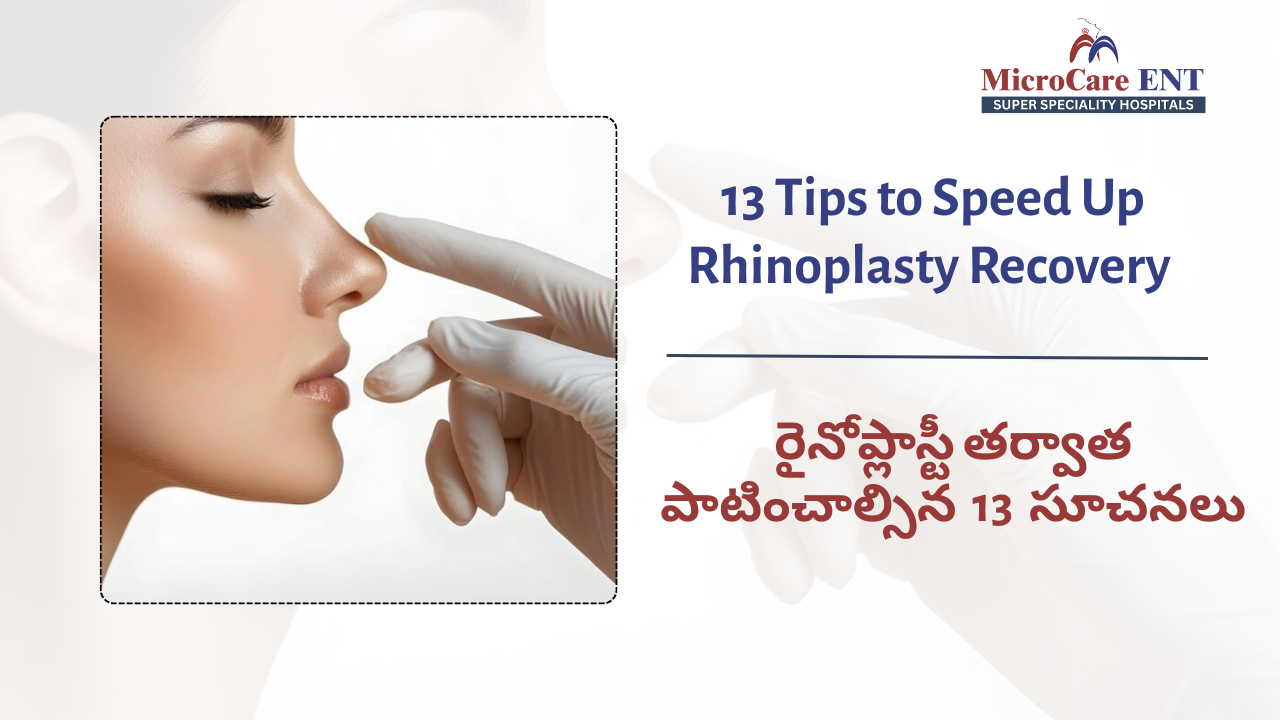
Recovering from rhinoplasty is just as important as the surgery itself. While the procedure improves both appearance and breathing, proper aftercare helps you heal faster and protects your results. Fortunately, by following the right steps, recovery can be smoother and more comfortable.

At MicroCare ENT Hospital in Hyderabad, our ENT specialists guide patients through safe and effective rhinoplasty recovery. Below are 13 simple and proven tips to help you recover faster after nose surgery.

Published By microcareenthospitals.com / Updated: Dec 13, 2025

How Long Does Rhinoplasty Recovery Take?

In most cases, initial recovery takes 7 to 14 days. However, mild swelling may last a few weeks, and final results continue to refine over several months. Therefore, following the correct recovery routine is essential for best outcomes.

13 Tips to Speed Up Your Rhinoplasty Recovery

1. Take Proper Rest

First of all, give your body enough rest. Rest allows tissues to heal faster and reduces swelling. Avoid unnecessary movement during the first few days.

2. Sleep With Your Head Elevated

Additionally, sleeping with your head raised helps reduce fluid buildup. Use two pillows or sleep in a reclined position for better comfort.

3. Apply Cold Compress Carefully

During the first 48 hours, cold compresses around the cheeks and eyes can reduce bruising. However, never place ice directly on the nose.

4. Avoid Touching or Rubbing Your Nose

Moreover, touching the nose can disturb healing tissues. Even gentle pressure should be avoided.

5. Do Not Blow Your Nose

Blowing your nose increases pressure and may cause bleeding. Instead, clean gently as advised by your ENT specialist.

Diet & Lifestyle Tips for Faster Healing

6. Stay Well Hydrated

Drinking enough water keeps tissues healthy and supports faster recovery. Therefore, sip water throughout the day.

7. Eat Soft and Nutritious Foods

Choose soft foods such as soups, dal, curd, fruits, and vegetables. As a result, chewing strain is reduced and healing improves.

8. Avoid Spicy and Hard Foods

Spicy or very hot foods may increase discomfort. Similarly, hard foods can strain facial muscles.

9. Avoid Smoking and Alcohol

Smoking slows healing, while alcohol increases swelling. Hence, avoiding both is crucial during recovery.

Activity & Care Guidelines

10. Take Medicines Exactly as Prescribed

Always follow your doctor’s medication instructions. Do not skip doses or self-medicate.

11. Avoid Heavy Exercise

Furthermore, avoid workouts, running, and gym activities until your doctor allows them. Physical strain can delay healing.

12. Protect Your Nose From Sun and Dust

Hyderabad’s climate can irritate healing skin. Therefore, use a mask outdoors and avoid direct sunlight on the nose.

13. Attend All Follow-Up Appointments

Finally, regular follow-ups at MicroCare ENT Hospital Hyderabad ensure proper healing and early detection of any issues.

Common Mistakes That Slow Recovery

Even with good intentions, some habits can delay healing:

  • Sleeping flat

  • Wearing glasses too early

  • Picking nasal crusts

  • Returning to exercise too soon

  • Skipping follow-up visits

Avoiding these mistakes helps maintain long-term results.

When Should You Contact an ENT Specialist?

You should immediately consult your doctor if you notice:

  • Heavy or continuous bleeding

  • Increasing pain or fever

  • Foul-smelling discharge

  • Sudden swelling on one side

  • Difficulty breathing

Early attention prevents complications.

Conclusion

In conclusion, rhinoplasty recovery becomes easier when you follow the right aftercare steps. By resting well, eating right, and following medical advice, you can heal faster and enjoy better results.

If you are planning rhinoplasty in Hyderabad or need expert recovery guidance, MicroCare ENT Hospital is here to help.

From MicroCare ENT Hospital to your inbox

Sign up for free and stay up to date on research advancements, health tips, current health topics, and expertise on managing health.

📞 Book Your Consultation Now

Call us: +91- 94 94 94 0725
appointments@microcareenthospitals.com
www.microcareenthospitals.com

To learn more about ent, visit our page on MicroCare ENT hospital

Watch our Related Videos

Viral Videos

Playlist

9 Videos

Closed vs Open Rhinoplasty: Which Is Better? | MicroCare ENT Hospital Hyderabad

nagarjuna

Closed vs open rhinoplasty explained by ENT surgeon at MicroCare ENT Hospital, Hyderabad (KPHB, Kukatpally), Telangana

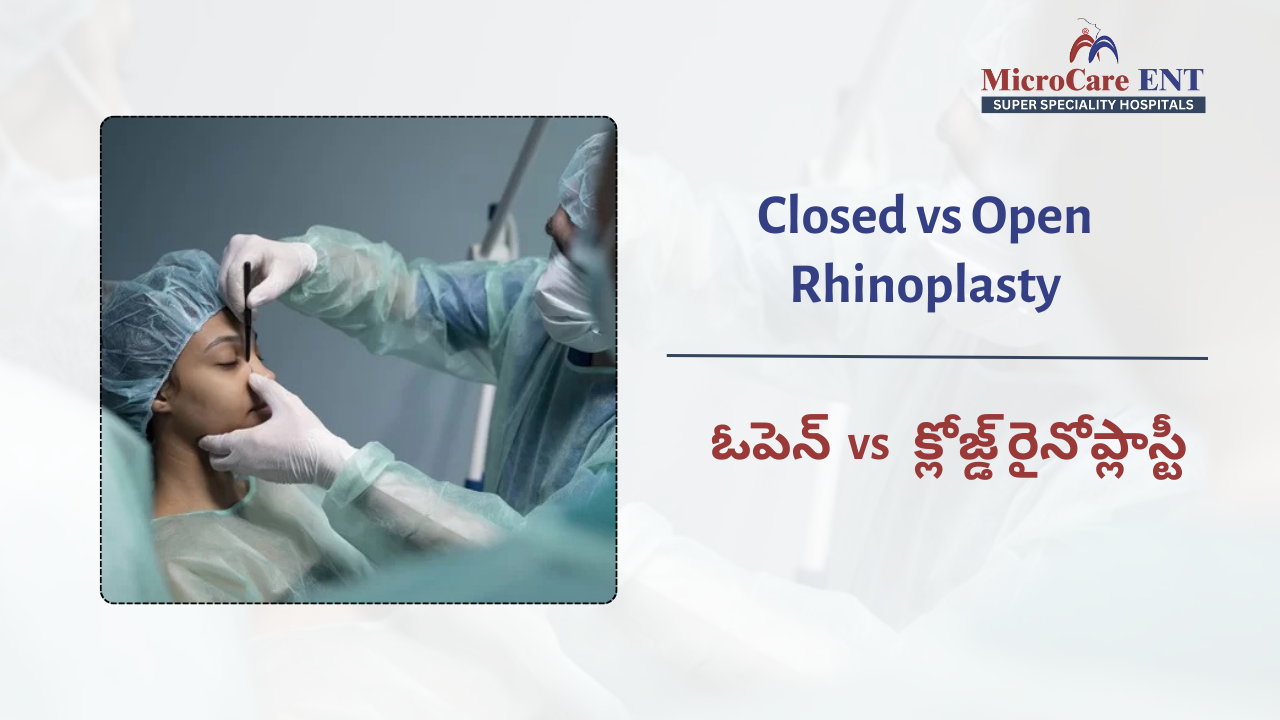
If you’re planning a nose job, one common question comes up early: Closed vs Open Rhinoplasty— which technique is better for you? The right answer depends on your nose structure, your goals (cosmetic or breathing), and how much correction is needed.

At MicroCare ENT Hospital, Hyderabad (KPHB / Kukatpally / Jubilee Hills), our ENT surgeons evaluate both appearance and function. That way, your results look natural and your breathing stays comfortable.

This guide explains the difference between closed and open rhinoplasty, who each method suits best, recovery expectations, and how to choose the safer, more effective option for your needs.

Published By microcareenthospitals.com / Updated: Dec 12, 2025

What Is Rhinoplasty?

Rhinoplasty is a surgical procedure to reshape the nose. It can be done for:

  • Cosmetic goals (shape, size, symmetry)

  • Functional goals (better breathing, correcting deviated septum)

  • Both (often called septorhinoplasty)

If you’re searching for rhinoplasty in Hyderabad, make sure your consultation includes a breathing assessment—not just photos.

Closed Rhinoplasty: What It Means

there is usually no visible scar.

Benefits of Closed Rhinoplasty

  • No external incision/scar

  • Often less swelling (in select cases)

  • Faster early healing for many patients

  • Suitable for minor to moderate reshaping

Best For

Closed rhinoplasty often works well when corrections are limited, such as:

  • Small hump reduction

  • Minor bridge refinement

  • Subtle tip adjustments

  • Mild asymmetry corrections

However, it may not be ideal when the surgeon needs full visibility and complex tip work.

Open Rhinoplasty: What It Means

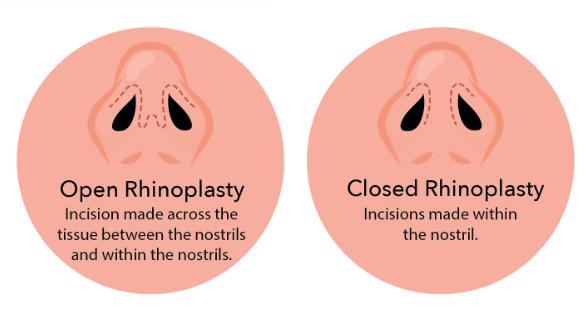
Open rhinoplasty involves a small incision on the columella (the strip between the nostrils). This allows the surgeon to lift the nasal skin and see the internal structures clearly.

Benefits of Open Rhinoplasty

  • Better visibility and precision

  • Ideal for complex reshaping

  • Stronger structural support work

  • Often preferred for revision rhinoplasty

Best For

Open rhinoplasty is commonly chosen for:

  • Major tip reshaping

  • Significant asymmetry correction

  • Revision rhinoplasty (second surgery)

  • Structural grafting needs

  • Severe crooked nose or trauma cases

The scar is usually small and becomes less noticeable over time when done properly.

Closed vs Open Rhinoplasty: Key Differences (Simple Comparison)

Incision Location

  • Closed: Inside the nostrils

  • Open: Inside + small external incision

Visibility for the Surgeon

  • Closed: Limited view

  • Open: Full view (more precision for complex cases)

Swelling & Healing

  • Closed: Often less swelling in simpler cases

  • Open: Swelling may last longer, especially at the tip

Best Use

  • Closed: Mild/moderate reshaping

  • Open: Complex reshaping, revisions, major tip work

Scar

  • Closed: No visible scar

  • Open: Tiny scar under nose (usually fades)

Which Technique Is Better for You?

The best technique depends on what you want to fix. Therefore, a personalized ENT evaluation matters.

Choose Closed Rhinoplasty If:

  • You want subtle changes

  • Your tip work is minimal

  • Your nose structure is stable

  • You prefer no external incision

Choose Open Rhinoplasty If:

  • You need tip definition or major reshaping

  • Your nose is crooked or post-trauma

  • You’re planning revision rhinoplasty

  • You need structural support (grafting)

  • You want maximum precision

At MicroCare ENT Hospital Hyderabad, we recommend the technique based on medical evaluation, not trends.

Functional Rhinoplasty: What If You Also Have Breathing Problems?

Many patients want a better-looking nose and better breathing. If you have:

  • Nasal blockage

  • Deviated septum

  • Turbinate enlargement

  • Chronic mouth breathing

  • Snoring linked to nasal obstruction

…you may need functional rhinoplasty or septorhinoplasty.

This is why choosing an experienced ENT specialist in Hyderabad is important—because ENT surgeons address both beauty and breathing.

Recovery: What to Expect After Rhinoplasty

Recovery varies between patients. Still, most people can expect:

  • Swelling and bruising (first 1–2 weeks)

  • Tip swelling may last longer (especially open rhinoplasty)

  • Avoid heavy exercise for a few weeks (as advised)

  • Final refinement continues over months

Your surgeon’s aftercare instructions play a huge role in how smoothly you heal.


How MicroCare ENT Hospital Hyderabad Helps You Decide

  • At MicroCare ENT Hospital (KPHB / Kukatpally / Jubilee Hills), your rhinoplasty consultation may include:

    • Nose examination (external + internal)

    • Breathing assessment

    • Imaging/endoscopy if needed

    • Photo-based planning

    • Clear explanation of open vs closed option

    • Customized plan focused on safety and natural results

Conclusion: Closed vs Open Rhinoplasty—The Right Choice Depends on Your Nose

So, closed vs open rhinoplasty— which is better? Closed rhinoplasty is often ideal for smaller corrections with no external scar. Open rhinoplasty offers more precision for complex reshaping and structural correction. The best decision comes from a proper ENT evaluation.

If you’re considering rhinoplasty in Hyderabad and want a safe, balanced result that supports both appearance and breathing, consult MicroCare ENT Hospital.

From MicroCare ENT Hospital to your inbox

Sign up for free and stay up to date on research advancements, health tips, current health topics, and expertise on managing health.

📞 Book Your Consultation Now

Call us: +91- 94 94 94 0725
appointments@microcareenthospitals.com
www.microcareenthospitals.com

To learn more about ent, visit our page on MicroCare ENT hospital

Watch our Related Videos

Viral Videos

Playlist

9 Videos