




Can Rhinoplasty Fix Breathing Problems?

ENT

patient breathing comfortably after rhinoplasty surgery Hyderabad

Many people think rhinoplasty is only a cosmetic procedure designed to improve the appearance of the nose. However, rhinoplasty can also be performed to correct structural issues that affect breathing.

If you frequently experience a blocked nose, difficulty breathing through one or both nostrils, snoring, or recurrent sinus infections, rhinoplasty may help improve nasal airflow and overall quality of life.

At MicroCare ENT Hospital & Research Institute, Hyderabad, we offer advanced rhinoplasty and nasal surgery solutions that improve both appearance and breathing function.

Published By microcareenthospitals.com / Updated: June 02, 2026

What Is Rhinoplasty?

Rhinoplasty, commonly known as nose reshaping surgery, is a procedure that changes the structure of the nose.

While some patients choose rhinoplasty for cosmetic reasons, others undergo surgery to:

  • Improve breathing
  • Correct nasal deformities
  • Repair injuries
  • Treat structural abnormalities

When rhinoplasty is performed to improve nasal function, it is often called functional rhinoplasty.

Common Causes of Breathing Problems

Several nasal conditions can make breathing difficult.

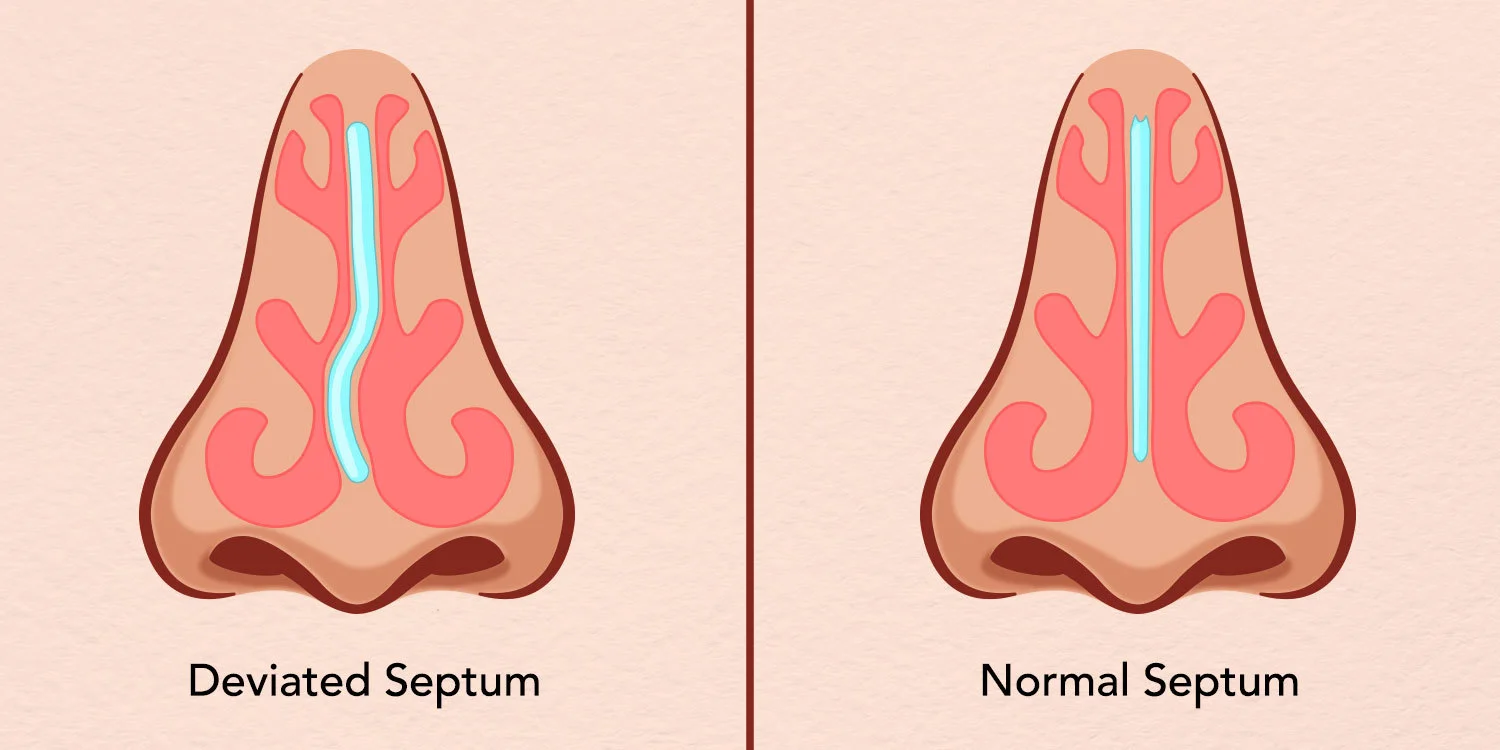
1. Deviated Septum

A deviated septum occurs when the wall separating the nostrils is displaced to one side.

This may cause:

  • Chronic nasal blockage
  • Difficulty breathing
  • Snoring
  • Frequent sinus infections

2. Nasal Valve Collapse

The nasal valve is the narrowest part of the airway. Weakness or collapse in this area can restrict airflow.

3. Nasal Injury

Previous fractures or trauma may change the shape of the nose and block airflow.

4. Congenital Nasal Abnormalities

Some individuals are born with structural issues that affect breathing.

How Can Rhinoplasty Improve Breathing?

1. Correcting a Deviated Septum

One of the most common reasons for breathing-related rhinoplasty is septal correction.

  • Straightening the septum can:
    Improve airflow
  • Reduce nasal blockage
  • Improve sleep quality

2. Strengthening Nasal Structures

Functional rhinoplasty can support weak nasal tissues and prevent airway collapse.

3. Improving Airflow

Reshaping the internal nasal passages allows air to move more freely through the nose.

4. Correcting Trauma-Related Deformities

Patients with old nasal injuries often experience both cosmetic concerns and breathing difficulties.

Rhinoplasty can restore normal structure and function.

Signs You May Need Rhinoplasty for Breathing Problems

Consult an ENT specialist if you experience:

  • Chronic nasal blockage
  • Difficulty breathing through the nose
  • Frequent sinus infections
  • Loud snoring
  • Sleep disturbances
  • Mouth breathing

Patients in Kukatpally, KPHB, and Hyderabad commonly seek treatment for these symptoms.

Benefits of Functional Rhinoplasty

1. Improved Breathing

The primary benefit is better airflow through the nasal passages.

2. Better Sleep Quality

Improved breathing often reduces snoring and nighttime breathing difficulties.

3. Reduced Sinus Problems

Better drainage decreases the risk of recurring sinus infections.

4. Enhanced Appearance

In many cases, rhinoplasty can improve both nasal function and facial aesthetics.

5. Improved Quality of Life

Patients often report greater comfort during exercise, sleep, and daily activities.

Rhinoplasty Recovery

Most patients experience:

  • Mild swelling
  • Temporary congestion
  • Minor discomfort

Recovery is usually smooth, and many patients return to normal activities within 1–2 weeks.

Full healing and final results may take several months.

How Is a Deviated Septum Diagnosed?

At MicroCare ENT Hospital, diagnosis may include:

  • ENT examination
  • Nasal endoscopy
  • Imaging studies if required
  • Evaluation of breathing and sinus symptoms

Accurate diagnosis helps determine whether surgery is necessary.

Meet Our Expert ENT Specialist

👨‍⚕️ Prof. Dr. Sriprakash Vinnakota

MBBS, MS (ENT, Head & Neck Surgery)
Chief Consultant ENT Specialist & Microsurgeon

  • 26+ Years Experience
  • Expertise in Rhinoplasty, Septoplasty, and Advanced Nasal Surgery

  • Specialized care for both cosmetic and functional nose correction

Dr. Sriprakash provides personalized treatment plans to improve both nasal function and appearance.

Why Choose MicroCare ENT Hospital?

  • Advanced ENT diagnostic technology
  • Experienced sinus specialists
  • Comprehensive sinus care
  • Personalized treatment plans
  • Convenient location in Kukatpally & KPHB

Final Thoughts

Rhinoplasty is not just about appearance. For many patients, it is an effective solution for chronic breathing difficulties caused by structural nasal problems.

If you struggle with nasal obstruction, snoring, or recurrent sinus issues, consult an ENT specialist to determine whether rhinoplasty can help improve your breathing and overall quality of life.

FAQs

1. Can rhinoplasty improve breathing?

Yes. Functional rhinoplasty can correct structural issues that block airflow and improve breathing.

No. Rhinoplasty can be performed for both cosmetic and functional reasons.

Yes. Septal correction is often performed along with rhinoplasty to improve airflow.

If snoring is caused by nasal obstruction, rhinoplasty may help improve breathing and reduce snoring.

Most patients recover within 1–2 weeks, although complete healing may take several months.

From MicroCare ENT Hospital to your inbox

Sign up for free and stay up to date on research advancements, health tips, current health topics, and expertise on managing health.

📞 Book Your Consultation Now

👨‍⚕️ Dr. Sriprakash Vinnakota (26+ Years of Experience)

Where Dr. Sriprakash Vinnakota Practices
Team of ENT Surgeons under Prof. Dr. Sriprakash Vinnakota provides advanced ENT, Head & Neck care at the following locations.

📍 MicroCare ENT Hospital – KPHB Colony, Kukatpally
Road No. 4, KPHB Colony, Hyderabad – 500072, Telangana, India

📍 Apollo Hospitals – Financial District
Financial District, Nanakramguda, Serilingampally, Hyderabad – 500032

📞 Book your appointment today: 9494940725 / 26
🌐 www.microcareenthospitals.com

Watch our Related Videos

Viral Videos

Playlist

8 Videos

Deviated Septum: When Do You Need Surgery?

ENT

deviated septum causing blocked nose and breathing issues

Do you constantly struggle with a blocked nose, difficulty breathing, frequent sinus infections, or snoring? The cause could be a deviated septum, a common condition that affects millions of people worldwide.

While some people live comfortably with a mildly deviated septum, others experience significant breathing problems that impact their quality of life. In such cases, surgery may be the most effective solution.

At MicroCare ENT Hospital & Research Institute, Hyderabad, we offer advanced diagnosis and treatment for deviated septum and other nasal disorders.

Published By microcareenthospitals.com / Updated: June 01, 2026

What Is a Deviated Septum?

The nasal septum is the thin wall of cartilage and bone that separates the two nostrils.

A deviated septum occurs when this wall is displaced to one side, making one nasal passage smaller than the other.

Some people are born with a deviated septum, while others develop it due to:

  • Nasal injuries
  • Sports accidents
  • Falls
  • Trauma to the face

Common Symptoms of a Deviated Septum

Many people may not realize they have a deviated septum until symptoms become noticeable.

1. Nasal Blockage

One side of the nose may feel constantly blocked, making breathing difficult.

2. Difficulty Breathing Through the Nose

Patients often complain of reduced airflow, especially during exercise or sleep.

3. Frequent Sinus Infections

Poor drainage can increase the risk of chronic sinusitis.

4. Snoring and Sleep Problems

A deviated septum may contribute to snoring and disturbed sleep.

5. Nosebleeds

Dryness caused by uneven airflow can increase nosebleed risk.

6. Facial Pain or Headaches

Some patients experience facial pressure and recurrent headaches.

When Does a Deviated Septum Need Surgery?

Not every deviated septum requires surgery. However, surgery may be recommended if symptoms significantly affect daily life.

1. Persistent Nasal Obstruction

If medications fail to improve breathing, surgery may be necessary.

2. Chronic Sinus Infections

Repeated sinus infections caused by poor nasal drainage are a common reason for surgical correction.

3. Severe Snoring or Sleep Issues

A blocked airway can contribute to sleep disturbances and sleep apnea symptoms.

4. Frequent Nosebleeds

Persistent nosebleeds caused by septal deviation may require treatment.

5. Reduced Quality of Life

If breathing difficulties affect work, exercise, or sleep, surgery can provide long-term relief.

What Is Septoplasty?

Septoplasty is the surgical procedure used to correct a deviated septum.

The procedure involves:

  • Straightening the septum
  • Improving airflow
  • Reducing nasal blockage
  • Enhancing sinus drainage

Septoplasty is one of the most common ENT surgeries and is generally performed as a day-care procedure.

Benefits of Septoplasty Surgery

1. Better Breathing

Improved airflow through both nostrils.

2. Reduced Sinus Problems

Better drainage helps prevent recurring sinus infections.

3. Improved Sleep Quality

Many patients experience reduced snoring and better sleep.

4. Fewer Nosebleeds

Correcting airflow reduces nasal dryness and irritation.

5. Enhanced Quality of Life

Patients often report significant improvement in daily comfort and physical activity.

What Is Recovery Like After Septoplasty?

Most patients recover quickly after surgery.

1. First Few Days

  • Mild discomfort
  • Nasal congestion
  • Minor swelling

2. After One Week

  • Improved breathing begins
  • Most patients return to normal activities

3. Within a Few Weeks

  • Significant improvement in airflow
  • Reduced symptoms

Your ENT specialist will provide specific recovery instructions for optimal healing.

How Is a Deviated Septum Diagnosed?

At MicroCare ENT Hospital, diagnosis may include:

  • ENT examination
  • Nasal endoscopy
  • Imaging studies if required
  • Evaluation of breathing and sinus symptoms

Accurate diagnosis helps determine whether surgery is necessary.

Meet Our Expert ENT Specialist

👨‍⚕️ Prof. Dr. Sriprakash Vinnakota

MBBS, MS (ENT, Head & Neck Surgery)
Chief Consultant ENT Specialist & Microsurgeon

  • 26+ Years Experience
  • Expertise in Rhinoplasty, Septoplasty, and Advanced Nasal Surgery

  • Specialized care for both cosmetic and functional nose correction

  • Dr. Sriprakash provides personalized rhinoplasty solutions that focus on both appearance and breathing improvement.

Why Choose MicroCare ENT Hospital?

  • Advanced ENT diagnostic technology
  • Experienced sinus specialists
  • Comprehensive sinus care
  • Personalized treatment plans
  • Convenient location in Kukatpally & KPHB

Final Thoughts

A deviated septum can cause more than just a blocked nose. It can affect breathing, sleep quality, and overall well-being. If symptoms persist despite medical treatment, septoplasty may offer long-lasting relief.

Consult an experienced ENT specialist to determine the best treatment option for your condition.

FAQs

1. Can a deviated septum heal on its own?

No. A deviated septum usually does not correct itself without treatment.

Most patients experience only mild discomfort, which can be managed with medications.

Most patients recover within 1–2 weeks, with breathing continuing to improve over time.

Yes. Nasal blockage from a deviated septum can contribute to snoring and sleep issues.

In many cases, septoplasty performed for medical reasons may be covered by health insurance policies.

From MicroCare ENT Hospital to your inbox

Sign up for free and stay up to date on research advancements, health tips, current health topics, and expertise on managing health.

📞 Book Your Consultation Now

👨‍⚕️ Dr. Sriprakash Vinnakota (26+ Years of Experience)

Where Dr. Sriprakash Vinnakota Practices
Team of ENT Surgeons under Prof. Dr. Sriprakash Vinnakota provides advanced ENT, Head & Neck care at the following locations.

📍 MicroCare ENT Hospital – KPHB Colony, Kukatpally
Road No. 4, KPHB Colony, Hyderabad – 500072, Telangana, India

📍 Apollo Hospitals – Financial District
Financial District, Nanakramguda, Serilingampally, Hyderabad – 500032

📞 Book your appointment today: 9494940725 / 26
🌐 www.microcareenthospitals.com

Watch our Related Videos

Viral Videos

Playlist

8 Videos

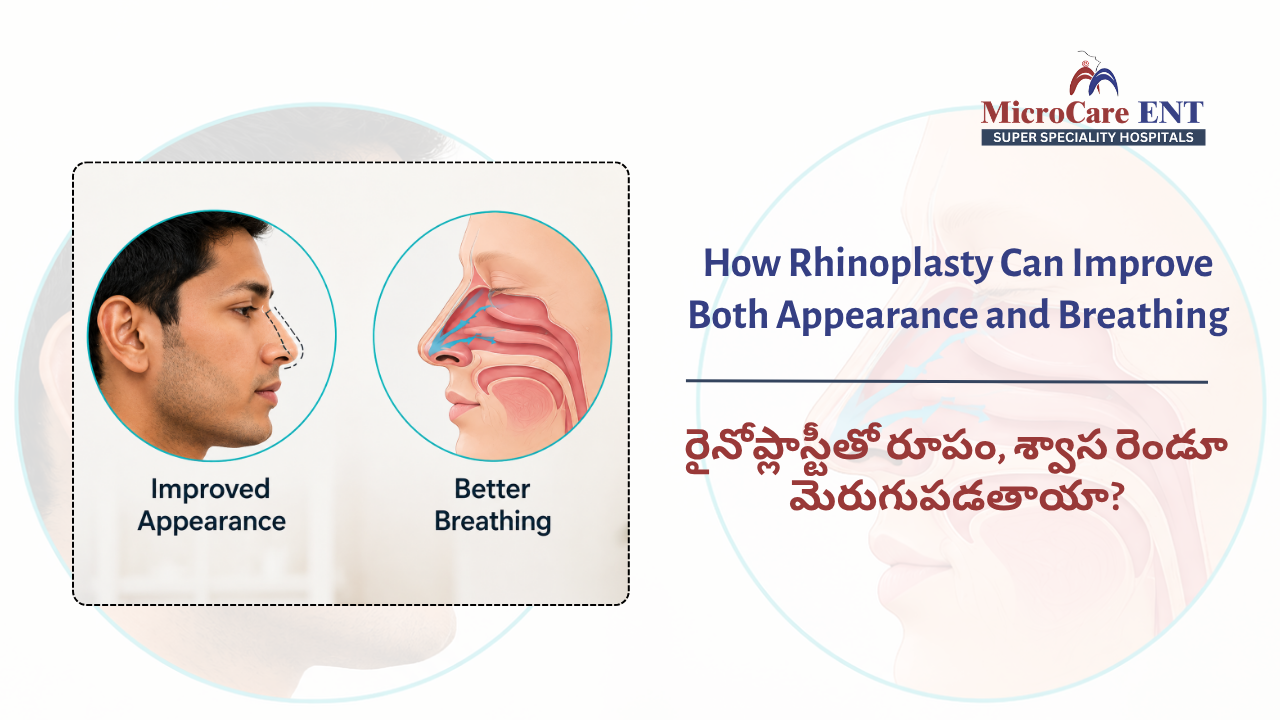
How Rhinoplasty Can Improve Both Appearance and Breathing

ENT

happy man after rhinoplasty surgery Hyderabad

Many people think rhinoplasty is only a cosmetic procedure designed to improve the shape of the nose. However, rhinoplasty can also provide significant functional benefits by correcting structural problems that affect breathing.

For individuals who are unhappy with the appearance of their nose and experience difficulty breathing, rhinoplasty offers a solution that addresses both concerns at the same time.

At MicroCare ENT Hospital & Research Institute, Hyderabad, advanced rhinoplasty procedures are performed to improve nasal appearance while restoring healthy breathing function.

Published By microcareenthospitals.com / Updated: May 30, 2026

What Is Rhinoplasty?

Rhinoplasty, commonly known as nose reshaping surgery, is a surgical procedure that modifies the shape, size, or structure of the nose.

The procedure may be performed to:

  • Improve facial appearance
  • Correct a crooked nose
  • Reduce or reshape a nasal hump
  • Repair nasal injuries
  • Improve breathing difficulties

Modern rhinoplasty combines cosmetic enhancement with functional correction whenever needed.

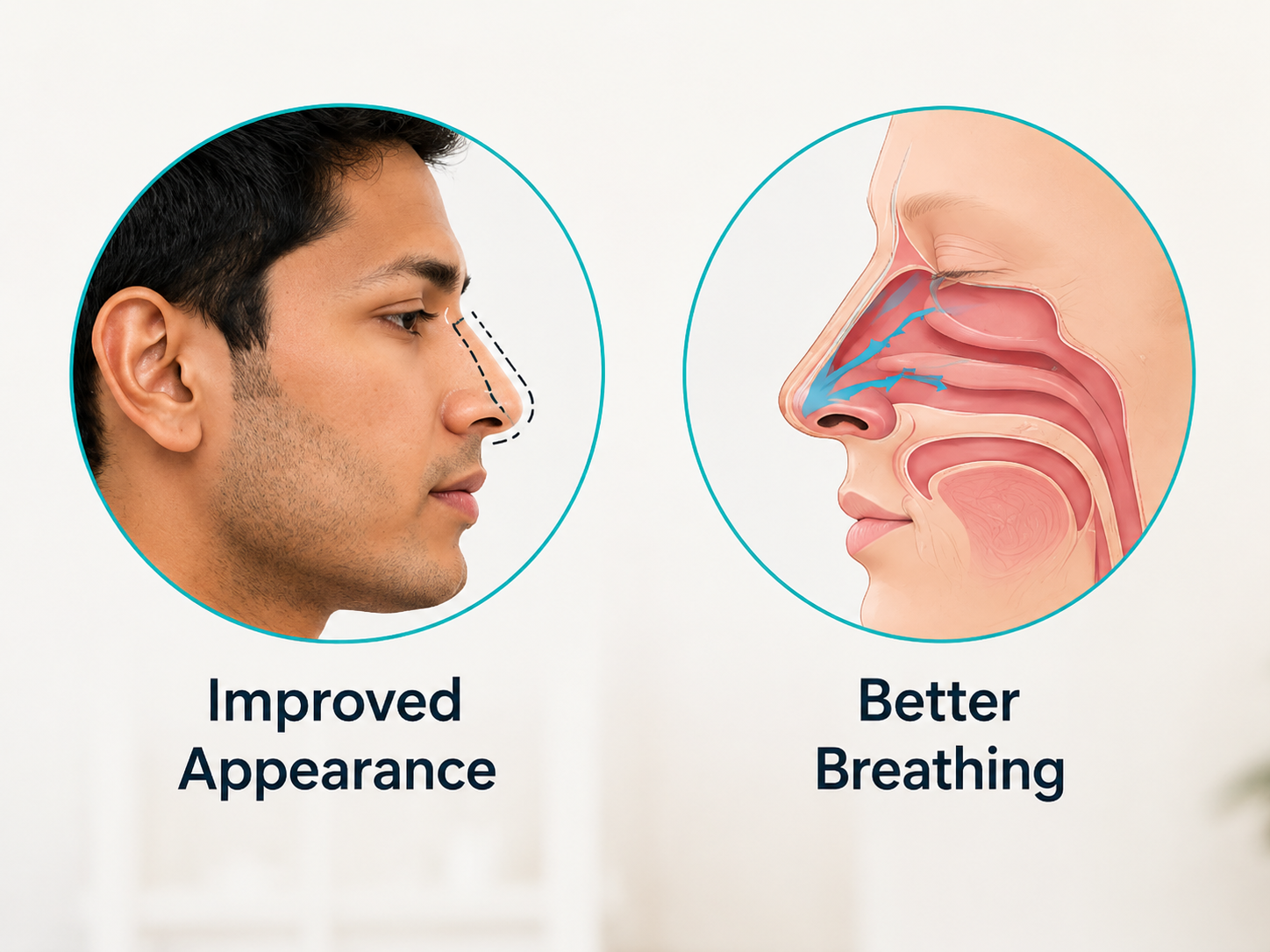
How Rhinoplasty Improves Appearance

The nose is one of the most prominent facial features and plays a major role in facial balance.

1. Correcting a Crooked Nose

A crooked nose can affect facial symmetry and self-confidence. Rhinoplasty can straighten the nasal structure and create a more balanced appearance.

2. Reducing a Nasal Hump

Many patients seek rhinoplasty to smooth a prominent bump on the bridge of the nose, creating a more refined profile.

3. Reshaping the Nasal Tip

The procedure can refine a wide, bulbous, drooping, or asymmetrical nasal tip.

4. Improving Facial Harmony

Rhinoplasty helps the nose blend naturally with other facial features, improving overall facial aesthetics.

How Rhinoplasty Improves Breathing

Besides cosmetic improvements, rhinoplasty can correct structural problems that interfere with airflow.

1. Correcting a Deviated Septum

A deviated nasal septum is one of the most common causes of nasal blockage.

Patients may experience:

  • Difficulty breathing
  • Chronic nasal congestion
  • Frequent sinus infections
  • Poor sleep quality

Septal correction performed during rhinoplasty can significantly improve airflow.

2. Opening Narrow Nasal Passages

Some individuals are born with narrow nasal structures that restrict breathing.

Rhinoplasty can widen airflow pathways and improve nasal function.

3. Repairing Nasal Injuries

Previous fractures or sports injuries can cause both cosmetic deformities and breathing difficulties.

Rhinoplasty helps restore normal nasal structure and function.

4. Improving Chronic Nasal Obstruction

Patients suffering from long-term nasal blockage may benefit from functional rhinoplasty that addresses underlying structural issues.

Who Is a Good Candidate for Rhinoplasty?

You may be a suitable candidate if you:

  • Are unhappy with your nose shape
  • Have a crooked or injured nose
  • Experience breathing difficulties
  • Have a deviated nasal septum
  • Are in good general health

An ENT specialist can determine the best treatment plan based on your concerns and nasal anatomy.

Benefits of Rhinoplasty

1. Cosmetic Benefits

  • Improved facial balance
  • Enhanced appearance
  • Better self-confidence
  • Natural-looking results

2. Functional Benefits

  • Improved breathing
  • Better airflow through the nose
  • Reduced nasal blockage
  • Improved sleep quality

Rhinoplasty Recovery

Recovery after rhinoplasty is generally straightforward.

Most patients experience:

  • Mild swelling
  • Temporary bruising
  • Nasal congestion

Most visible swelling improves within a few weeks, while final results continue to refine over several months.

Meet Our Expert ENT Specialist

👨‍⚕️ Prof. Dr. Sriprakash Vinnakota

MBBS, MS (ENT, Head & Neck Surgery)
Chief Consultant ENT Specialist & Microsurgeon

  • 26+ Years Experience
  • Expertise in Rhinoplasty, Septoplasty, and Advanced Nasal Surgery

  • Specialized care for both cosmetic and functional nose correction

  • Dr. Sriprakash provides personalized rhinoplasty solutions that focus on both appearance and breathing improvement.

Why Choose MicroCare ENT Hospital?

  • Advanced ENT diagnostic technology
  • Experienced sinus specialists
  • Comprehensive sinus care
  • Personalized treatment plans
  • Convenient location in Kukatpally & KPHB

Final Thoughts

Rhinoplasty is more than just a cosmetic procedure. It can help improve facial appearance, boost confidence, and significantly enhance breathing function.

If you are experiencing nasal obstruction or are unhappy with the shape of your nose, consulting an experienced ENT specialist can help you explore the best treatment options.

FAQs

Can rhinoplasty improve breathing problems?

Yes. Functional rhinoplasty can correct structural issues such as a deviated septum and improve airflow.

No. Rhinoplasty can improve both appearance and nasal function.

Most patients return to normal activities within 1–2 weeks, while full healing may take several months.

Yes. Rhinoplasty is commonly performed to straighten and reshape a crooked nose.

Most modern rhinoplasty techniques leave minimal or no visible scarring.

From MicroCare ENT Hospital to your inbox

Sign up for free and stay up to date on research advancements, health tips, current health topics, and expertise on managing health.

📞 Book Your Consultation Now

👨‍⚕️ Dr. Sriprakash Vinnakota (26+ Years of Experience)

Where Dr. Sriprakash Vinnakota Practices
Team of ENT Surgeons under Prof. Dr. Sriprakash Vinnakota provides advanced ENT, Head & Neck care at the following locations.

📍 MicroCare ENT Hospital – KPHB Colony, Kukatpally
Road No. 4, KPHB Colony, Hyderabad – 500072, Telangana, India

📍 Apollo Hospitals – Financial District
Financial District, Nanakramguda, Serilingampally, Hyderabad – 500032

📞 Book your appointment today: 9494940725 / 26
🌐 www.microcareenthospitals.com

Watch our Related Videos

Viral Videos

Playlist

8 Videos

Rhinoplasty Surgery Recovery: What to Expect After Nose Surgery

ENT

patient recovering after rhinoplasty surgery Hyderabad

Rhinoplasty, commonly known as a nose reshaping surgery, is one of the most popular facial procedures performed for both cosmetic and functional reasons. Whether you’re undergoing rhinoplasty to improve your appearance, correct a nasal deformity, or enhance breathing, understanding the recovery process is essential.

Many patients are concerned about how long recovery takes, when swelling subsides, and when they can return to normal activities. Knowing what to expect after surgery can help you prepare for a smoother healing journey.

At MicroCare ENT Hospital & Research Institute, Hyderabad, advanced rhinoplasty procedures are performed with a focus on both aesthetics and nasal function.

Published By microcareenthospitals.com / Updated: May 29, 2026

What Happens Immediately After Rhinoplasty?

After surgery, patients are usually monitored for a few hours before being discharged.

You may experience:

  • Mild discomfort
  • Nasal congestion
  • Swelling around the nose
  • Bruising around the eyes
  • Minor bleeding or drainage

These symptoms are normal and gradually improve over time.

Rhinoplasty Recovery Timeline

1. First Week

The first week is the most important phase of recovery.

Common experiences include:

  • Swelling and bruising
  • Nasal blockage
  • Mild pain or pressure
  • External nasal splint placement

Most patients return for a follow-up visit after 5–7 days to remove the splint.

2. Second Week

By the second week:

  • Most bruising starts fading
  • Swelling begins to reduce
  • Patients feel more comfortable socially

Many people return to work or college during this period.

3. First Month

During the first month:

  • Breathing improves gradually
  • Swelling continues to decrease
  • The nose starts taking its new shape

Strenuous activities should still be avoided.

4. Three to Six Months

Most visible swelling improves significantly.

Patients usually notice:

  • Better nasal definition
  • Improved breathing function
  • More refined appearance

5. One Year

Final rhinoplasty results become visible as the nose completely heals and settles into its new shape.

Common Recovery Symptoms

1. Swelling

Swelling is the most common part of rhinoplasty recovery. While major swelling improves within weeks, minor swelling may take several months to disappear.

2. Bruising Around the Eyes

Temporary bruising around the eyes is common and usually resolves within 1–2 weeks.

3. Nasal Congestion

Many patients feel like they have a blocked nose after surgery due to internal swelling.

4. Mild Discomfort

Pain is usually manageable with prescribed medications.

Tips for Faster Recovery

1. Follow Your Doctor’s Instructions

Post-operative care instructions play a major role in healing.

2. Sleep With Your Head Elevated

Keeping your head elevated reduces swelling and improves comfort.

3. Avoid Touching the Nose

Avoid pressure or accidental injury to the healing nose.

4. Stay Hydrated

Drinking plenty of water supports tissue healing.

5. Avoid Smoking and Alcohol

Smoking can delay healing and increase complications.

Activities to Avoid After Rhinoplasty

During recovery, avoid:

  • Heavy exercise
  • Swimming
  • Wearing heavy glasses on the nose
  • Blowing your nose forcefully
  • Contact sports

Your surgeon will advise when it is safe to resume normal activities.

When Should You Contact Your Doctor?

Seek medical attention if you experience:

  • Excessive bleeding
  • Severe pain
  • High fever
  • Difficulty breathing
  • Sudden swelling increase

Prompt evaluation helps prevent complications.

Benefits of Rhinoplasty

Many patients choose rhinoplasty to:

  • Improve facial harmony
  • Correct a crooked nose
  • Enhance breathing
  • Repair injury-related deformities
  • Boost self-confidence

Patients in Kukatpally, KPHB, and Hyderabad increasingly seek rhinoplasty for both cosmetic and functional improvements.

Meet Our Expert ENT Specialist

👨‍⚕️ Prof. Dr. Sriprakash Vinnakota

MBBS, MS (ENT, Head & Neck Surgery)
Chief Consultant ENT Specialist & Microsurgeon

  • 26+ Years Experience
  • Expertise in Rhinoplasty, Septoplasty, and Advanced Nasal Surgery

  • Specialized care for cosmetic and functional nose correction

Why Choose MicroCare ENT Hospital?

  • Advanced ENT diagnostic technology
  • Experienced sinus specialists
  • Comprehensive sinus care
  • Personalized treatment plans
  • Convenient location in Kukatpally & KPHB

Final Thoughts

Rhinoplasty recovery is a gradual process, but with proper care and realistic expectations, patients can achieve excellent results. Understanding the healing stages helps reduce anxiety and ensures a smoother recovery experience.

If you’re considering nose reshaping surgery or have questions about recovery, consult an experienced ENT specialist for personalized guidance.

FAQs

1. How long does rhinoplasty recovery take?

Most patients recover within 2–4 weeks, but complete healing and final results may take up to one year.

Most patients experience mild discomfort rather than severe pain, which can be managed with medications.

Many patients return to work within 1–2 weeks, depending on their recovery progress.

Major swelling improves within a few weeks, while minor swelling can take several months to fully resolve.

Yes. Functional rhinoplasty can correct structural issues that cause nasal obstruction and breathing difficulties.

From MicroCare ENT Hospital to your inbox

Sign up for free and stay up to date on research advancements, health tips, current health topics, and expertise on managing health.

📞 Book Your Consultation Now

MicroCare ENT Hospital & Research Institute
📍 KPHB Colony, Kukatpally | Jubilee Hills
📲 9494940725 / 26
🌐 https://microcareenthospitals.com/sinusitis-treatment-hyderabad/

To learn more about ENT, visit our page MicroCare ENT.

Watch our Related Videos

Viral Videos

Playlist

8 Videos

Puberphonia Surgery vs Voice Therapy: Which Is Better?

ENT

puberphonia voice therapy vs surgery Hyderabad

Puberphonia is a voice disorder where a male continues to have a high-pitched or childlike voice even after puberty. This condition can affect confidence, communication, and emotional well-being.

Fortunately, effective treatment options are available. The two main approaches are voice therapy and puberphonia surgery. Many patients wonder which option is better and whether surgery is always necessary.

At MicroCare ENT Hospital & Research Institute, we provide advanced voice disorder treatment and puberphonia care in Hyderabad.

Published By microcareenthospitals.com / Updated: May 26, 2026

What Is Puberphonia?

Puberphonia occurs when an adolescent or adult male continues using a high-pitched voice despite normal development of the vocal cords and larynx.

Common symptoms include:

  •  High-pitched voice after puberty
  • Voice cracking
  • Difficulty maintaining deep voice tone
  • Low confidence while speaking
  • Social embarrassment

Patients in Kukatpally, KPHB, and Hyderabad often seek ENT care for persistent voice problems.

Voice Therapy for Puberphonia

Voice therapy is usually the first and most effective treatment for puberphonia.

Speech and voice therapists train patients to:

  • Lower voice pitch naturally
  • Improve vocal control
  • Use proper breathing techniques
  • Develop healthy speaking habits

Benefits of Voice Therapy

  • Non-surgical treatment
  • Safe and painless
  • Natural voice improvement
  • Improves confidence and communication
  • High success rate in many patients

Many patients notice improvement within a few therapy sessions.

Who Benefits Most From Voice Therapy?

Voice therapy is ideal for:

  • Mild to moderate puberphonia
  • Patients without structural vocal cord problems
  • Individuals willing to practice exercises regularly

Puberphonia Surgery

Surgery is considered only in selected cases where voice therapy does not provide sufficient improvement.

The goal of surgery is to:

  • Lower vocal pitch
  • Modify vocal cord tension
  • Create a deeper masculine voice

Advanced ENT surgical techniques help improve voice quality while preserving natural speech.

Benefits of Puberphonia Surgery

  • Permanent pitch reduction
  • Faster structural correction
  • Helpful in difficult or resistant cases

Risks of Surgery

Like any procedure, surgery may involve:

  • Temporary voice weakness
  • Vocal fatigue
  • Healing time
  • Rare voice quality changes

This is why surgery is usually recommended only after proper evaluation.

Voice Therapy vs Surgery – Key Differences

FeatureVoice TherapySurgery
TypeNon-surgicalSurgical
RecoveryMinimalRequires healing
Risk LevelVery lowModerate
CostLowerHigher
Success RateHigh in most casesUsed for resistant cases
First-Line TreatmentYesUsually No

Which Treatment Is Better?

For most patients, voice therapy is the preferred and first-line treatment because it is:

  • Safe
  • Effective
  • Non-invasive
  • Cost-effective

Surgery is usually reserved for patients who:

  • Do not respond to therapy
  • Have persistent severe voice issues
  • Need additional structural correction

An experienced ENT specialist can determine the best treatment approach after evaluation.

How Is Puberphonia Diagnosed?

Diagnosis may include:

  • Voice analysis
  • Laryngoscopy (vocal cord examination)
  • Speech assessment
  • ENT evaluation

At MicroCare ENT Hospital, advanced voice diagnostic methods help identify the exact cause of voice disorders.

Meet Our Expert ENT Specialist

👨‍⚕️ Prof. Dr. Sriprakash Vinnakota

MBBS, MS (ENT, Head & Neck Surgery)
Chief Consultant ENT Specialist & Microsurgeon

  • 26+ Years Experience
  • Expertise in voice disorders, vocal cord evaluation, and advanced ENT care

    Dr. Sriprakash provides personalized treatment for voice-related disorders including puberphonia and vocal cord problems.

Why Choose MicroCare ENT Hospital?

  • Advanced ENT diagnostic technology
  • Experienced sinus specialists
  • Comprehensive sinus care
  • Personalized treatment plans
  • Convenient location in Kukatpally & KPHB

Final Thoughts

Puberphonia can affect communication and self-confidence, but effective treatment is available. In most cases, voice therapy successfully improves voice quality without surgery.

Surgery may be considered only when necessary after expert ENT evaluation.

If you are experiencing persistent high-pitched voice after puberty, consult an ENT specialist for proper diagnosis and treatment.

FAQs

1. Is voice therapy enough for puberphonia?

Yes, most patients improve significantly with voice therapy alone.

Surgery is considered when voice therapy does not provide sufficient improvement.

Yes, surgery usually provides long-term pitch reduction when properly performed.

Improvement may occur within a few sessions, but treatment duration varies depending on the patient.

Yes, many patients experience social anxiety and low confidence due to voice-related concerns.

From MicroCare ENT Hospital to your inbox

Sign up for free and stay up to date on research advancements, health tips, current health topics, and expertise on managing health.

📞 Book Your Consultation Now

MicroCare ENT Hospital & Research Institute
📍 KPHB Colony, Kukatpally | Jubilee Hills
📲 9494940725 / 26
🌐 https://microcareenthospitals.com/sinusitis-treatment-hyderabad/

To learn more about ENT, visit our page MicroCare ENT.

Watch our Related Videos

Viral Videos

Playlist

8 Videos

What Is Puberphonia? Causes & Treatment Explained

ENT

puberphonia treatment high pitch voice disorder Hyderabad

Voice changes are a natural part of puberty in males. However, some individuals continue to have a high-pitched or childlike voice even after puberty. This condition is known as Puberphonia.

Puberphonia can affect confidence, communication, social interaction, and emotional well-being. Fortunately, with proper diagnosis and treatment, most patients can achieve a normal masculine voice.

At MicroCare ENT Hospital & Research Institute, we provide advanced voice disorder treatment and puberphonia therapy in Hyderabad.

Published By microcareenthospitals.com / Updated: May 23, 2026

What Is Puberphonia?

Puberphonia is a voice disorder in which an adolescent or adult male continues to speak in a high-pitched voice after puberty, despite having a normally developed larynx (voice box).

It is also called:

  • Functional falsetto
  • Mutational falsetto
  • Incomplete voice change disorder

The condition is not usually caused by structural abnormalities but is often related to improper voice usage or psychological factors.

Common Symptoms of Puberphonia

People with puberphonia may experience:

  • High-pitched voice after puberty
  • Difficulty maintaining deep voice tone
  • Voice cracking or instability
  • Low confidence while speaking
  • Social anxiety or embarrassment
  • Communication difficulties

Patients in Kukatpally, KPHB, and Hyderabad commonly seek treatment for persistent voice change problems.

Causes of Puberphonia

Several factors may contribute to puberphonia.

1. Improper Voice Habits

Some individuals continue using a childhood voice pattern even after physical voice maturation.

2. Psychological Factors

Stress, anxiety, emotional issues, or fear of adulthood may influence voice behavior.

3. Delayed Voice Adaptation

Although the vocal cords mature normally, the patient may not transition naturally to a lower-pitched voice.

4. Rare Medical Conditions

In some cases, hormonal imbalance or vocal cord problems may contribute to voice disorders.

How Is Puberphonia Diagnosed?

At MicroCare ENT Hospital, ENT specialists perform a detailed evaluation to identify the cause of voice problems.

Diagnosis may include:

  • Voice assessment
  • Laryngoscopy (vocal cord examination)
  • Speech evaluation
  • Psychological assessment (if needed)

These tests help rule out structural or neurological causes.

Puberphonia Treatment in Hyderabad

The good news is that puberphonia is highly treatable in most cases.

1. Voice Therapy

Voice therapy is the most effective treatment for puberphonia.

Speech and voice therapists help patients:

  • Develop proper vocal techniques
  • Lower voice pitch naturally
  • Improve voice confidence
  • Strengthen vocal control

Many patients experience significant improvement within a short period.

2. Counseling and Psychological Support

Emotional support and confidence-building techniques may help in certain cases.

3. Surgical Treatment

Surgery is rarely required and is considered only when voice therapy does not produce sufficient improvement.

Benefits of Early Treatment

Early treatment can help:

  • Improve communication
  • Increase self-confidence
  • Reduce social anxiety
  • Enhance professional and personal interactions

Recovery and Results

Most patients respond well to voice therapy and achieve noticeable improvement in voice quality.

Regular practice and follow-up sessions help maintain long-term results.

Meet Our Expert ENT Specialist

👨‍⚕️ Prof. Dr. Sriprakash Vinnakota

MBBS, MS (ENT, Head & Neck Surgery)
Chief Consultant ENT Specialist & Microsurgeon

  • 26+ Years Experience
  • Expertise in voice disorders, vocal cord evaluation, and advanced ENT care

    Dr. Sriprakash provides personalized treatment for voice-related disorders including puberphonia and vocal cord problems.

Why Choose MicroCare ENT Hospital?

  • Advanced ENT diagnostic technology
  • Experienced sinus specialists
  • Comprehensive sinus care
  • Personalized treatment plans
  • Convenient location in Kukatpally & KPHB

Final Thoughts

Puberphonia can affect communication and self-confidence, but effective treatment is available. Early diagnosis and proper voice therapy can help individuals achieve a natural masculine voice and improve quality of life.

If you or your loved one is experiencing persistent high-pitched voice after puberty, consult an ENT specialist for expert evaluation and treatment.

FAQs

1. What is puberphonia?

Puberphonia is a voice disorder in which a male continues to speak in a high-pitched voice even after puberty.

Yes, most patients improve significantly with voice therapy and speech exercises.

Improper voice habits, psychological factors, and delayed voice adaptation are common causes.

No, with proper treatment and therapy, most patients achieve long-term voice improvement.

You should consult an ENT specialist if high-pitched voice continues after puberty or affects confidence and communication.

From MicroCare ENT Hospital to your inbox

Sign up for free and stay up to date on research advancements, health tips, current health topics, and expertise on managing health.

📞 Book Your Consultation Now

MicroCare ENT Hospital & Research Institute
📍 KPHB Colony, Kukatpally | Jubilee Hills
📲 9494940725 / 26
🌐 https://microcareenthospitals.com/sinusitis-treatment-hyderabad/

To learn more about ENT, visit our page MicroCare ENT.

Watch our Related Videos

Viral Videos

Playlist

8 Videos

Why Do People Snore? Common Causes Explained

ENT

snoring causes blocked nose sleep apnea Hyderabad

Snoring is a common sleep-related problem that affects both adults and children. While occasional snoring may not seem serious, frequent or loud snoring can disturb sleep quality and sometimes indicate an underlying health issue.

Many people ignore snoring until it begins affecting daily life, sleep, or breathing. Understanding the causes of snoring is the first step toward effective treatment.

At MicroCare ENT Hospital & Research Institute, we provide advanced snoring and sleep apnea treatment in Hyderabad with expert ENT care.

Published By microcareenthospitals.com / Updated: May 22, 2026

What Causes Snoring?

Snoring occurs when airflow through the nose or throat becomes partially blocked during sleep. This causes surrounding tissues to vibrate, producing the snoring sound.

Several factors can contribute to airway narrowing and breathing difficulty during sleep.

Common Causes of Snoring

1. Nasal Blockage

Conditions such as:

  • Sinusitis
  • Allergies
  • Deviated nasal septum
  • Nasal polyps

can block airflow and increase snoring.

Patients in Kukatpally, KPHB, and Hyderabad often experience snoring related to sinus and nasal problems.

2. Obesity or Weight Gain

Excess fat around the neck can narrow the airway and increase breathing obstruction during sleep.

3. Enlarged Tonsils or Adenoids

Large tonsils or adenoids can partially block the airway, especially in children.

4. Sleeping Position

Sleeping on the back may cause the tongue and soft tissues to collapse backward, narrowing the airway.

5. Alcohol and Smoking

Alcohol relaxes throat muscles, while smoking irritates airway tissues and increases inflammation.

6. Sleep Apnea

Loud snoring with pauses in breathing may indicate obstructive sleep apnea, a serious sleep disorder requiring medical attention.

Warning Signs That Snoring May Be Serious

Consult an ENT specialist if snoring is associated with:

  • Pauses in breathing during sleep
  • Excessive daytime sleepiness
  • Morning headaches
  • Difficulty concentrating
  • Poor sleep quality
  • Loud or chronic snoring

How ENT Specialists Diagnose Snoring Problems

At MicroCare ENT Hospital, diagnosis may include:

  • Nasal and throat examination
  • Nasal endoscopy
  • Sleep study (if required)
  • Evaluation for sleep apnea

These tests help identify the exact cause of snoring and guide treatment.

Snoring Treatment in Hyderabad

Treatment depends on the underlying cause.

1. Lifestyle Changes

  • Weight management
  • Sleeping on the side
  • Avoiding alcohol before sleep
  • Quitting smoking

2. Medical Treatment

  • Nasal sprays
  • Allergy treatment
  • Sinus treatment

3. Advanced ENT Procedures

For structural airway problems:

  • Septoplasty
  • Tonsil surgery
  • Laser snoring treatment
  • Sleep apnea management

MicroCare ENT Hospital offers advanced snoring treatment with modern ENT techniques.

Can Snoring Be Prevented?

You can reduce snoring risk by:

  • Maintaining healthy weight
  • Treating allergies early
  • Staying hydrated
  • Sleeping with proper head elevation
  • Avoiding smoking and alcohol

Meet Our Expert ENT Specialist

👨‍⚕️ Prof. Dr. Sriprakash Vinnakota

MBBS, MS (ENT, Head & Neck Surgery)
Chief Consultant ENT Specialist & Microsurgeon

  • 26+ Years Experience
  • Expertise in snoring treatment, sleep apnea care, and advanced ENT procedures

    Dr. Sriprakash provides comprehensive evaluation and personalized treatment for snoring and sleep-related breathing disorders.

Why Choose MicroCare ENT Hospital?

  • Advanced ENT diagnostic technology
  • Experienced sinus specialists
  • Comprehensive sinus care
  • Personalized treatment plans
  • Convenient location in Kukatpally & KPHB

Final Thoughts

Snoring is not always harmless. Persistent or loud snoring may indicate underlying ENT or sleep-related problems that require proper medical evaluation.

Early diagnosis and treatment can improve sleep quality, breathing, and overall health.

If you or your loved one is struggling with chronic snoring, consult an ENT specialist for expert care and treatment.

FAQs

1. Is snoring always a serious problem?

Occasional snoring may not be serious, but chronic or loud snoring can indicate sleep apnea or airway obstruction.

Yes, blocked nasal passages due to sinusitis or allergies can worsen snoring.

Yes, sleeping on the back can increase airway blockage and worsen snoring.

You should consult a doctor if snoring is loud, frequent, or associated with breathing pauses and daytime fatigue.

Yes, ENT specialists can identify and treat underlying causes such as sinus problems, deviated septum, enlarged tonsils, or sleep apnea.

From MicroCare ENT Hospital to your inbox

Sign up for free and stay up to date on research advancements, health tips, current health topics, and expertise on managing health.

📞 Book Your Consultation Now

MicroCare ENT Hospital & Research Institute
📍 KPHB Colony, Kukatpally | Jubilee Hills
📲 9494940725 / 26
🌐 https://microcareenthospitals.com/sinusitis-treatment-hyderabad/

To learn more about ENT, visit our page MicroCare ENT.

Watch our Related Videos

Viral Videos

Playlist

8 Videos

Best ENT Hospital for Cochlear Implants in Hyderabad

ENT

cochlear implant treatment hearing loss Hyderabad ENT

Hearing loss can significantly affect communication, education, career, and overall quality of life. For individuals with severe hearing impairment who do not benefit from hearing aids, cochlear implants offer a life-changing solution.

Choosing the right hospital and experienced ENT specialist is essential for successful treatment and long-term hearing improvement.

At MicroCare ENT Hospital & Research Institute, we provide advanced cochlear implant surgery and comprehensive hearing loss treatment in Hyderabad.

Published By microcareenthospitals.com / Updated: May 18, 2026

What Is a Cochlear Implant?

A cochlear implant is an advanced electronic hearing device designed for people with severe to profound hearing loss.

Unlike hearing aids that only amplify sound, cochlear implants:

  • Convert sound into electrical signals
  • Directly stimulate the auditory nerve
  • Help improve hearing and speech understanding

Cochlear implants are highly effective for both children and adults with significant hearing loss.

Who Needs a Cochlear Implant?

Cochlear implants may be recommended for individuals who:

  • Have severe hearing loss
  • Struggle to understand speech
  • Do not benefit from hearing aids
  • Experience communication difficulties
  • Have delayed speech development in children

An evaluation by an experienced ENT specialist is necessary to determine suitability.

Why Choosing the Right ENT Hospital Matters

Successful cochlear implant treatment depends on:

  • Accurate diagnosis
  • Advanced surgical expertise
  • Modern implant technology
  • Post-surgery rehabilitation
  • Long-term hearing support

A specialized ENT hospital ensures better outcomes and comprehensive patient care.

Why MicroCare ENT Hospital Is Trusted for Cochlear Implants

MicroCare ENT Hospital is recognized for advanced ENT care and hearing restoration treatment in Hyderabad.

1. Advanced Diagnostic Facilities

We provide:

  • Hearing evaluation
  • Audiology testing
  • CT and MRI guidance
  • Speech and hearing assessment

2. Experienced ENT Specialists

Our team has expertise in:

  • Cochlear implant surgery
  • Advanced ear surgeries
  • Hearing rehabilitation
  • Pediatric and adult hearing care

3. Personalized Treatment Plans

Every patient receives individualized treatment based on:

  • Age
  • Hearing level
  • Speech ability
  • Overall health condition

4. Advanced Surgical Techniques

We use modern surgical methods for:

  • Safe procedures
  • Faster recovery
  • Improved hearing outcomes

Cochlear Implant Surgery Procedure

The treatment process usually includes:

  • Hearing assessment
  • ENT evaluation
  • Imaging scans
  • Surgical implant placement
  • Device activation
  • Speech and hearing rehabilitation

Patients from Kukatpally, KPHB, and across Hyderabad visit MicroCare ENT Hospital for advanced hearing care.

Benefits of Cochlear Implants

  • Improved hearing clarity
  • Better speech understanding
  • Enhanced communication
  • Better quality of life
  • Improved social interaction

Many patients experience significant improvement after proper rehabilitation and therapy.

Recovery and Rehabilitation

Recovery after surgery is usually smooth, but rehabilitation is important for achieving the best results.

Patients may require:

  • Hearing training
  • Speech therapy
  • Regular follow-up visits

With proper rehabilitation, many patients experience significant improvement in hearing and communication.

Meet Our Expert ENT Specialist

👨‍⚕️ Prof. Dr. Sriprakash Vinnakota

MBBS, MS (ENT, Head & Neck Surgery)
Chief Consultant ENT Specialist & Microsurgeon

  • 26+ Years Experience
  • Expertise in cochlear implants, ear surgery, and advanced ENT care

Dr. Sriprakash is known for providing advanced ear care and personalized ENT treatment in Hyderabad.

Why Patients Choose MicroCare ENT Hospital

  • Advanced ENT diagnostic technology
  • Experienced sinus specialists
  • Comprehensive sinus care
  • Personalized treatment plans
  • Convenient location in Kukatpally & KPHB

Final Thoughts

Cochlear implants can transform the lives of individuals with severe hearing loss. Choosing the right ENT hospital and experienced specialist is the first step toward better hearing and improved communication.

If you or your loved one is struggling with hearing difficulties, consult an expert ENT specialist for proper evaluation and advanced treatment options.

FAQs

1. Who is eligible for cochlear implant surgery?

People with severe hearing loss who do not benefit from hearing aids may be suitable candidates for cochlear implants.

Yes, cochlear implant surgery is safe and commonly performed by experienced ENT specialists.

Most patients recover within a few weeks, while hearing improvement continues gradually with rehabilitation.

Yes, cochlear implants are highly beneficial for children with severe hearing loss and can improve speech development.

Speech therapy and hearing rehabilitation help patients adapt to the implant and improve hearing outcomes.

From MicroCare ENT Hospital to your inbox

Sign up for free and stay up to date on research advancements, health tips, current health topics, and expertise on managing health.

📞 Book Your Consultation Now

MicroCare ENT Hospital & Research Institute
📍 KPHB Colony, Kukatpally | Jubilee Hills
📲 9494940725 / 26
🌐 https://microcareenthospitals.com/sinusitis-treatment-hyderabad/

To learn more about ENT, visit our page MicroCare ENT.

Watch our Related Videos

Viral Videos

Playlist

8 Videos

Signs You May Need a Cochlear Implant

ENT

warning signs severe hearing loss cochlear implant Hyderabad

Hearing loss can slowly affect communication, confidence, education, and overall quality of life. While hearing aids help many people, some individuals with severe hearing loss may require a more advanced solution — a cochlear implant.

Recognizing the warning signs early is important for timely treatment and better hearing outcomes.

At MicroCare ENT Hospital & Research Institute, we provide advanced hearing loss treatment and cochlear implant care in Hyderabad.

Published By microcareenthospitals.com / Updated: May 16, 2026

What Is a Cochlear Implant?

A cochlear implant is a small electronic device designed to help people with severe hearing loss hear sounds more clearly.

Unlike hearing aids, which only amplify sound, cochlear implants directly stimulate the auditory nerve and improve speech understanding.

Common Signs You May Need a Cochlear Implant

1. Hearing Aids No Longer Help

If hearing aids are not improving your ability to understand conversations, it may indicate severe hearing loss requiring advanced treatment.

2. Difficulty Understanding Speech

Many patients can hear sounds but cannot clearly understand words, especially:

  • In crowded places
  • During phone calls
  • In group conversations

3. Frequently Asking Others to Repeat

If you often ask people to repeat themselves, it may be a sign of worsening hearing ability.

4. Increasing TV or Mobile Volume

Constantly increasing the volume on devices is a common warning sign.

5. Trouble Hearing High-Pitched Sounds

Difficulty hearing children’s voices, alarms, or phone notifications may indicate severe hearing damage.

6. Delayed Speech Development in Children

Children with hearing loss may:

  • Not respond to sounds
  • Have delayed speech
  • Show difficulty learning words

Early diagnosis is very important for better speech and hearing development.

Who Can Benefit from Cochlear Implants?

Cochlear implants may help:

  • Adults with severe hearing loss
  • Children with congenital hearing impairment
  • Patients who gain little benefit from hearing aids
  • Individuals struggling with speech understanding

Patients in Kukatpally, KPHB, and Hyderabad increasingly choose cochlear implants for advanced hearing restoration.

Causes of Severe Hearing Loss

Common causes include:

  • Aging-related hearing loss
  • Genetic conditions
  • Ear infections
  • Noise exposure
  • Birth-related hearing problems
  • Injury or trauma

How Is Cochlear Implant Eligibility Diagnosed?

At MicroCare ENT Hospital, evaluation may include:

  • Hearing tests (Audiometry)
  • Speech understanding tests
  • CT or MRI scans
  • ENT examination

These tests help determine whether cochlear implant surgery is suitable.

Benefits of Cochlear Implants

  • Improved hearing clarity
  • Better speech understanding
  • Enhanced communication
  • Better quality of life
  • Improved social interaction

Many patients experience significant improvement after proper rehabilitation and therapy.

Cochlear Implant Surgery in Hyderabad

Advanced cochlear implant surgery is performed using modern techniques for:

  • Safe procedure
  • Faster recovery
  • Better hearing outcomes

At MicroCare ENT Hospital, patients receive complete care including diagnosis, surgery, activation, and rehabilitation.

Meet Our Expert ENT Specialist

👨‍⚕️ Prof. Dr. Sriprakash Vinnakota

MBBS, MS (ENT, Head & Neck Surgery)
Chief Consultant ENT Specialist & Microsurgeon

  • 26+ Years Experience
  • Expertise in cochlear implants, ear surgery, and advanced ENT care

Dr. Sriprakash is known for providing advanced ear care and personalized ENT treatment in Hyderabad.

Why Choose MicroCare ENT Hospital?

  • Advanced ENT diagnostic technology
  • Experienced sinus specialists
  • Comprehensive sinus care
  • Personalized treatment plans
  • Convenient location in Kukatpally & KPHB

Final Thoughts

Severe hearing loss should never be ignored, especially when it affects communication and daily life. Early diagnosis and advanced treatment can significantly improve hearing and quality of life.

If you notice warning signs of hearing loss, consult an ENT specialist for proper evaluation and treatment guidance.

FAQs

1. How do I know if I need a cochlear implant?

You may need a cochlear implant if hearing aids no longer improve your ability to understand speech or if you have severe hearing loss.

No, cochlear implants can benefit both children and adults with severe hearing impairment.

Yes, cochlear implant surgery is a safe and commonly performed procedure when done by experienced ENT specialists.

Cochlear implants significantly improve hearing and speech understanding, but hearing quality may differ from natural hearing.

Most patients recover within a few weeks, followed by activation and hearing rehabilitation sessions.

From MicroCare ENT Hospital to your inbox

Sign up for free and stay up to date on research advancements, health tips, current health topics, and expertise on managing health.

📞 Book Your Consultation Now

MicroCare ENT Hospital & Research Institute
📍 KPHB Colony, Kukatpally | Jubilee Hills
📲 9494940725 / 26
🌐 https://microcareenthospitals.com/sinusitis-treatment-hyderabad/

To learn more about ENT, visit our page MicroCare ENT.

Watch our Related Videos

Viral Videos

Playlist

8 Videos

Why Is My Hearing Decreasing Slowly? Common Causes Explained

ENT

slow hearing loss symptoms ear problems Hyderabad

Hearing loss often develops gradually, making it difficult to notice in the early stages. Many people ignore mild hearing difficulties until conversations become unclear or everyday sounds seem quieter than before.

Slow hearing loss can affect people of all ages and may result from aging, infections, noise exposure, or underlying ear conditions. Early diagnosis is important to prevent further hearing damage and improve quality of life.

At MicroCare ENT Hospital & Research Institute, we provide advanced hearing evaluation and hearing loss treatment in Hyderabad.

Published By microcareenthospitals.com / Updated: May 15, 2026

Common Signs of Gradual Hearing Loss

Many patients do not realize their hearing is decreasing slowly because symptoms develop over time.

Common Symptoms Include:

  • Difficulty hearing conversations clearly
  • Frequently asking people to repeat themselves
  • Increasing TV or phone volume
  • Trouble hearing in noisy places
  • Ringing sound in the ears (tinnitus)
  • Feeling like others are speaking softly

Patients in Kukatpally, KPHB, and Hyderabad commonly seek ENT consultation for these symptoms.

Common Causes of Slow Hearing Loss

1. Aging (Age-Related Hearing Loss)

Natural aging can gradually damage the inner ear and reduce hearing ability over time.

This is one of the most common causes of hearing loss in adults.

2. Repeated Ear Infections

Chronic ear infections may damage the eardrum or middle ear structures, affecting hearing.

Persistent ear discharge or infections should never be ignored.

3. Excessive Noise Exposure

Long-term exposure to:

  • Loud music
  • Traffic noise
  • Industrial machinery
  • Earphones at high volume

can permanently damage hearing.

4. Earwax Blockage

Excess earwax can block sound transmission and reduce hearing temporarily.

Professional ear cleaning by an ENT specialist is recommended.

5. Eardrum Damage

A perforated or damaged eardrum may cause gradual hearing reduction and repeated infections.

Some patients may require tympanoplasty surgery in Hyderabad for treatment.

6. Inner Ear Disorders

Conditions affecting the inner ear or auditory nerve can lead to progressive hearing loss.

When Should You See an ENT Specialist?

Consult an ENT specialist if:

  • Hearing loss is gradually worsening
  • You experience ringing in the ears
  • Ear infections occur repeatedly
  • Difficulty hearing conversations
  • Ear pain or dizziness is present

Early treatment can help protect hearing and prevent complications.

How Hearing Loss Is Diagnosed

At MicroCare ENT Hospital, hearing evaluation may include:

  • Audiometry (hearing test)
  • Ear examination
  • Tympanometry
  • Microscopic ear evaluation

Advanced diagnostic technology helps identify the exact cause of hearing loss.

Hearing Loss Treatment in Hyderabad

Treatment depends on the underlying cause.

1. Medical Treatment

  • Ear infection treatment
  • Wax removal
  • Anti-inflammatory medications

2. Hearing Aids

For moderate hearing loss, hearing aids may improve hearing clarity and communication.

3. Surgical Treatment

Some conditions may require:

  • Tympanoplasty surgery
  • Ear reconstruction procedures
  • Cochlear implant evaluation

Tips to Protect Your Hearing

  • Avoid loud noise exposure
  • Reduce earphone volume
  • Keep ears dry and clean
  • Treat ear infections early
  • Avoid inserting objects into the ear

Benefits of Tympanoplasty Surgery

  • Improved hearing ability
  • Reduced ear infections
  • Better ear protection
  • Improved quality of life

Early treatment can prevent long-term hearing complications.

Meet Our Expert ENT Specialist

👨‍⚕️ Prof. Dr. Sriprakash Vinnakota

MBBS, MS (ENT, Head & Neck Surgery)
Chief Consultant ENT Specialist & Microsurgeon

  • 26+ Years Experience
  • Expertise in ear surgery, tympanoplasty, and advanced ENT procedures

Dr. Sriprakash is known for providing advanced ear care and personalized ENT treatment in Hyderabad.

Why Choose MicroCare ENT Hospital?

  • Advanced ENT diagnostic technology
  • Experienced sinus specialists
  • Comprehensive sinus care
  • Personalized treatment plans
  • Convenient location in Kukatpally & KPHB

Final Thoughts

Gradual hearing loss should never be ignored, as early diagnosis can prevent permanent hearing damage and improve quality of life.

If you are noticing difficulty hearing conversations or increased ear-related symptoms, consult an ENT specialist for proper evaluation and treatment.

FAQs

1. Why is my hearing decreasing slowly?

Gradual hearing loss may occur due to aging, repeated ear infections, noise exposure, or inner ear problems.

Yes, many hearing problems can be treated with medications, hearing aids, or surgical procedures depending on the cause.

Some types of hearing loss are temporary, while others may be permanent if not treated early.

Yes, chronic ear infections can damage the eardrum and middle ear, leading to hearing problems.

You should consult an ENT doctor if hearing difficulty is worsening, persistent, or associated with ear pain, ringing, or infections.

From MicroCare ENT Hospital to your inbox

Sign up for free and stay up to date on research advancements, health tips, current health topics, and expertise on managing health.

📞 Book Your Consultation Now

MicroCare ENT Hospital & Research Institute
📍 KPHB Colony, Kukatpally | Jubilee Hills
📲 9494940725 / 26
🌐 https://microcareenthospitals.com/sinusitis-treatment-hyderabad/

To learn more about ENT, visit our page MicroCare ENT.

Watch our Related Videos

Viral Videos

Playlist

8 Videos