

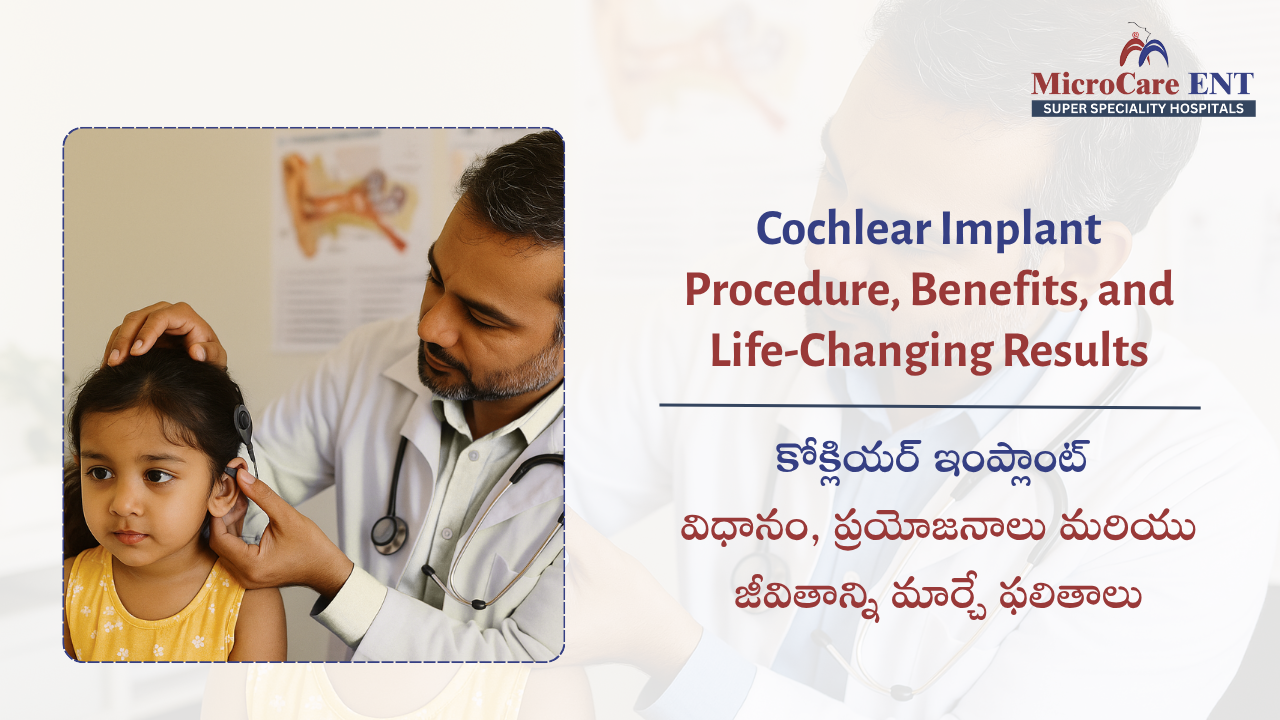

Cochlear Implant – Procedure, Benefits, and Life-Changing Results

Thyroid

A cochlear implant is a revolutionary medical device designed to help people with severe hearing loss or deafness experience sound again. Unlike traditional hearing aids that amplify sound, a cochlear implant directly stimulates the auditory nerve, offering a clear and natural hearing experience. In this blog, we’ll explore how cochlear implants work, their benefits, and what patients can expect before and after the surgery.

Published By microcareenthospitals.com / Updated: 15 OCT , 2025

What Is a Cochlear Implant?

A cochlear implant is a small, complex electronic device that provides a sense of sound to individuals who are profoundly deaf or severely hard of hearing. It consists of two main parts:

External Processor: Captures and processes sound from the environment.

Internal Implant: Sends electrical signals directly to the auditory nerve.

This allows sound signals to bypass damaged parts of the inner ear and reach the brain directly.

How Does a Cochlear Implant Work?

Sound Detection: The external processor captures sound.

Signal Conversion: It converts sound into digital signals.

Transmission: The implant sends electrical impulses to the auditory nerve.

Brain Interpretation: The brain translates these impulses into recognizable sound.

This advanced hearing technology has changed millions of lives across the world.

Benefits of Cochlear Implants

Improved speech understanding

Better communication in noisy environments

Enhanced awareness of environmental sounds

Support for child language development

Improved quality of life and social interaction

The Cochlear Implant Surgery Procedure

Cochlear implant surgery is performed under general anesthesia and typically takes 2–3 hours.

A small incision is made behind the ear.

The internal device is placed under the skin.

The electrode array is inserted into the cochlea.

The external processor is fitted a few weeks after healing.

Patients often undergo speech therapy and rehabilitation to adjust to their new hearing sensations.

If home remedies don’t help after 7–10 days or symptoms worsen, it’s time to seek professional help. Persistent infections may require a CT scan or nasal endoscopy for proper diagnosis and advanced sinus treatment.

Who Can Benefit from a Cochlear Implant?

Cochlear implants are recommended for:

Adults with severe or profound hearing loss in both ears

Children born with deafness

Patients who receive little or no benefit from hearing aids

Life After Cochlear Implant

Post-surgery, patients experience gradual improvement in hearing clarity as the brain adapts. With consistent therapy and device tuning, most recipients can recognize speech and enjoy music.

Conclusion

A cochlear implant offers a second chance at hearing for those who thought silence was permanent. Whether for a child developing language or an adult reconnecting with loved ones, cochlear implants represent hope, technology, and transformation. If you or a loved one struggles with hearing loss, consult an ENT specialist to explore this life-changing option.

From MicroCare ENT Hospital to your inbox

Sign up for free and stay up to date on research advancements, health tips, current health topics, and expertise on managing health.

📞 Book Your Consultation Now

Call us: +91- 94 94 94 0725
appointments@microcareenthospitals.com
www.microcareenthospitals.com

To learn more about ear, visit our page on advanced ear solutions at MicroCare ENT
learn about How snoring effects your health

Watch our Related Videos

Everything You Need to Know About Thyroid Disorders: A Comprehensive Guide

Thyroid

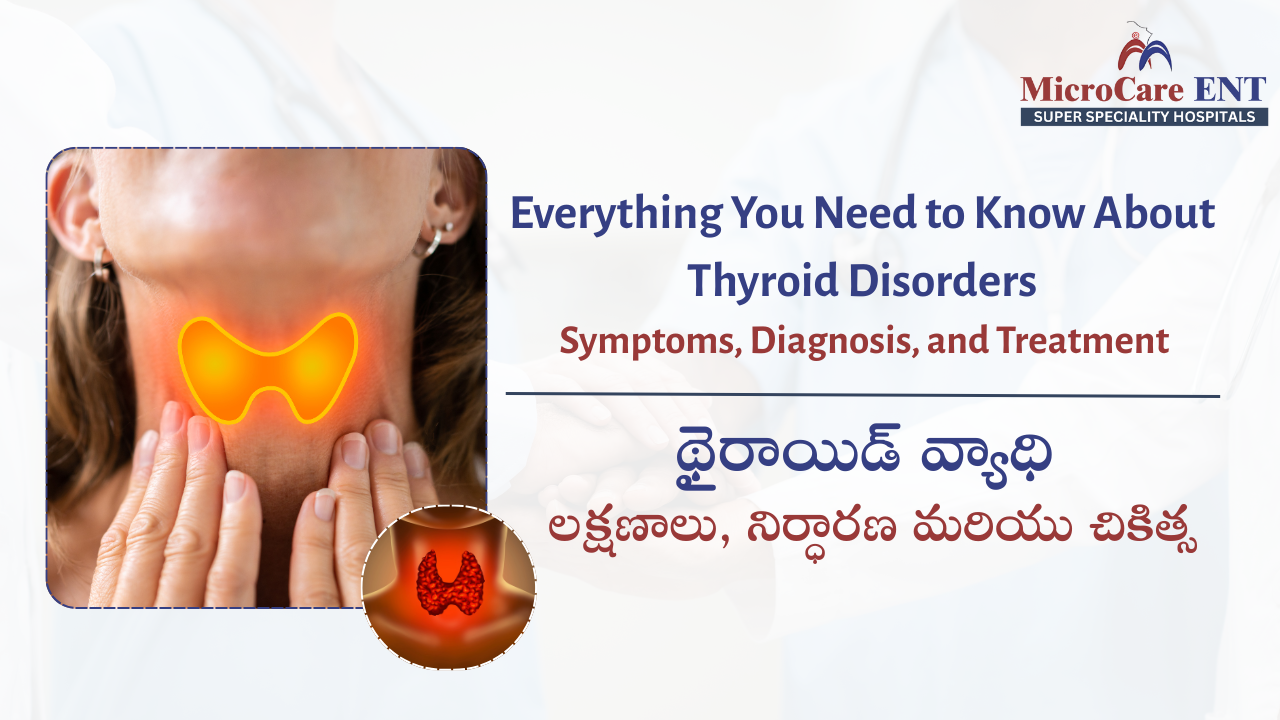
The thyroid is a small, butterfly-shaped gland in your neck—but it has a big role in your overall health. It controls metabolism, heart rate, digestion, mood, and more.


In growing urban areas like Hyderabad and Kukatpally, thyroid problems are rising due to lifestyle changes, stress, and diet patterns. Early diagnosis and proper treatment are crucial to avoid long-term health issues.

Published By microcareenthospitals.com / Updated: April 30, 2025

What is the Thyroid Gland?

The thyroid gland produces hormones (T3 and T4) that regulate your body’s metabolic rate, temperature, and energy. A dysfunctional thyroid can be underactive, overactive, enlarged, or contain nodules. Let’s explore these conditions in detail.

Types of Common Thyroid Disorders

Detailed Symptoms:

Fatigue or feeling sluggish – You may feel tired even after sleeping well. Energy levels drop throughout the day, and physical activity feels more difficult.

Unexplained weight gain – You might gain weight even if you haven’t changed your diet or lifestyle.

Cold intolerance – You may feel unusually cold or shiver even when others are comfortable.

Dry skin and hair thinning – Your skin may become flaky, and your hair may fall out or feel dry and brittle.

Depression and forgetfulness – Mental fog, poor memory, and mood swings are common.

Irregular or heavy periods – Women may experience more frequent or heavier menstrual cycles.

Causes:

Autoimmune condition (Hashimoto’s Thyroiditis)

Iodine deficiency

Certain medications

Thyroid surgery or radiation

Treatment:

A daily dose of Levothyroxine can balance hormone levels. Regular TSH tests are essential to monitor your response.

Hyperthyroidism (Overactive Thyroid)

This occurs when your thyroid produces too much hormone, making your body work faster than normal

Detailed Symptoms:

Rapid heartbeat or palpitations – You might feel your heart racing or skipping beats, especially during rest. Some describe it as a fluttering in the chest or neck, sometimes causing dizziness.

Unintentional weight loss – Even if you’re eating normally, you may lose weight quickly.

Anxiety and nervousness – You may feel constantly on edge, restless, or unable to relax.

Heat intolerance and sweating – A slight rise in temperature can cause sweating and discomfort.

Tremors – Slight shaking, especially in your hands or fingers.

Frequent bowel movements – You might experience more trips to the bathroom, even without dietary changes.

Menstrual irregularities – Periods may become lighter or less frequent.

Causes:

Graves’ disease (autoimmune)

Thyroid nodules producing excess hormone

Thyroid inflammation

Treatment:

Anti-thyroid medications like Methimazole

Radioactive iodine therapy

Surgery in severe or resistant cases

Goiter (Thyroid Enlargement)

Goiter is an abnormal enlargement of the thyroid gland, noticeable as swelling in the neck.

Detailed Symptoms:

Visible swelling at the base of your neck – This may increase slowly and be more noticeable while shaving or applying makeup.

Tightness or fullness in the throat – You may feel pressure, especially when lying down.

Difficulty swallowing or breathing – In large goiters, it may press on your windpipe or esophagus.

Causes:

Iodine deficiency

Hashimoto’s or Graves’ disease

Thyroid nodules or tumors

Treatment:

Monitoring (if small and symptomless)

Medications or iodine supplements

Surgery for large or symptomatic goiters

Thyroid Nodules and Thyroid Cancer

Nodules are small lumps within the thyroid. While most are harmless, some may cause symptoms or be cancerous.

Detailed Symptoms:

A painless lump in the neck – Usually discovered during self-exam or routine checkup.

Voice changes or hoarseness – A growing nodule may affect vocal cords.

Difficulty swallowing or breathing – Indicates compression by a large nodule.

Swollen lymph nodes – Especially if the nodule is cancerous.

Diagnosis:

Ultrasound scan

Thyroid function tests (T3, T4, TSH)

FNAC (needle biopsy)

Treatment:

Monitoring for benign nodules

Surgical removal if cancerous or causing problems

Radioactive iodine for some cancers

Long-term hormone replacement

Best Thyroid Treatment in Hyderabad & Kukatpally

Hyderabad has many expert ENT and thyroid specialists, particularly in areas like Kukatpally, Hitech City, and Banjara Hills. Patients from nearby regions like Miyapur, Nizampet, and Gachibowli also travel here for advanced diagnostics and affordable care.

Looking for trusted care? Visit Hyderabad’s top ENT hospitals here.

Lifestyle & Diet Tips for Thyroid Health

Use iodized salt – Prevents iodine deficiency, a key cause of goiter.

Avoid raw cruciferous vegetables – Like cabbage or broccoli if you have hypothyroidism.

Stay active – Exercise helps regulate metabolism.

Reduce stress – Practice yoga or meditation.

Regular testing – Annual thyroid checks for early detection.

Q: Is thyroid disease permanent?
A: Not always. Many thyroid issues are manageable or even reversible with treatment.

Q: Can I live normally with hypothyroidism or hyperthyroidism?
A: Yes, with correct medication and monitoring, most people live fully normal lives.

Q: Can thyroid problems affect pregnancy?
A: Yes. Both hypo- and hyperthyroidism can affect fertility and pregnancy outcomes. Proper care is essential.

Q: How do I know if my thyroid is working properly?
A: A simple TSH blood test gives a clear picture of thyroid function.

Thyroid conditions are common—but they don’t have to control your life. Whether you’re in Kukatpally, Jubilee Hills, or visiting from nearby districts, expert help is within reach.

💬 Got concerns? Book a consultation with a thyroid specialist in Hyderabad today. Schedule an appointment.

More Information

From MicroCare ENT Hospital to your inbox

Sign up for free and stay up to date on research advancements, health tips, current health topics, and expertise on managing health.

📞 Book Your Consultation Now

Call us: +91- 94 94 94 0725
appointments@microcareenthospitals.com
www.microcareenthospitals.com