
- Jubliee Hills
- +91-9603 024 111
- +91-9603 024 222
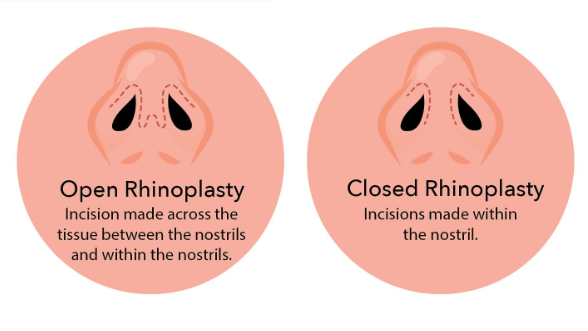
If you’re planning a nose job, one common question comes up early: Closed vs Open Rhinoplasty— which technique is better for you? The right answer depends on your nose structure, your goals (cosmetic or breathing), and how much correction is needed.
At MicroCare ENT Hospital, Hyderabad (KPHB / Kukatpally / Jubilee Hills), our ENT surgeons evaluate both appearance and function. That way, your results look natural and your breathing stays comfortable.
This guide explains the difference between closed and open rhinoplasty, who each method suits best, recovery expectations, and how to choose the safer, more effective option for your needs.
Published By microcareenthospitals.com / Updated: Dec 12, 2025
Rhinoplasty is a surgical procedure to reshape the nose. It can be done for:
Cosmetic goals (shape, size, symmetry)
Functional goals (better breathing, correcting deviated septum)
Both (often called septorhinoplasty)
If you’re searching for rhinoplasty in Hyderabad, make sure your consultation includes a breathing assessment—not just photos.
there is usually no visible scar.
Benefits of Closed Rhinoplasty
No external incision/scar
Often less swelling (in select cases)
Faster early healing for many patients
Suitable for minor to moderate reshaping
Best For
Closed rhinoplasty often works well when corrections are limited, such as:
Small hump reduction
Minor bridge refinement
Subtle tip adjustments
Mild asymmetry corrections
However, it may not be ideal when the surgeon needs full visibility and complex tip work.
Open rhinoplasty involves a small incision on the columella (the strip between the nostrils). This allows the surgeon to lift the nasal skin and see the internal structures clearly.
Benefits of Open Rhinoplasty
Better visibility and precision
Ideal for complex reshaping
Stronger structural support work
Often preferred for revision rhinoplasty
Best For
Open rhinoplasty is commonly chosen for:
Major tip reshaping
Significant asymmetry correction
Revision rhinoplasty (second surgery)
Structural grafting needs
Severe crooked nose or trauma cases
The scar is usually small and becomes less noticeable over time when done properly.
Incision Location
Closed: Inside the nostrils
Open: Inside + small external incision
Visibility for the Surgeon
Closed: Limited view
Open: Full view (more precision for complex cases)
Swelling & Healing
Closed: Often less swelling in simpler cases
Open: Swelling may last longer, especially at the tip
Best Use
Closed: Mild/moderate reshaping
Open: Complex reshaping, revisions, major tip work
Scar
Closed: No visible scar
Open: Tiny scar under nose (usually fades)
The best technique depends on what you want to fix. Therefore, a personalized ENT evaluation matters.
Choose Closed Rhinoplasty If:
You want subtle changes
Your tip work is minimal
Your nose structure is stable
You prefer no external incision
Choose Open Rhinoplasty If:
You need tip definition or major reshaping
Your nose is crooked or post-trauma
You’re planning revision rhinoplasty
You need structural support (grafting)
You want maximum precision
At MicroCare ENT Hospital Hyderabad, we recommend the technique based on medical evaluation, not trends.
Many patients want a better-looking nose and better breathing. If you have:
Nasal blockage
Deviated septum
Turbinate enlargement
Chronic mouth breathing
Snoring linked to nasal obstruction
…you may need functional rhinoplasty or septorhinoplasty.
This is why choosing an experienced ENT specialist in Hyderabad is important—because ENT surgeons address both beauty and breathing.
Recovery varies between patients. Still, most people can expect:
Swelling and bruising (first 1–2 weeks)
Tip swelling may last longer (especially open rhinoplasty)
Avoid heavy exercise for a few weeks (as advised)
Final refinement continues over months
Your surgeon’s aftercare instructions play a huge role in how smoothly you heal.
At MicroCare ENT Hospital (KPHB / Kukatpally / Jubilee Hills), your rhinoplasty consultation may include:
Nose examination (external + internal)
Breathing assessment
Imaging/endoscopy if needed
Photo-based planning
Clear explanation of open vs closed option
Customized plan focused on safety and natural results
So, closed vs open rhinoplasty— which is better? Closed rhinoplasty is often ideal for smaller corrections with no external scar. Open rhinoplasty offers more precision for complex reshaping and structural correction. The best decision comes from a proper ENT evaluation.
If you’re considering rhinoplasty in Hyderabad and want a safe, balanced result that supports both appearance and breathing, consult MicroCare ENT Hospital.
Sign up for free and stay up to date on research advancements, health tips, current health topics, and expertise on managing health.
Call us: +91- 94 94 94 0725
appointments@microcareenthospitals.com
www.microcareenthospitals.com
To learn more about ent, visit our page on MicroCare ENT hospital
Road No 4, KPHB Colony, Hyderabad-500033, Telangana
Road No.36, Jubilee Hills Beside Peddamma Temple Kaman



Microcare ENT Super Specialty International Hospital built as per Hospital norms of Government and NABH. KPHB, Kukatpally, Hyderabad, India. Patients are the biggest beneficiary with Standard norms of hospital as it results in high quality of care and patient safety.
Phone: +91- 94 94 94 0725
Phone: +91- 94 94 94 0726
Road No 4, KPHB Colony,
Hyderabad-500033, Telangana, India
Phone: +91-9603 024 111
Phone: +91-9603 024 222
Road No.36, Jubilee Hills
Beside Peddamma Temple Kaman,
Hyderabad-500033, Telangana, India
appointments@microcareenthospitals.com
Contact us