




Frequent Nosebleeds: When Should You See an ENT Specialist?

sinus infection treatment

adult experiencing recurrent nosebleeds Hyderabad

A nosebleed, also known as epistaxis, is a common condition that most people experience at least once in their lifetime. While occasional nosebleeds are usually harmless, frequent or recurring nosebleeds may indicate an underlying health issue that requires medical attention.

If you experience nosebleeds regularly, especially without an obvious reason, it may be time to consult an ENT specialist.

At MicroCare ENT Hospital & Research Institute, we provide expert diagnosis and treatment for nosebleeds and nasal disorders in Hyderabad.

Published By microcareenthospitals.com / Updated: June 03, 2026

What Causes Frequent Nosebleeds?

The inside of the nose contains many tiny blood vessels that can easily become irritated or damaged.

1. Dry Air and Weather Changes

Dry air, air conditioning, and hot summer temperatures can dry out the nasal lining, making it more likely to bleed.

2. Nose Picking or Injury

Minor trauma to the nose, including frequent nose picking, can damage delicate blood vessels.

3. Allergies and Sinus Problems

Chronic allergies and sinus infections can cause inflammation and irritation inside the nose.

4. Deviated Septum

A deviated septum can create uneven airflow, leading to dryness and repeated nosebleeds.

5. High Blood Pressure

In some adults, uncontrolled hypertension may contribute to recurring nosebleeds.

6. Blood-Thinning Medications

Medications such as aspirin or anticoagulants can increase the risk of bleeding.

7. Nasal Polyps or Growths

Rarely, recurrent nosebleeds may be caused by nasal polyps or other growths inside the nasal cavity.

Common Symptoms That Accompany Nosebleeds

Frequent nosebleeds may occur along with:

  • Nasal blockage
  • Facial pressure
  • Sinus infections
  • Headaches
  • Difficulty breathing through the nose
  • Nasal dryness or crusting

When Should You See an ENT Specialist?

Occasional nosebleeds are usually not a cause for concern. However, medical evaluation is recommended if:

1. Nosebleeds Occur Frequently

If you experience nosebleeds several times a month, an underlying cause should be investigated.

2. Bleeding Lasts More Than 20 Minutes

Persistent bleeding may require medical treatment.

3. Nosebleeds Are Heavy

Significant blood loss should never be ignored.

4. You Have Breathing Difficulties

Nasal blockage along with bleeding may indicate a structural problem.

5. You Have High Blood Pressure

Adults with hypertension should seek evaluation if nosebleeds become frequent.

6. There Is a History of Nasal Injury

Previous trauma may damage internal nasal structures and blood vessels.

How ENT Specialists Diagnose Frequent Nosebleeds

At MicroCare ENT Hospital, diagnosis may include:

  • Detailed medical history
  • Nasal examination
  • Nasal endoscopy
  • Blood pressure evaluation
  • Blood tests (if required)
  • Imaging studies for structural abnormalities

Identifying the root cause is essential for effective treatment.

Treatment Options for Frequent Nosebleeds

1. Nasal Moisturization

Saline sprays and nasal gels help prevent dryness and irritation.

2. Allergy and Sinus Treatment

Managing allergies and sinus infections can reduce inflammation and bleeding.

3. Nasal Cauterization

For recurrent bleeding from a specific blood vessel, cauterization may be recommended.

This procedure:

  • Seals the blood vessel
  • Reduces recurrence
  • Is performed quickly and safely

4. Treatment of Structural Problems

Conditions such as:

  • Deviated septum
  • Nasal polyps
  • Chronic sinus disease

may require specialized ENT treatment.

How to Prevent Nosebleeds

You can reduce your risk by:

  • Staying hydrated
  • Using saline nasal sprays
  • Avoiding nose picking
  • Managing allergies
  • Using a humidifier in dry environments
  • Controlling blood pressure

Meet Our Expert ENT Specialist

👨‍⚕️ Prof. Dr. Sriprakash Vinnakota

MBBS, MS (ENT, Head & Neck Surgery)
Chief Consultant ENT Specialist & Microsurgeon

  • 26+ Years Experience
  •  Expertise in nasal disorders, sinus treatment, and advanced ENT procedures

  • Specialized care for recurrent nosebleeds and nasal obstruction

Why Choose MicroCare ENT Hospital?

  • Advanced ENT diagnostic technology
  • Experienced sinus specialists
  • Comprehensive sinus care
  • Personalized treatment plans
  • Convenient location in Kukatpally & KPHB

Final Thoughts

While occasional nosebleeds are common, frequent or recurring nosebleeds should not be ignored. They may indicate allergies, sinus problems, structural abnormalities, or other medical conditions that require treatment.

Early diagnosis by an ENT specialist can help identify the cause and prevent future episodes.

If you’re experiencing recurrent nosebleeds, schedule a consultation for expert evaluation and care.

FAQs

1. Are frequent nosebleeds serious?

Occasional nosebleeds are usually harmless, but frequent nosebleeds may indicate an underlying condition that requires medical evaluation.

Yes. Chronic sinusitis and nasal inflammation can irritate blood vessels and increase the risk of bleeding.

Seek medical care if bleeding lasts more than 20 minutes, is heavy, or occurs repeatedly.

High blood pressure can contribute to recurrent nosebleeds, especially in adults.

Nasal cauterization is a simple ENT procedure used to seal bleeding blood vessels and prevent recurring nosebleeds.

From MicroCare ENT Hospital to your inbox

Sign up for free and stay up to date on research advancements, health tips, current health topics, and expertise on managing health.

📞 Book Your Consultation Now

👨‍⚕️ Dr. Sriprakash Vinnakota (26+ Years of Experience)

Where Dr. Sriprakash Vinnakota Practices
Team of ENT Surgeons under Prof. Dr. Sriprakash Vinnakota provides advanced ENT, Head & Neck care at the following locations.

📍 MicroCare ENT Hospital – KPHB Colony, Kukatpally
Road No. 4, KPHB Colony, Hyderabad – 500072, Telangana, India

📍 Apollo Hospitals – Financial District
Financial District, Nanakramguda, Serilingampally, Hyderabad – 500032

📞 Book your appointment today: 9494940725 / 26
🌐 www.microcareenthospitals.com

Watch our Related Videos

Viral Videos

Playlist

8 Videos

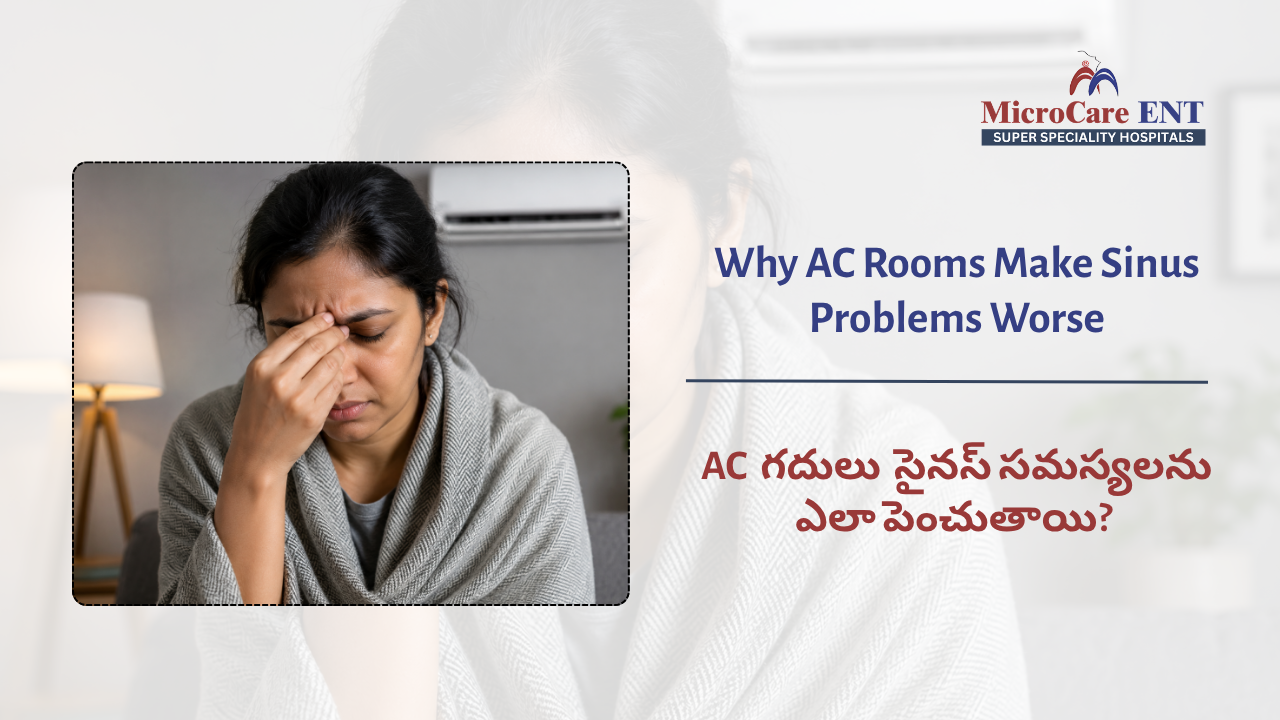
Can AC Cause Stuffy Nose & Sinus Problems? | Microcare ENT

sinus infection treatment

AC room sinus problems blocked nose headache Hyderabad

Can Air Conditioning Cause Sinus Problems, Congestion, or Sinus Headaches?

Yes, air conditioning can worsen sinus symptoms. Cold, dry, recirculated air can dry out the nasal lining, thicken mucus, and trigger congestion, post-nasal drip, or sinus headaches in people who are already sensitive. This is common, usually manageable, and rarely a sign of infection on its own. Below, we explain why it happens and when to see an ENT specialist.

Published By microcareenthospitals.com / Updated: May 13, 2026

Can AC Cause a Stuffy Nose or Congestion?

Air conditioned air is drier than normal room air. When the nasal lining (the moist tissue inside your nose) dries out, it can swell slightly and produce thicker mucus, leading to a stuffy or blocked nose. This is a direct physical response to dry, cold air rather than an infection, and it usually improves once you leave the air-conditioned environment or add moisture back into the air.

Can AC Cause a Sinus Infection or Sinusitis?

Air conditioning does not directly cause a sinus infection (sinusitis, an inflammation or infection of the sinus cavities). However, dry air can slow the natural clearing of mucus from the sinuses, making it easier for a viral or bacterial infection to take hold if you are already run down. If symptoms include facial pain, thick discoloured discharge, or fever lasting more than a few days, this may indicate an infection rather than simple dryness.

Can AC Cause Post-Nasal Drip or Sinus Headaches?

Post-nasal drip (mucus running down the back of the throat) and sinus headaches can both be triggered by dry, recirculated air, particularly in offices or bedrooms with AC running for long hours. The dryness irritates the throat and sinus lining, increasing mucus production and pressure around the forehead, cheeks, and eyes.

How Is Sinus Pain from Air Conditioning Treated?

Mild AC-related sinus discomfort often responds to simple measures: using a humidifier, staying hydrated, saline nasal rinses, and limiting direct exposure to the AC airflow. If symptoms persist, worsen, or recur every time you are in air conditioning, an ENT specialist can check for an underlying issue such as allergic rhinitis or chronic sinusitis and recommend appropriate treatment. [Add specific in-clinic treatment options offered at Microcare, e.g., nasal endoscopy, allergy testing, if applicable.]

When Should You See an ENT Specialist?

Consult an ENT specialist if you experience:

  • Persistent nasal blockage
  • Frequent sinus headaches
  • Recurrent sneezing or allergies
  • Facial pressure and sinus pain
  • Symptoms lasting more than a few weeks

Patients in Hyderabad, Kukatpally, and KPHB Colony can access advanced sinus care at MicroCare ENT Hospital.

Sinus Treatment in Hyderabad

At MicroCare ENT Hospital, sinus treatment may include:

1. Medical Treatment

  • Anti-allergy medications
  • Nasal sprays
  • Sinus infection treatment

2. Advanced Diagnosis

  • Nasal endoscopy
  • Allergy evaluation
  • CT scan (if required)

3. Surgical Treatment

  • For chronic sinusitis:
    FESS Surgery
  • Septoplasty
  • Nasal polyp removal

Meet Our Expert ENT Specialist

👨‍⚕️ Prof. Dr. Sriprakash Vinnakota
MBBS, MS (ENT, Head & Neck Surgery)
Chief Consultant ENT Specialist & Microsurgeon

  • 26+ Years Experience
  • Expertise in sinus treatment, nasal endoscopy, and advanced ENT procedures

Dr. Sriprakash provides expert evaluation and treatment for sinus-related headaches and ENT disorders.

Why Choose MicroCare ENT Hospital?

  • Advanced ENT diagnostic technology
  • Experienced sinus specialists
  • Comprehensive sinus care
  • Personalized treatment plans
  • Convenient location in Kukatpally & KPHB

Final Thoughts

Sinus headaches and migraines may appear similar, but they have different causes and treatments. Identifying the correct condition is essential for effective relief and long-term management.

If you are experiencing persistent headaches or sinus symptoms, consult an ENT specialist for accurate diagnosis and expert care.

FAQs

Can air conditioning cause a sinus infection?

Not directly. AC dries the nasal lining and slows mucus clearance, which can make you more prone to infection, but the infection itself usually needs a virus or bacteria to be present. Persistent facial pain, fever, or thick discharge should be checked by a doctor.

Yes. Dry, cold air from AC can irritate the throat and sinus lining, increasing mucus production that drips down the back of the throat. This is usually temporary and eases once humidity is restored or exposure is reduced.

Yes. Dry AC air can swell the nasal lining and thicken mucus, leading to congestion. This is a common reaction to dry indoor air rather than an infection and often improves with a humidifier or saline rinse.

Yes, in people prone to sinus issues. Dry air and pressure changes from AC can irritate the sinuses, causing pain or pressure around the forehead and cheeks. If headaches are frequent or severe, an ENT evaluation is advisable.

Mild cases improve with humidifiers, hydration, and saline nasal rinses. If pain persists or recurs often, an ENT specialist can assess for allergic rhinitis or chronic sinusitis and suggest suitable treatment.

From MicroCare ENT Hospital to your inbox

Sign up for free and stay up to date on research advancements, health tips, current health topics, and expertise on managing health.

📞 Book Your Consultation Now

MicroCare ENT Hospital & Research Institute
📍 KPHB Colony, Kukatpally | Jubilee Hills
📲 9494940725 / 26
🌐 https://microcareenthospitals.com/sinusitis-treatment-hyderabad/

To learn more about ENT, visit our page MicroCare ENT.

Watch our Related Videos

Viral Videos

Playlist

8 Videos

Sinus Headache vs Migraine: Key Differences Explained

sinus infection treatment

sinus headache vs migraine facial pain symptoms Hyderabad

Headaches are one of the most common health complaints, but not all headaches are the same. Many people assume they have a sinus headache when they may actually be experiencing a migraine.

Understanding the difference between a sinus headache and migraine is important because both conditions require different treatment approaches.

At MicroCare ENT Hospital & Research Institute, we help patients in Hyderabad, Kukatpally, and KPHB Colony accurately diagnose and treat sinus-related problems and chronic headaches.

Published By microcareenthospitals.com / Updated: May 12, 2026

What Is a Sinus Headache?

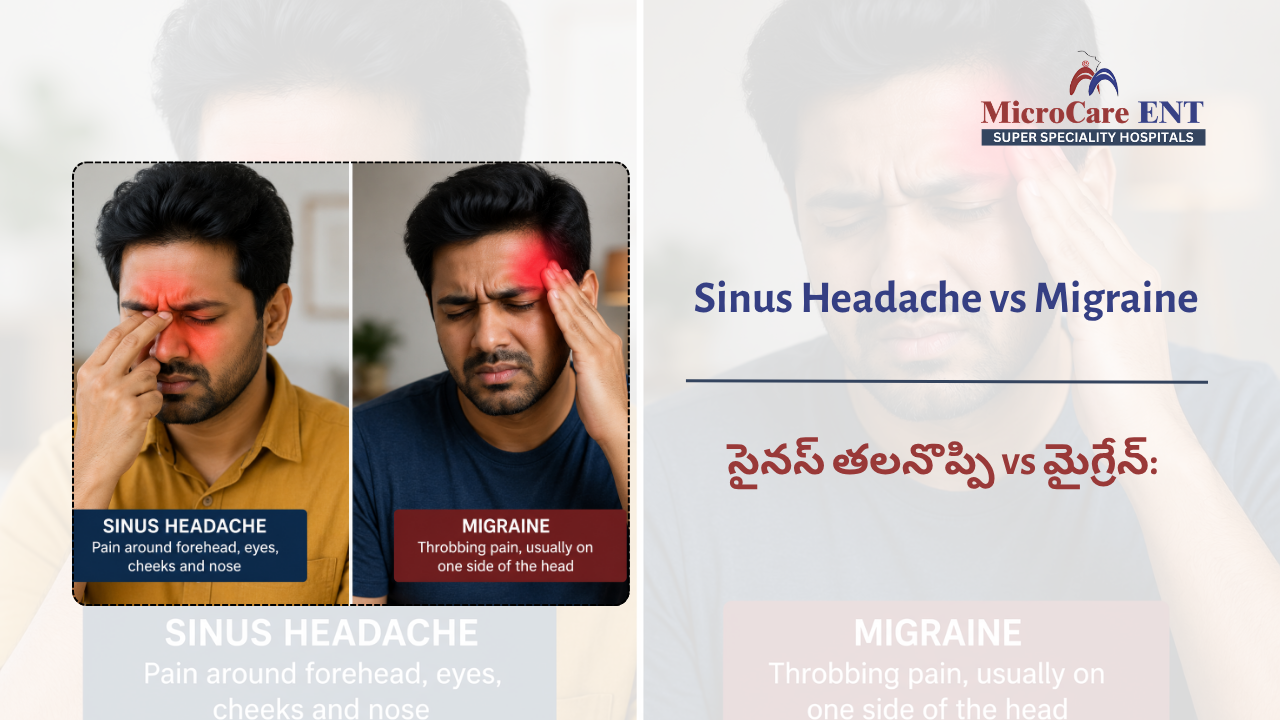
A sinus headache occurs when the sinus cavities become inflamed or blocked due to infection, allergies, or sinusitis. Pressure builds up inside the sinuses, causing pain around the face and forehead.

Common Symptoms of Sinus Headache:

  • Pain around forehead, eyes, and cheeks
  • Facial pressure
  • Nasal congestion
  • Thick nasal discharge
  • Pain that worsens when bending forward
  • Fever in some cases

Patients seeking sinus headache treatment in Hyderabad commonly experience these symptoms during sinus infections.

What Is a Migraine?

A migraine is a neurological condition that causes intense headaches and other symptoms. Migraines are often mistaken for sinus headaches because they may also cause facial pain and pressure.

Common Symptoms of Migraine:

  • Throbbing or pulsating headache
  • Sensitivity to light and sound
  • Nausea or vomiting
  • Visual disturbances (aura)
  • Pain usually on one side of the head
  • Symptoms lasting several hours or days

Sinus Headache vs Migraine – Key Differences

FeatureSinus HeadacheMigraine
CauseSinus inflammation/infectionNeurological condition
Pain LocationForehead, cheeks, eyesUsually one side of head
Nasal SymptomsCommonRare
NauseaLess commonVery common
FeverMay occurUsually absent
Light SensitivityRareCommon

Why Are Migraines Often Misdiagnosed as Sinus Headaches?

Many migraine patients experience:

  • Facial pressure
  • Nasal congestion
  • Watery eyes

This can create confusion, leading people to believe they have sinus problems instead of migraines.

Accurate diagnosis by an ENT specialist or neurologist is important for proper treatment.

Causes of Sinus Headaches

Common causes include:

  • Sinusitis
  • Allergies
  • Deviated nasal septum
  • Nasal polyps
  • Weather changes and pollution

Patients in Kukatpally and Hyderabad frequently experience sinus issues due to environmental triggers.

How Are These Conditions Diagnosed?

At MicroCare ENT Hospital, diagnosis may include:

  • Nasal endoscopy
  • Sinus examination
  • CT scan (if required)
  • Clinical headache evaluation

These tests help determine whether symptoms are caused by sinusitis or migraines.

Treatment for Sinus Headache

1. Medical Treatment

  • Nasal sprays
  • Antibiotics (if infection present)
  • Anti-allergy medications
  • Steam inhalation

2. Advanced Treatment

For chronic sinusitis:

Treatment for Migraine

Migraine treatment may involve:

    • Pain-relief medications
    • Lifestyle changes
    • Trigger management
    • Neurological evaluation

When Should You See a Doctor?

Consult a specialist if:

  • Headaches occur frequently
  • Pain is severe or worsening
  • Symptoms do not improve with medication
  • Nasal blockage or fever is present
  • Daily activities are affected

Patients from KPHB Colony, Kukatpally, and Hyderabad can access expert ENT care at MicroCare ENT Hospital.

Meet Our Expert ENT Specialist

👨‍⚕️ Prof. Dr. Sriprakash Vinnakota
MBBS, MS (ENT, Head & Neck Surgery)
Chief Consultant ENT Specialist & Microsurgeon

  • 26+ Years Experience
  • Expertise in sinus treatment, nasal endoscopy, and advanced ENT procedures

Dr. Sriprakash provides expert evaluation and treatment for sinus-related headaches and ENT disorders.

Why Choose MicroCare ENT Hospital?

  • Advanced ENT diagnostic technology
  • Experienced sinus specialists
  • Comprehensive sinus care
  • Personalized treatment plans
  • Convenient location in Kukatpally & KPHB

Final Thoughts

Sinus headaches and migraines may appear similar, but they have different causes and treatments. Identifying the correct condition is essential for effective relief and long-term management.

If you are experiencing persistent headaches or sinus symptoms, consult an ENT specialist for accurate diagnosis and expert care.

FAQs

1. How can I tell if I have a sinus headache or migraine?

Sinus headaches usually cause facial pressure and nasal congestion, while migraines often include nausea and sensitivity to light and sound.

Yes, sinus inflammation and pressure may trigger headaches or worsen migraine symptoms in some patients.

Most sinus headaches improve with treatment, but chronic sinusitis may require medical evaluation and advanced ENT care.

Some migraine patients may experience nasal congestion or watery eyes, which is why migraines are often mistaken for sinus headaches.

You should consult an ENT specialist if headaches are frequent, severe, associated with nasal symptoms, or not improving with treatment.

From MicroCare ENT Hospital to your inbox

Sign up for free and stay up to date on research advancements, health tips, current health topics, and expertise on managing health.

📞 Book Your Consultation Now

MicroCare ENT Hospital & Research Institute
📍 KPHB Colony, Kukatpally | Jubilee Hills
📲 9494940725 / 26
🌐 https://microcareenthospitals.com/sinusitis-treatment-hyderabad/

To learn more about ENT, visit our page MicroCare ENT.

Watch our Related Videos

Viral Videos

Playlist

8 Videos