Rhinoplasty in Hyderabad | Nose Surgery at MicroCare ENT

Rhinoplasty

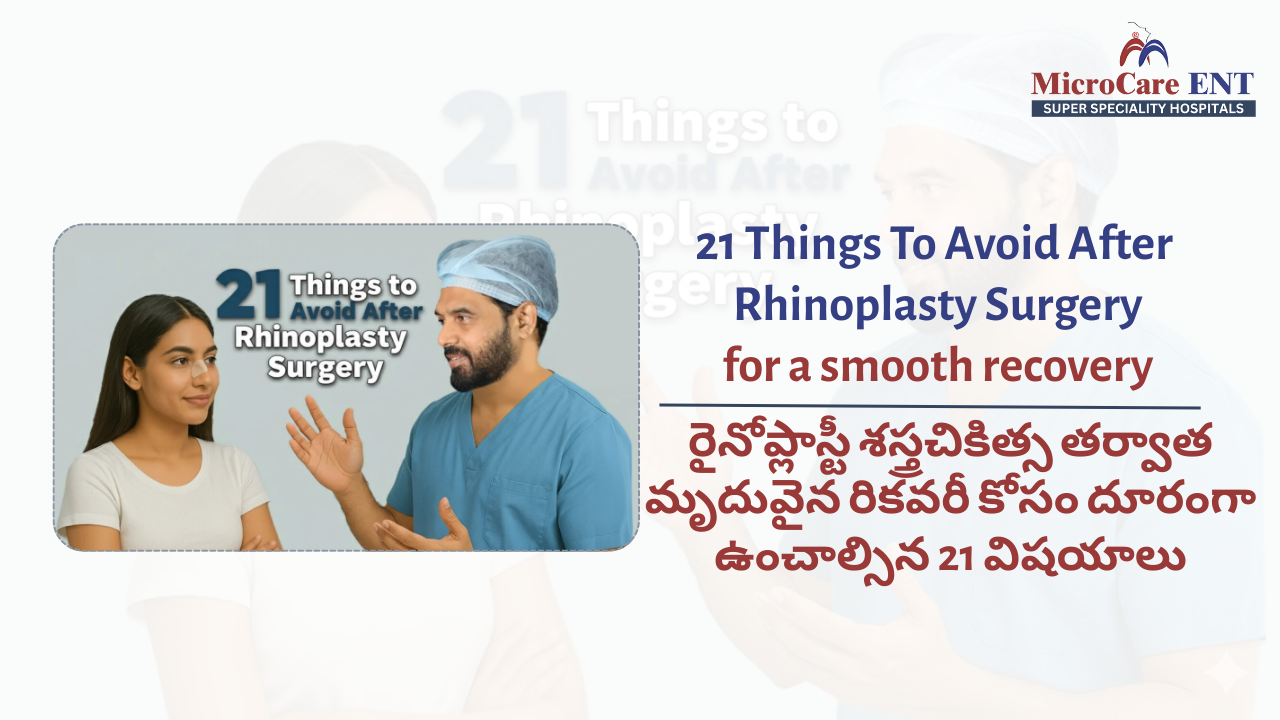
Rhinoplasty nose surgery performed by ENT specialists at MicroCare ENT Hospital Hyderabad Telangana

Rhinoplasty, also called a nose job, reshapes the nose to improve appearance and breathing. In many cases, patients choose this surgery to improve facial balance. However, rhinoplasty can also correct nasal blockage and breathing discomfort. Because of this, it supports both looks and function at the same time.

At MicroCare ENT Hospitals in Hyderabad, our ENT surgeons plan rhinoplasty with safety and natural results in mind. As a result, patients often feel more confident and breathe more easily. Most importantly, we recommend surgery only when it truly benefits the patient.

Published By microcareenthospitals.com / Updated: Feb 06, 2025

What Is Rhinoplasty?

Rhinoplasty is a surgical procedure that changes the shape or structure of the nose. In addition, it can improve airflow through the nasal passages. For example, the surgery may help when a deviated septum blocks breathing. Therefore, many patients sleep better and feel more comfortable during exercise.

Who Is Eligible for Rhinoplasty?

Rhinoplasty suits people who are in good overall health. Generally, candidates should have completed facial growth. In some cases, teenagers may also be eligible. However, parental consent is necessary.

Typically, girls may be ready around 15–16 years, while boys may be ready around 17–18 years. Smoking slows healing. Because of this, non-smokers usually recover better. Most importantly, having realistic expectations helps ensure satisfaction.

What Can Rhinoplasty Correct?

Rhinoplasty can improve appearance and breathing together. For example, it may correct:

  • A bulbous, droopy, hooked, or upturned nose

  • A deviated septum that reduces airflow

  • Wide, narrow, or uneven nostrils

  • A bump or dip on the nasal bridge

  • A nose size that feels out of balance with the face

In some cases, rhinoplasty also repairs injury-related nose changes. Similarly, it may improve breathing issues caused by older nasal trauma. As a result, daily comfort often improves.

What Happens Before Rhinoplasty?

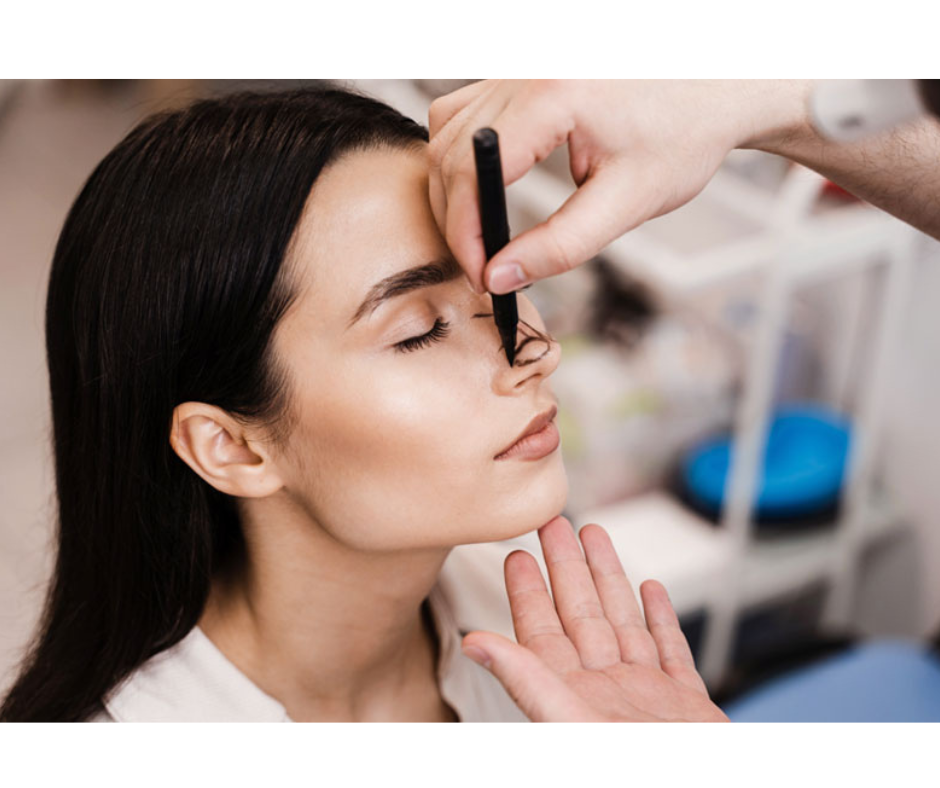
First, you meet the surgeon for a detailed consultation. During this visit, the surgeon checks your nose and facial structure. Next, your medical history and personal goals are discussed. After that, photographs may be taken for surgical planning.

In addition, the surgeon clearly explains benefits, limits, and risks. Therefore, you know what to expect before making a decision.

What Happens During Rhinoplasty?

Rhinoplasty is usually a day-care procedure. So, most patients go home the same day. You may receive general anaesthesia. Alternatively, local anaesthesia with sedation may be used.

In either option, the main goal is comfort and safety. As a result, the procedure runs smoothly and recovery begins calmly.

How Long Does Rhinoplasty Take?

Rhinoplasty typically takes 1 to 3 hours. However, the duration varies based on the changes required.

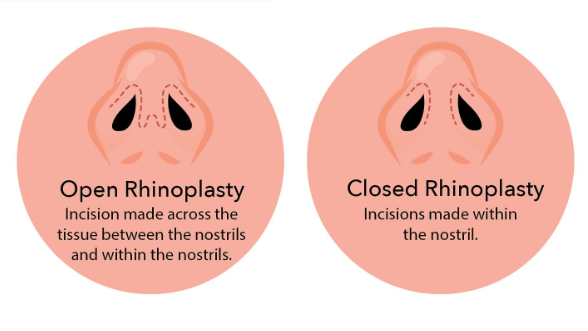
In closed rhinoplasty, incisions are made inside the nostrils. Therefore, this method is often chosen for smaller corrections. In open rhinoplasty, a small incision is made between the nostrils along with internal cuts. Even so, the scar is usually minimal and heals well.

What Happens After Rhinoplasty?

After surgery, a nasal splint supports the new shape and reduces swelling. In most cases, you wear it for 1–2 weeks. Some patients may also have gentle nasal packing. Usually, it is removed within 1–2 days, as advised by the surgeon.

Swelling and bruising around the nose and eyes are common. However, they gradually reduce over the next few weeks. Pain is often mild to moderate. Therefore, simple pain medicines are usually sufficient.

Understanding Uneven Swelling

Sometimes, swelling is more noticeable on one side early on. As a result, the nose may look slightly uneven during the first few weeks. Over time, swelling settles evenly and symmetry improves.

If you feel concerned, contact your surgeon so you receive the right guidance and reassurance.

Risks of Rhinoplasty

Rhinoplasty is generally safe when performed by experienced surgeons. Still, every surgical procedure carries some risks. These may include:

  • Infection

  • Nosebleeds

  • Scarring or slow healing

  • Skin colour changes

  • Temporary change in smell

  • Results that do not meet expectations

  • Need for revision surgery in some cases

Therefore, choosing an experienced ENT team and a well-equipped hospital is important.

Recovery Timeline and Results

Healing takes time. So, patience is important during recovery. Typically, most swelling reduces within 4–6 weeks. After that, the nose continues to settle over the next few months.

Meanwhile, breathing improvement may be noticed earlier, especially if septal correction was done. Finally, the full result may take up to one year. Because every person heals differently, recovery timelines can vary.

Precautions to Heal Faster

You can support healing by following these simple steps:

  • Keep your head elevated while resting

  • Use cool compresses on the cheeks (not on the nose)

  • Avoid rubbing or pressing the nose

  • Do not blow your nose until permitted

  • Avoid heavy lifting and intense workouts for 4–6 weeks

  • Limit sun exposure

  • Avoid wearing glasses on the nose bridge until allowed

  • Take medicines exactly as prescribed

As a result, swelling reduces faster and healing stays on track.

When to Call Your Doctor

Call your doctor immediately if you experience:

  • Difficulty breathing

  • Severe pain that worsens

  • Continuous nosebleeds

  • Fever or yellow discharge

  • Persistent nausea or vomiting

If any of these occur, seek medical care without delay.

Conclusion

Rhinoplasty can improve both appearance and breathing. At the same time, it requires careful planning and proper aftercare. Therefore, expert evaluation is essential before surgery.

If you are looking for rhinoplasty in Hyderabad, visit MicroCare ENT Hospitals in Kukatpally or Jubilee Hills, Telangana for safe and expert ENT care.

From MicroCare ENT Hospital to your inbox

Sign up for free and stay up to date on research advancements, health tips, current health topics, and expertise on managing health.

📞 Book Your Consultation Now

Call us: +91- 94 94 94 0725
appointments@microcareenthospitals.com
www.microcareenthospitals.com

To learn more about ent, visit our page on MicroCare ENT hospital

Watch our Related Videos

Breathing Problems After Rhinoplasty: When to See an ENT | MicroCare ENT Hyderabad

Rhinoplasty

Breathing problems after rhinoplasty evaluation by ENT specialist at MicroCare ENT Hospitals Hyderabad Telangana

Rhinoplasty is also called a nose job. It changes the shape of your nose. Many people choose it for a better look. Some people also want better breathing. Still, after surgery, your nose needs time to heal. Because of this, breathing problems after rhinoplasty can happen.

Most of the time, the breathing issue is temporary. However, in some cases, it can last longer. So, it is important to know what is normal and what is not.

At MicroCare ENT Hospitals in Hyderabad, we help patients who feel blocked after nose surgery. We also guide them with safe recovery steps.

Published By microcareenthospitals.com / Updated: Dec 31, 2025

Is It Normal to Have Breathing Problems After Rhinoplasty?

Yes, it is normal in the early weeks.

After surgery, the inside of the nose swells. As a result, the airflow reduces. Also, you may have splints or packing. So, breathing through the nose becomes hard at first.

The good news is that this improves step by step.

Common Reasons for Breathing Difficulty After Rhinoplasty

Many people feel blocked for simple reasons. These include:

  • Swelling inside the nose

  • Dryness and crusting

  • Mucus build-up

  • Healing tissues

  • Splints or packing (temporary support)

Because the nose is healing, these issues are expected. Still, they should improve with time.

How Long Does It Take to Breathe Normally? (Easy Timeline)

Healing is different for each person. However, most people follow a similar pattern.

Right after surgery (Day 1–3)

Breathing is very difficult. This is because swelling is high.

Week 1–2

Packing may be removed. So, breathing feels a little better.

Week 2–4

Swelling starts reducing more. Therefore, airflow improves.

Week 4–6

Most people breathe better. Still, mild congestion may remain.

Week 6–12

Breathing becomes close to normal. Also, inside healing continues.

Month 3–6

Final healing happens. As a result, breathing and shape improve fully.

When Breathing Problems Are NOT Normal

Sometimes breathing stays blocked for too long. In that case, you may have a deeper issue. So, an ENT check is needed.

Possible causes include:

1. Nasal valve weakness
The valve area is very small. If it becomes weak, the nostril may collapse.

2. Septum deviation (crooked septum)
If the septum blocks one side, breathing becomes difficult.

3. Turbinate swelling
Turbinates can enlarge and reduce airflow.

4. Thick scar tissue
Some people form thick scars inside. Therefore, the airway becomes narrow.

5. Too much cartilage removal
If the nose support becomes weak, airflow may reduce.

These problems may need ENT care. Sometimes they need revision surgery. So, early evaluation is helpful.

Simple Signs That You Should See an ENT Specialist

Visit an ENT specialist in Hyderabad if you notice:

  • Breathing is still blocked after 8–12 weeks

  • One nostril closes while you inhale

  • You hear a whistling sound while breathing

  • There is severe pain or increasing swelling

  • You get repeated nosebleeds

  • You have fever or foul discharge

  • Your breathing gets worse instead of better

  • You feel panic due to poor airflow

If these happen, don’t wait. Early ENT care prevents long-term problems.

Safe Home Tips to Improve Breathing After Rhinoplasty

These tips can help, especially in the first few weeks:

  • Use saline spray (as advised)

  • Keep a cool-mist humidifier at night

  • Drink enough water daily

  • Sleep with your head slightly raised

  • Avoid dust, smoke, and strong perfumes

  • Rest well and avoid heavy workouts

🚫 Avoid these:

  • Do not blow your nose hard

  • Do not pick inside crusts

  • Do not use medicines without your doctor’s advice

Because healing tissues are delicate, gentle care is best.

How MicroCare ENT Hospitals in Hyderabad Can Help

At MicroCare ENT Hospitals (Hyderabad, Telangana), we check the nose safely and clearly. We may suggest:

Nasal endoscopy to see inside
✅ Septum and valve assessment
✅ Turbinate swelling evaluation
✅ Recovery support plan
✅ Functional correction if required

We focus on breathing safety first. Then we help you heal comfortably.

Conclusion: Get Help at the Right Time

Breathing problems after rhinoplasty are common early on. However, they should improve slowly week by week. If the blockage stays too long, it may need ENT attention.

So, if you have difficulty breathing after rhinoplasty, visit MicroCare ENT Hospitals in Hyderabad for expert care and guidance.

From MicroCare ENT Hospital to your inbox

Sign up for free and stay up to date on research advancements, health tips, current health topics, and expertise on managing health.

📞 Book Your Consultation Now

Call us: +91- 94 94 94 0725
appointments@microcareenthospitals.com
www.microcareenthospitals.com

To learn more about ent, visit our page on MicroCare ENT hospital

Watch our Related Videos

Rhinoplasty Recovery & Swelling: What’s Normal? | Best ENT Hospital in Hyderabad

Rhinoplasty

Rhinoplasty recovery in Hyderabad is a common concern for people who wish to improve their nose shape or breathing. Many patients from Kukatpally, Jubilee Hills Hyderabad often worry after surgery because of swelling or puffiness. But the truth is — swelling after rhinoplasty is completely normal and part of your body’s healing process.

At MicroCare ENT Super Speciality Hospital, led by Dr. Sriprakash Vinnakota, we guide patients through safe rhinoplasty recovery with expert ENT care and advanced follow-up support. In this blog, we’ll explain why swelling happens, what to expect during recovery, and the best tips to reduce swelling naturally.

Published By microcareenthospitals.com / Updated: Dec 27, 2025

What Happens During Rhinoplasty Recovery?

After rhinoplasty, the nose tissues begin healing immediately. During this healing phase, swelling occurs due to:

  • Minor trauma to nasal tissues during surgery

  • Normal inflammation response of the body

  • Fluid retention and internal healing

  • Changes in nasal cartilage and bone structure

Important Note: Swelling may look more noticeable in the first few days, especially around the eyes and nose bridge. This is completely expected.

Why Swelling After Rhinoplasty Is Normal

Swelling is the body’s natural way of protecting tissues and repairing them. It helps:

  • Increase blood flow to healing tissues

  • Reduce risk of infection

  • Support tissue remodeling over time

If you’ve had rhinoplasty in Hyderabad, Kukatpally, or Jubilee Hills, don’t panic if your nose looks larger initially. The final shape takes time to settle.

Symptoms You May Notice After Rhinoplasty

During recovery, patients commonly report:

  • Puffy nose tip or bridge swelling

  • Mild bruising under eyes

  • Nasal blockage or congestion

  • Mild pain or tightness

  • Slight bleeding or discharge (first 24–48 hrs)

  • Reduced smell temporarily

These are normal healing signs. However, severe pain, fever, or heavy bleeding should be evaluated immediately by an ENT specialist.

Rhinoplasty Swelling Timeline: What to Expect

Healing differs from patient to patient, but in general:

First 1–3 Days

  • Maximum swelling and facial puffiness

  • Bruising around eyes may appear

  • Nose feels stiff or tight

1–2 Weeks

  • Bruising reduces significantly

  • Major swelling starts decreasing

  • Splint removal is usually done

1–3 Months

  • Nose looks more defined

  • Swelling reduces gradually, especially at the tip

  • Breathing improves progressively

6–12 Months

  • Final rhinoplasty results become visible

  • Nose tip swelling fully settles slowly

  • Subtle refinement continues naturally

Most patients see 70–80% improvement in swelling within 4–6 weeks, but complete results can take up to 1 year.

Best ENT Treatment Support for Rhinoplasty Recovery in Hyderabad

At MicroCare ENT Super Speciality Hospital, we ensure rhinoplasty recovery is safe through:

Regular Post-Operative Checkups

We monitor healing closely and ensure the nose shape is settling normally.

Swelling Reduction Guidance

Our ENT team advises proven recovery tips including positioning, ice therapy, and safe medications.

Infection Prevention

If swelling is abnormal, we quickly evaluate for infection or complications.

Breathing & Nasal Care Support

We guide safe nasal cleaning and decongestion methods without harming surgical results.

Do:

  • Sleep with your head elevated

  • Use cold compress (first 48 hours only)

  • Take medicines exactly as prescribed

  • Drink plenty of water

  • Eat soft, low-salt foods

  • Rest and avoid heavy physical activity

Don’t:

  • Blow your nose forcefully

  • Touch or press your nose repeatedly

  • Wear glasses directly on the bridge early

  • Smoke or consume alcohol

  • Eat high-sodium foods (increases swelling)

  • Return to gym too early

If you want safe rhinoplasty recovery guidance in Hyderabad, Kukatpally, or Jubilee Hills, consult a specialist instead of trying home hacks.

Patients choose MicroCare ENT because we provide:

  • Advanced ENT and cosmetic evaluation tools

  • Experienced ENT surgeon – Dr. Sriprakash Vinnakota

  • Safe rhinoplasty recovery support

  • Painless follow-up visits and nasal care

  • Hygienic operation theatre & infection control

  • Trusted by thousands across Hyderabad & Telangana

If you’re looking for the Best ENT Hospital in Telangana for rhinoplasty recovery, MicroCare ENT is your trusted destination.

When Should You See a Doctor?

Visit an ENT specialist in Hyderabad immediately if you notice:

  • Sudden increase in swelling after improvement

  • High fever or chills

  • Severe pain that doesn’t reduce

  • Pus discharge or foul smell from the nose

  • Heavy bleeding

  • Difficulty breathing

These signs may indicate infection or complications that require urgent expert care.

Book Your Appointment Today

If you had rhinoplasty and are worried about swelling or recovery in Hyderabad, Kukatpally, or Jubilee Hills, don’t stress — swelling is normal, but expert guidance matters.

Visit MicroCare ENT Super Speciality Hospital today and get rhinoplasty recovery support from Dr. Sriprakash Vinnakota with safe follow-up care and personalized healing guidance.

From MicroCare ENT Hospital to your inbox

Sign up for free and stay up to date on research advancements, health tips, current health topics, and expertise on managing health.

📞 Book Your Consultation Now

Call us: +91- 94 94 94 0725
appointments@microcareenthospitals.com
www.microcareenthospitals.com

To learn more, visit our page on advanced snoring solutions at MicroCare ENT
learn about  Cochlear Implantation

Watch our Related Videos

13 Tips to Speed Up Rhinoplasty Recovery | MicroCare ENT Hospital Hyderabad

Rhinoplasty

Rhinoplasty recovery tips explained by ENT specialists at MicroCare ENT Hospital in Hyderabad Telangana

Recovering from rhinoplasty is just as important as the surgery itself. While the procedure improves both appearance and breathing, proper aftercare helps you heal faster and protects your results. Fortunately, by following the right steps, recovery can be smoother and more comfortable.

At MicroCare ENT Hospital in Hyderabad, our ENT specialists guide patients through safe and effective rhinoplasty recovery. Below are 13 simple and proven tips to help you recover faster after nose surgery.

Published By microcareenthospitals.com / Updated: Dec 13, 2025

How Long Does Rhinoplasty Recovery Take?

In most cases, initial recovery takes 7 to 14 days. However, mild swelling may last a few weeks, and final results continue to refine over several months. Therefore, following the correct recovery routine is essential for best outcomes.

13 Tips to Speed Up Your Rhinoplasty Recovery

1. Take Proper Rest

First of all, give your body enough rest. Rest allows tissues to heal faster and reduces swelling. Avoid unnecessary movement during the first few days.

2. Sleep With Your Head Elevated

Additionally, sleeping with your head raised helps reduce fluid buildup. Use two pillows or sleep in a reclined position for better comfort.

3. Apply Cold Compress Carefully

During the first 48 hours, cold compresses around the cheeks and eyes can reduce bruising. However, never place ice directly on the nose.

4. Avoid Touching or Rubbing Your Nose

Moreover, touching the nose can disturb healing tissues. Even gentle pressure should be avoided.

5. Do Not Blow Your Nose

Blowing your nose increases pressure and may cause bleeding. Instead, clean gently as advised by your ENT specialist.

Diet & Lifestyle Tips for Faster Healing

6. Stay Well Hydrated

Drinking enough water keeps tissues healthy and supports faster recovery. Therefore, sip water throughout the day.

7. Eat Soft and Nutritious Foods

Choose soft foods such as soups, dal, curd, fruits, and vegetables. As a result, chewing strain is reduced and healing improves.

8. Avoid Spicy and Hard Foods

Spicy or very hot foods may increase discomfort. Similarly, hard foods can strain facial muscles.

9. Avoid Smoking and Alcohol

Smoking slows healing, while alcohol increases swelling. Hence, avoiding both is crucial during recovery.

Activity & Care Guidelines

10. Take Medicines Exactly as Prescribed

Always follow your doctor’s medication instructions. Do not skip doses or self-medicate.

11. Avoid Heavy Exercise

Furthermore, avoid workouts, running, and gym activities until your doctor allows them. Physical strain can delay healing.

12. Protect Your Nose From Sun and Dust

Hyderabad’s climate can irritate healing skin. Therefore, use a mask outdoors and avoid direct sunlight on the nose.

13. Attend All Follow-Up Appointments

Finally, regular follow-ups at MicroCare ENT Hospital Hyderabad ensure proper healing and early detection of any issues.

Common Mistakes That Slow Recovery

Even with good intentions, some habits can delay healing:

  • Sleeping flat

  • Wearing glasses too early

  • Picking nasal crusts

  • Returning to exercise too soon

  • Skipping follow-up visits

Avoiding these mistakes helps maintain long-term results.

When Should You Contact an ENT Specialist?

You should immediately consult your doctor if you notice:

  • Heavy or continuous bleeding

  • Increasing pain or fever

  • Foul-smelling discharge

  • Sudden swelling on one side

  • Difficulty breathing

Early attention prevents complications.

Conclusion

In conclusion, rhinoplasty recovery becomes easier when you follow the right aftercare steps. By resting well, eating right, and following medical advice, you can heal faster and enjoy better results.

If you are planning rhinoplasty in Hyderabad or need expert recovery guidance, MicroCare ENT Hospital is here to help.

From MicroCare ENT Hospital to your inbox

Sign up for free and stay up to date on research advancements, health tips, current health topics, and expertise on managing health.

📞 Book Your Consultation Now

Call us: +91- 94 94 94 0725
appointments@microcareenthospitals.com
www.microcareenthospitals.com

To learn more about ent, visit our page on MicroCare ENT hospital

Watch our Related Videos

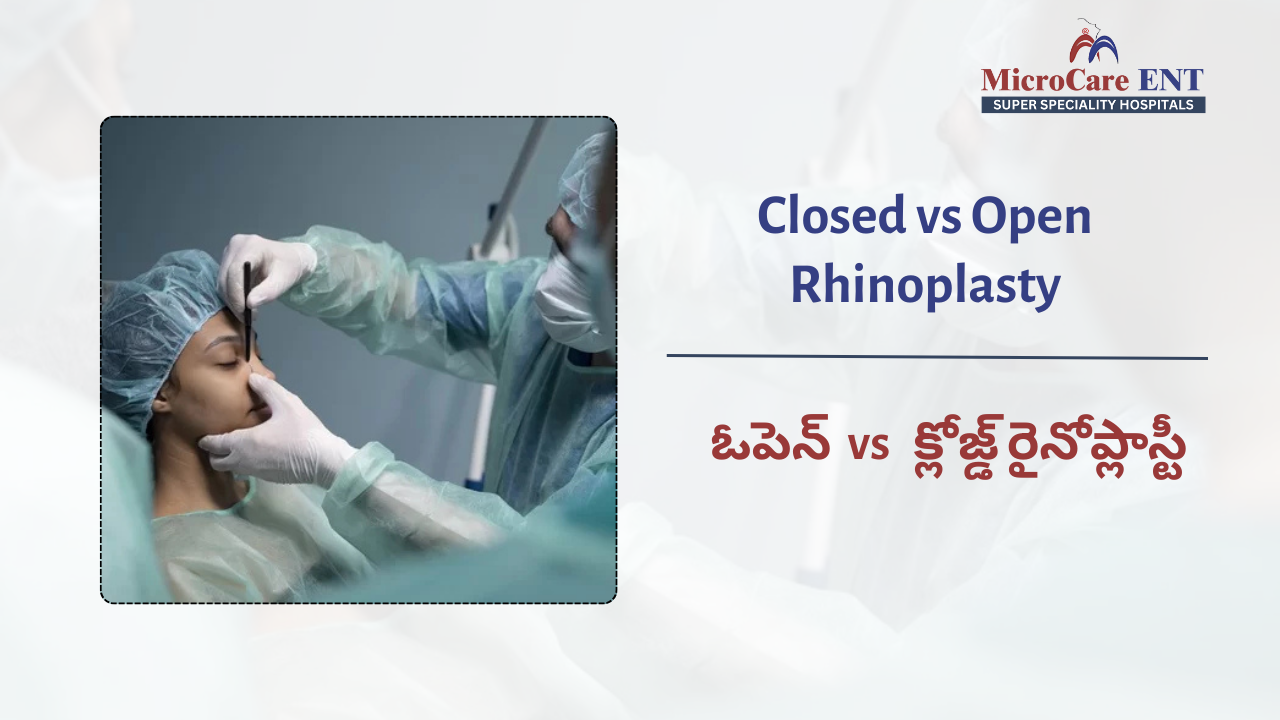
Closed vs Open Rhinoplasty: Which Is Better? | MicroCare ENT Hospital Hyderabad

Rhinoplasty

Closed vs open rhinoplasty explained by ENT surgeon at MicroCare ENT Hospital, Hyderabad (KPHB, Kukatpally), Telangana

If you’re planning a nose job, one common question comes up early: Closed vs Open Rhinoplasty— which technique is better for you? The right answer depends on your nose structure, your goals (cosmetic or breathing), and how much correction is needed.

At MicroCare ENT Hospital, Hyderabad (KPHB / Kukatpally / Jubilee Hills), our ENT surgeons evaluate both appearance and function. That way, your results look natural and your breathing stays comfortable.

This guide explains the difference between closed and open rhinoplasty, who each method suits best, recovery expectations, and how to choose the safer, more effective option for your needs.

Published By microcareenthospitals.com / Updated: Dec 12, 2025

What Is Rhinoplasty?

Rhinoplasty is a surgical procedure to reshape the nose. It can be done for:

  • Cosmetic goals (shape, size, symmetry)

  • Functional goals (better breathing, correcting deviated septum)

  • Both (often called septorhinoplasty)

If you’re searching for rhinoplasty in Hyderabad, make sure your consultation includes a breathing assessment—not just photos.

Closed Rhinoplasty: What It Means

there is usually no visible scar.

Benefits of Closed Rhinoplasty

  • No external incision/scar

  • Often less swelling (in select cases)

  • Faster early healing for many patients

  • Suitable for minor to moderate reshaping

Best For

Closed rhinoplasty often works well when corrections are limited, such as:

  • Small hump reduction

  • Minor bridge refinement

  • Subtle tip adjustments

  • Mild asymmetry corrections

However, it may not be ideal when the surgeon needs full visibility and complex tip work.

Open Rhinoplasty: What It Means

Open rhinoplasty involves a small incision on the columella (the strip between the nostrils). This allows the surgeon to lift the nasal skin and see the internal structures clearly.

Benefits of Open Rhinoplasty

  • Better visibility and precision

  • Ideal for complex reshaping

  • Stronger structural support work

  • Often preferred for revision rhinoplasty

Best For

Open rhinoplasty is commonly chosen for:

  • Major tip reshaping

  • Significant asymmetry correction

  • Revision rhinoplasty (second surgery)

  • Structural grafting needs

  • Severe crooked nose or trauma cases

The scar is usually small and becomes less noticeable over time when done properly.

Closed vs Open Rhinoplasty: Key Differences (Simple Comparison)

Incision Location

  • Closed: Inside the nostrils

  • Open: Inside + small external incision

Visibility for the Surgeon

  • Closed: Limited view

  • Open: Full view (more precision for complex cases)

Swelling & Healing

  • Closed: Often less swelling in simpler cases

  • Open: Swelling may last longer, especially at the tip

Best Use

  • Closed: Mild/moderate reshaping

  • Open: Complex reshaping, revisions, major tip work

Scar

  • Closed: No visible scar

  • Open: Tiny scar under nose (usually fades)

Which Technique Is Better for You?

The best technique depends on what you want to fix. Therefore, a personalized ENT evaluation matters.

Choose Closed Rhinoplasty If:

  • You want subtle changes

  • Your tip work is minimal

  • Your nose structure is stable

  • You prefer no external incision

Choose Open Rhinoplasty If:

  • You need tip definition or major reshaping

  • Your nose is crooked or post-trauma

  • You’re planning revision rhinoplasty

  • You need structural support (grafting)

  • You want maximum precision

At MicroCare ENT Hospital Hyderabad, we recommend the technique based on medical evaluation, not trends.

Functional Rhinoplasty: What If You Also Have Breathing Problems?

Many patients want a better-looking nose and better breathing. If you have:

  • Nasal blockage

  • Deviated septum

  • Turbinate enlargement

  • Chronic mouth breathing

  • Snoring linked to nasal obstruction

…you may need functional rhinoplasty or septorhinoplasty.

This is why choosing an experienced ENT specialist in Hyderabad is important—because ENT surgeons address both beauty and breathing.

Recovery: What to Expect After Rhinoplasty

Recovery varies between patients. Still, most people can expect:

  • Swelling and bruising (first 1–2 weeks)

  • Tip swelling may last longer (especially open rhinoplasty)

  • Avoid heavy exercise for a few weeks (as advised)

  • Final refinement continues over months

Your surgeon’s aftercare instructions play a huge role in how smoothly you heal.


How MicroCare ENT Hospital Hyderabad Helps You Decide

  • At MicroCare ENT Hospital (KPHB / Kukatpally / Jubilee Hills), your rhinoplasty consultation may include:

    • Nose examination (external + internal)

    • Breathing assessment

    • Imaging/endoscopy if needed

    • Photo-based planning

    • Clear explanation of open vs closed option

    • Customized plan focused on safety and natural results

Conclusion: Closed vs Open Rhinoplasty—The Right Choice Depends on Your Nose

So, closed vs open rhinoplasty— which is better? Closed rhinoplasty is often ideal for smaller corrections with no external scar. Open rhinoplasty offers more precision for complex reshaping and structural correction. The best decision comes from a proper ENT evaluation.

If you’re considering rhinoplasty in Hyderabad and want a safe, balanced result that supports both appearance and breathing, consult MicroCare ENT Hospital.

From MicroCare ENT Hospital to your inbox

Sign up for free and stay up to date on research advancements, health tips, current health topics, and expertise on managing health.

📞 Book Your Consultation Now

Call us: +91- 94 94 94 0725
appointments@microcareenthospitals.com
www.microcareenthospitals.com

To learn more about ent, visit our page on MicroCare ENT hospital

Watch our Related Videos

Post-Rhinoplasty Care Tips for Best Healing & Results

Rhinoplasty

Post-rhinoplasty care tips for best healing and results at MicroCare ENT Hospital Hyderabad

Post-Rhinoplasty Care Tips

Rhinoplasty (nose surgery) can enhance your facial balance and, in some cases, improve breathing too. However, the final result depends a lot on healing. Because the nose is delicate after surgery, the right routine reduces swelling and protects your new shape. Therefore, consistent post-rhinoplasty care is essential for long-term results.

This simple guide shares doctor-friendly post-rhinoplasty care tips with clear steps and easy headings. Moreover, it includes what to do, what to avoid, and when to contact your surgeon.

Published By microcareenthospitals.com / Updated: Dec 03, 2025

🧠 Why After Rhinoplasty Care Matters

After surgery, the skin and internal tissues need time to settle. Therefore, swelling, bruising, and a blocked-nose feeling are common at first. In addition, the nose is sensitive to pressure and strain during recovery. So, careful routines reduce risk and support better healing.

When you follow proper after rhinoplasty care, swelling reduces steadily. As a result, your nose shape refines naturally over time.

First 48 Hours: The Most Important Post-Rhinoplasty Care Tips

The first two days are crucial because healing begins immediately. Therefore, focus on rest and gentle support.

Keep your head elevated

Sleep on your back with 2–3 pillows or use a recliner. Because elevation reduces fluid build-up, swelling usually reduces faster. Also, staying elevated helps reduce pressure around the eyes.

Use cold compresses correctly

Apply cold compresses to the cheeks and under-eye area. However, do not press ice directly on the nose. As a result, bruising and swelling often reduce more comfortably.

Take medicines exactly as prescribed

Use pain relief and antibiotics per your surgeon’s schedule. In addition, avoid self-medicating with blood-thinning medicines unless approved. Therefore, always follow medical advice strictly.

Expect congestion and mild drainage

A blocked feeling is normal due to swelling or internal support. So, stay calm and breathe gently. Meanwhile, avoid forceful sniffing because it can irritate tissues.

💧 Daily Hygiene: Safe Nose Surgery Aftercare at Home

Daily hygiene keeps the nose comfortable and supports smooth healing. Therefore, do these steps gently and consistently.

Saline spray and moisture support

If your surgeon recommends saline spray, use it as advised. Consequently, dryness reduces and crusting becomes easier to manage. Also, moisture improves comfort while healing.

Gentle outer cleaning only

Clean only the outer nostril area with a clean cotton swab. However, do not insert anything deep inside the nose. As a result, you protect delicate tissues and reduce bleeding risk.

No nose blowing

Instead of blowing, dab gently with tissue. Because blowing increases pressure, it can cause bleeding or worsen swelling. Therefore, avoid it until your surgeon allows.

Sneeze safely

If you feel a sneeze, keep your mouth open. This reduces nasal pressure and protects healing tissues. So, it is a simple but important habit.

hinoplasty Precautions: What to Avoid for Best Results

Even if you feel better quickly, internal healing continues. Therefore, avoiding common mistakes protects your final outcome.

Avoid heavy exercise and lifting

Skip gym workouts, running, swimming, and weights until your surgeon approves. Because exercise raises blood pressure, swelling and bleeding risk can increase. So, return slowly and safely.

Avoid bending forward often

Bending increases facial pressure and can worsen swelling. Instead, bend at the knees when needed. As a result, you protect your nose and feel more comfortable.

Avoid smoking and alcohol

Smoking slows healing and increases infection risk. Similarly, alcohol can increase swelling. Therefore, avoiding both supports smoother recovery.

Avoid heat, steam, and strong sun

Heat can worsen swelling, and sun may darken bruising. So, avoid steam rooms, hot showers on the face, and direct sunlight. Moreover, wear a cap outdoors for extra protection.

Avoid pressure on the nasal bridge

If advised, avoid wearing glasses on the nose. In addition, do not rub, press, or massage the nose unless your surgeon instructs it. Therefore, keep your nose protected from accidental touch.


Food, Water, and Sleep: Simple Healing Support

Healthy habits improve healing. Therefore, keep recovery gentle and consistent.

Eat healing-friendly foods

Choose soft foods in the first few days. In addition, add protein, fruits, and vegetables because they support tissue repair. So, your body heals better from inside.

Stay hydrated daily

Drink plenty of water, because hydration supports circulation and reduces dryness. As a result, you may feel less discomfort.

Sleep safely every night

Sleep on your back with head elevation. Also, avoid side sleeping early on, because pressure can affect the nose. Therefore, safe sleep habits protect results.

⚠️ When to Call a Doctor After Rhinoplasty

Some symptoms need quick attention. Therefore, contact your surgeon or an ENT specialist if you notice:

  • Bleeding that does not stop

  • Fever or increasing redness

  • Severe pain not improving with medicines

  • Sudden swelling on one side

  • Foul-smelling discharge

  • Breathing difficulty that worsens

Early review prevents complications. So, don’t delay if symptoms feel unusual.

Post-Rhinoplasty Care in Hyderabad: MicroCare ENT Hospital

  • Follow-up care supports safe healing and better results. Therefore, MicroCare ENT Hospital offers personalised guidance for nose surgery aftercare and recovery support. Moreover, our ENT team focuses on both appearance and breathing.

    If you are looking for an ENT specialist in Hyderabad and the Best ENT Hospital in Telangana, MicroCare ENT Hospital is a trusted option for rhinoplasty care and aftercare.

Conclusion

  • These post-rhinoplasty care tips can reduce swelling, prevent complications, and support long-term results. So, follow this plan daily and allow your body the time it needs to heal. For expert recovery guidance, consult MicroCare ENT Hospital, Hyderabad, Telangana.

From MicroCare ENT Hospital to your inbox

Sign up for free and stay up to date on research advancements, health tips, current health topics, and expertise on managing health.

📞 Book Your Consultation Now

Call us: +91- 94 94 94 0725
appointments@microcareenthospitals.com
www.microcareenthospitals.com

To learn more about ent, visit our page on MicroCare ENT hospital

Watch our Related Videos

Rhinoplasty in Hyderabad – The Art and Science of Nose Reshaping at Microcare ENT Hospital

Rhinoplasty

What Is Rhinoplasty?

Rhinoplasty in Hyderabad is a surgical procedure designed to improve both the appearance and function of the nose. At Microcare ENT Hospital, it’s not just about cosmetic change — it’s about restoring confidence and helping patients breathe freely.
Dr. Sriprakash Vinnakota, an expert ENT and facial surgeon, combines medical precision with artistic vision to deliver balanced, natural-looking results.

Some people choose rhinoplasty to correct nasal deformities from birth or injury, while others seek it to refine facial harmony. In many cases, patients also suffer from nasal obstruction or snoring, which functional rhinoplasty can effectively treat.

Published By microcareenthospitals.com / Updated: OCT 18, 2025

Why Do People Undergo Rhinoplasty?

Every patient’s story is unique. Some come in hoping to improve facial balance, while others want to finally breathe without discomfort. Rhinoplasty can address a range of concerns, such as:

A crooked or bent nose due to previous trauma

Breathing difficulty from a deviated septum

A prominent nasal hump or bulbous tip

Asymmetrical nostrils or wide nasal base

At Microcare ENT Hospital, each surgery begins with a thorough nasal evaluation, breathing assessment, and 3D facial analysis to plan a result that suits both your appearance and lifestyle.

The Surgical Journey – What to Expect

Dr. Sriprakash begins each case with a careful diagnosis and discussion about goals. During Rhinoplasty in Hyderabad, modern techniques like endoscopic and coblation-assisted surgery allow for precise reshaping with minimal recovery time.

The surgery is usually done under general anesthesia. Depending on the complexity, it can be performed as either:

Closed Rhinoplasty – incisions made inside the nose, leaving no visible scars.

Open Rhinoplasty – a tiny incision under the nasal tip for better visibility and detailed reshaping.

After adjusting the cartilage and bone, the nose is reshaped, the airway widened, and the incision closed neatly. Most patients return home the same day or within 24 hours.

Recovery and Healing

Recovery after rhinoplasty is surprisingly smooth when done under expert hands.
Mild swelling, bruising, and congestion may last for about 7–10 days. Patients can usually resume work within a week.
At Microcare ENT Hospital, every patient receives personalized post-surgical care and follow-up.

Most importantly, the final results improve gradually as swelling settles — revealing a refined, natural shape that enhances both function and appearance.

Rhinoplasty vs Septoplasty – Know the Difference

Many patients confuse these two terms.

Septoplasty focuses on correcting a deviated septum to improve breathing.

Rhinoplasty, on the other hand, deals with reshaping the external structure of the nose.

When both are done together, it’s called Septorhinoplasty, which improves airflow and facial appearance in one procedure.

Benefits of Rhinoplasty in Hyderabad

Patients often say that rhinoplasty doesn’t just change how they look — it changes how they feel.
At Microcare ENT Hospital, the benefits include:

Clearer breathing and relief from nasal obstruction

Enhanced facial symmetry and profile

Correction of injury-related deformities

Boosted self-confidence and comfort in appearance

Many also report better sleep quality and reduced snoring after surgery, especially when functional corrections are involved.

Common Beliefs and the Truth About Rhinoplasty

Many people have different opinions about rhinoplasty. Let’s look at some common beliefs and understand what’s really true.

Belief 1: Rhinoplasty is only done for looks.
Reality: Rhinoplasty isn’t just about changing appearance. It can also correct breathing issues, fix a deviated septum, and improve sleep quality.

Belief 2: The nose will look unnatural after surgery.
Reality: At Microcare ENT Hospital, every procedure is done carefully to match your natural facial features. The goal is to create a balanced, natural look that suits you perfectly.

Belief 3: The surgery is painful and recovery is very difficult.
Reality: With today’s modern anesthesia and surgical technology, discomfort is minimal. Most patients feel only mild swelling, which reduces within a few days, and they return to normal life quickly.

Belief 4: Rhinoplasty is meant only for young people.
Reality: Age is not a barrier. People of all age groups—young adults, middle-aged, and even older individuals—undergo rhinoplasty to improve breathing or correct nose shape comfortably and safely.

Why Choose Microcare ENT Hospital?

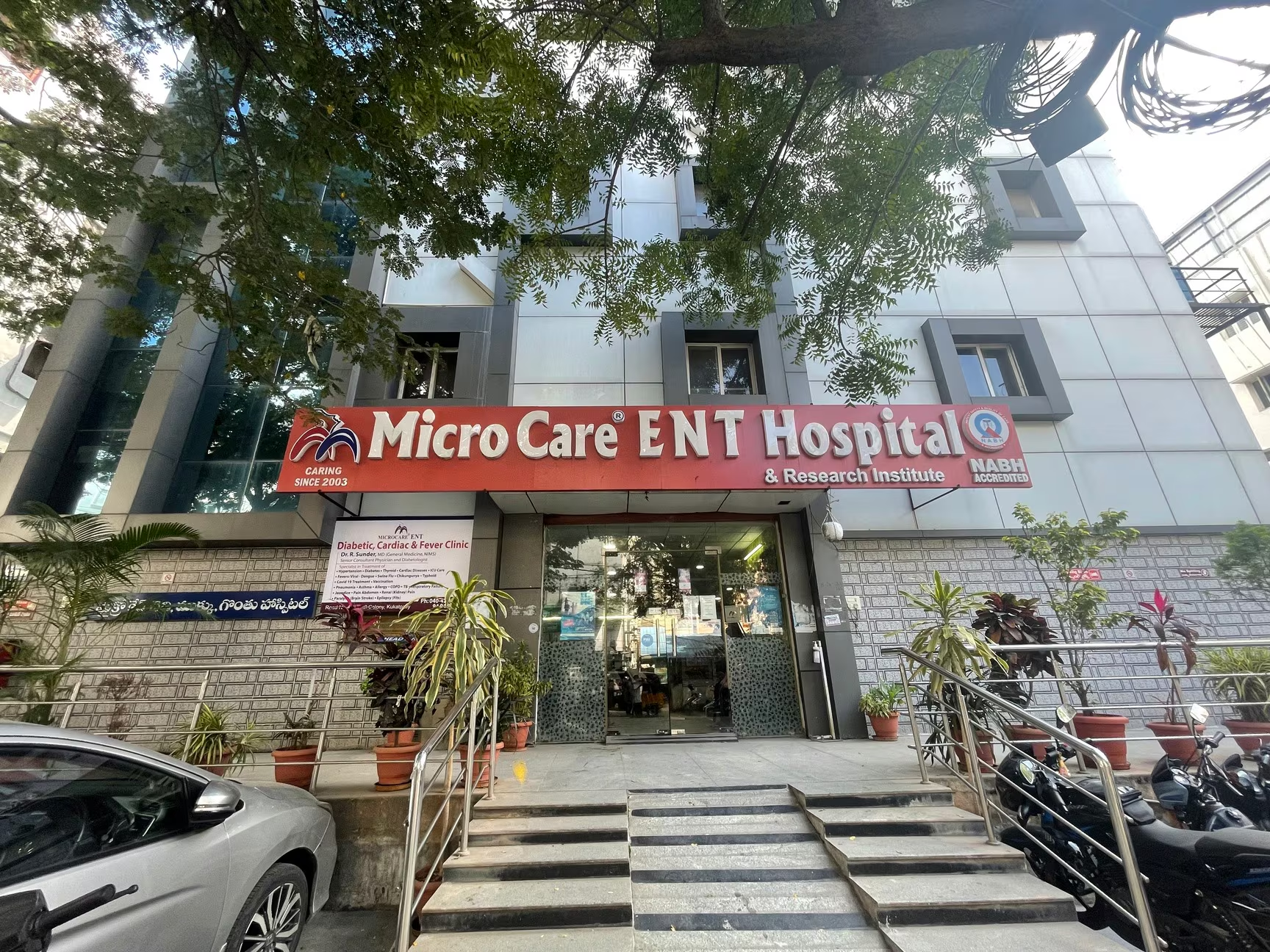
Microcare ENT Hospital, located in KPHB Colony, Kukatpally, is among Hyderabad’s most advanced centers for ENT and facial surgeries.
Dr. Sriprakash Vinnakota brings years of experience in functional and cosmetic rhinoplasty, ensuring that each patient receives a personalized plan that focuses equally on aesthetics and breathing function.

With cutting-edge facilities, 3D planning, coblation-assisted surgery, and compassionate care, Microcare ENT Hospital has helped numerous patients achieve lasting results and renewed confidence.

Conclusion – Breathe Freely, Look Confident

Rhinoplasty in Hyderabad is more than a cosmetic transformation — it’s a medical solution for better breathing and emotional well-being. Whether you’re struggling with nasal blockage, post-injury deformity, or dissatisfaction with your appearance, Microcare ENT Hospital offers comprehensive care from consultation to recovery.

A balanced nose not only improves your facial appearance but also your overall health. Trust the expertise of Dr. Sriprakash Vinnakota to help you breathe better and feel beautiful — inside and out.

From MicroCare ENT Hospital to your inbox

Sign up for free and stay up to date on research advancements, health tips, current health topics, and expertise on managing health.

📞 Book Your Consultation Now

Call us: +91- 94 94 94 0725
appointments@microcareenthospitals.com
www.microcareenthospitals.com

To learn more about ear, visit our page on advanced ear solutions at MicroCare ENT
learn about How snoring effects your health

Watch our Related Videos

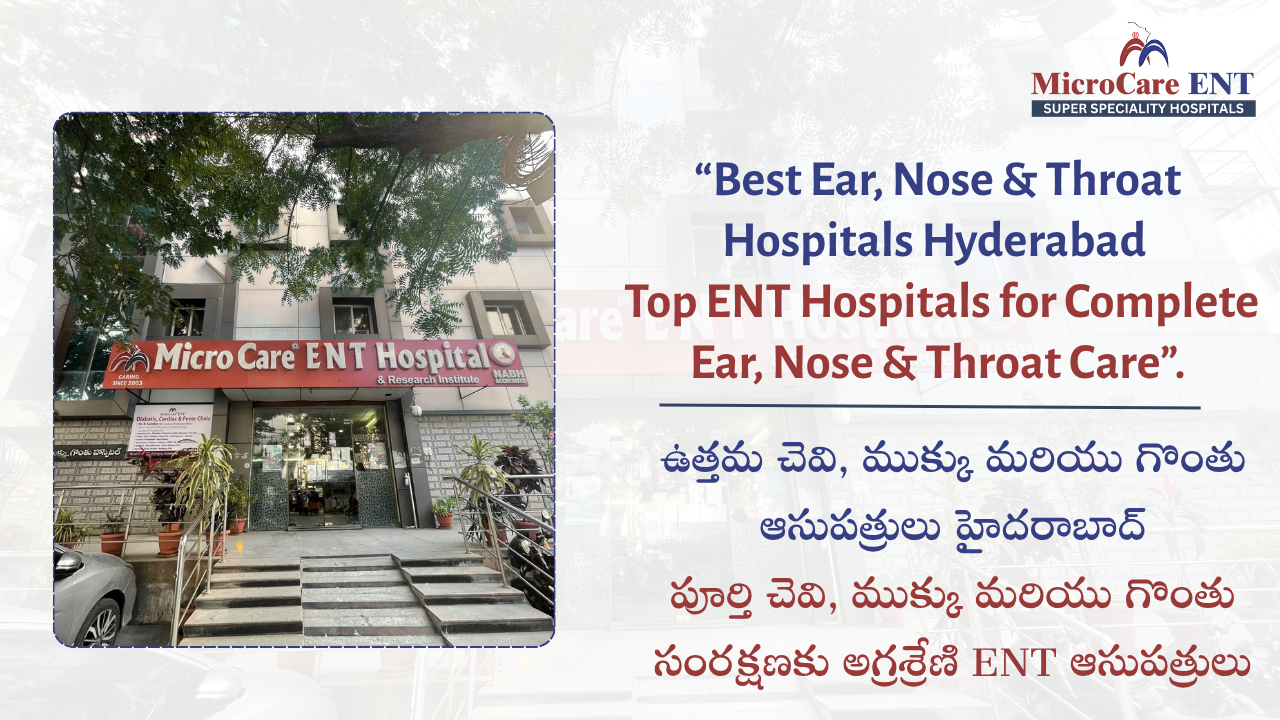
Best Ear, Nose & Throat Hospitals Hyderabad – Top ENT Hospitals for Complete Ear, Nose & Throat Care

Rhinoplasty

When it comes to maintaining good health, ear, nose, and throat care is often overlooked — yet these three areas play a crucial role in breathing, hearing, and communication. The Best Ear, Nose & Throat Hospitals Hyderabad are dedicated to providing specialized medical care for all ENT-related disorders, from common ear infections and sinus issues to complex surgeries like cochlear implants and head & neck procedures.

Hyderabad has become a major hub for advanced ENT treatment in India, with hospitals offering state-of-the-art facilities, skilled surgeons, and personalized patient care. Whether you’re struggling with chronic sinusitis, hearing loss, voice disorders, or sleep apnea, the Best Ear, Nose & Throat Hospitals Hyderabad provide comprehensive solutions using the latest technology and minimally invasive techniques.

Published By microcareenthospitals.com / Updated: OCT 16, 2025

1. MicroCare ENT Hospital – The Leading ENT Super Speciality in Hyderabad

MicroCare ENT Super Speciality Hospital is widely recognized as one of the Best Ear, Nose & Throat Hospitals Hyderabad for advanced treatments and compassionate care.

Expertise: Led by Dr. Sriprakash Vinnakota, one of Hyderabad’s most trusted ENT specialists.

Services Offered: Cochlear implants, endoscopic sinus surgery, allergy management, voice & throat disorders, ear microsurgery, and skull base surgeries.

Technology: Equipped with advanced endoscopic systems, laser-assisted instruments, and 3D navigation technology.

Infrastructure: Features four state-of-the-art operation theatres, dedicated audiology units, and modern ICUs.

Locations: Branches in KPHB and Jubilee Hills for patient convenience.

2. Dr. Rao’s ENT Super Specialty Hospital

Dr. Rao’s ENT Hospital is another reputed name among the Best Ear, Nose & Throat Hospitals Hyderabad, known for advanced ENT and skull base surgeries.

Specialties: Pediatric ENT, cochlear implants, head & neck oncology, rhinology, and facial plastic surgery.

Recognition: NABH accredited and equipped with advanced endoscopy labs.

3.MAA ENT Hospital

MAA ENT is a well-known ENT super specialty hospital in Hyderabad, with strong credentials in cochlear implantation, sinus surgeries, and ENT care. 

They report over 700 cochlear implant surgeries, many sinus surgeries, and advanced navigation / robotic laser tools.

4. Apollo Hospitals ENT Department

Apollo Hospitals, Jubilee Hills, ranks among the top ENT hospitals with advanced diagnostic and surgical facilities.

Services: Laser tonsillectomy, voice therapy, ear reconstruction, and hearing restoration surgeries.

Specialists: Houses top ENT surgeons like Dr. Y.L. Ravi Jadhav, renowned for cochlear implant procedures.

5.Continental Hospitals (ENT Department)

Continental Hospitals in Hyderabad has a dedicated ENT department offering comprehensive ear, nose, and throat treatments.

How to Choose the Right ENT Hospital in Hyderabad

When selecting from the Best Ear, Nose & Throat Hospitals Hyderabad, keep these factors in mind:

FactorImportance
Doctor ExperienceChoose hospitals with board-certified ENT surgeons.
InfrastructureModern operation theatres and diagnostics improve outcomes.
SpecializationLook for hospitals offering services like cochlear implants or allergy care.
Patient ReviewsReal feedback helps assess quality of service.
LocationAccessibility for follow-up care is key.

Conclusion

For anyone seeking the Best Ear, Nose & Throat Hospitals Hyderabad, MicroCare ENT Hospital stands as the top choice — known for expertise, technology, and patient trust. Alongside MicroCare, institutions like Dr. Rao’s ENT, Rainbow Children’s Hospital, and Apollo Hospitals continue to offer world-class ENT care. Choosing the right hospital can make a life-changing difference in hearing, sinus, or throat health.

From MicroCare ENT Hospital to your inbox

Sign up for free and stay up to date on research advancements, health tips, current health topics, and expertise on managing health.

📞 Book Your Consultation Now

Call us: +91- 94 94 94 0725
appointments@microcareenthospitals.com
www.microcareenthospitals.com

To learn more about ear, visit our page on advanced ear solutions at MicroCare ENT
learn about How snoring effects your health

Watch our Related Videos

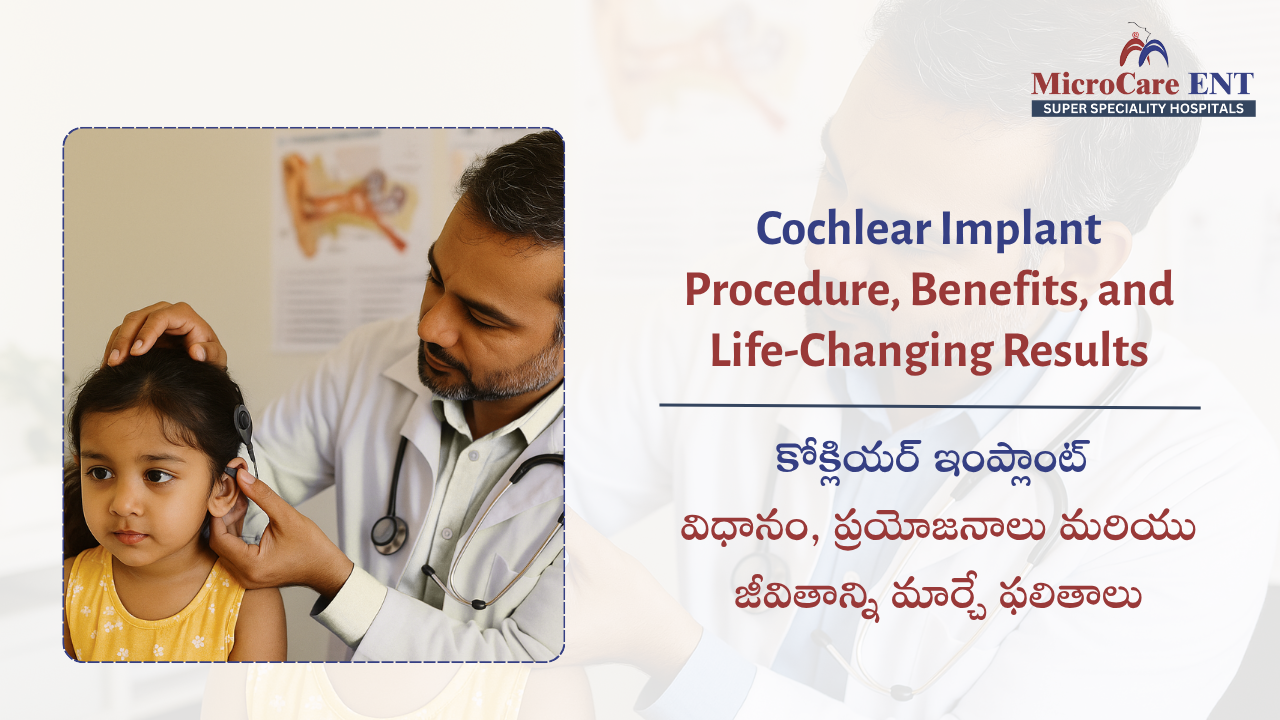
Cochlear Implant – Procedure, Benefits, and Life-Changing Results

Rhinoplasty

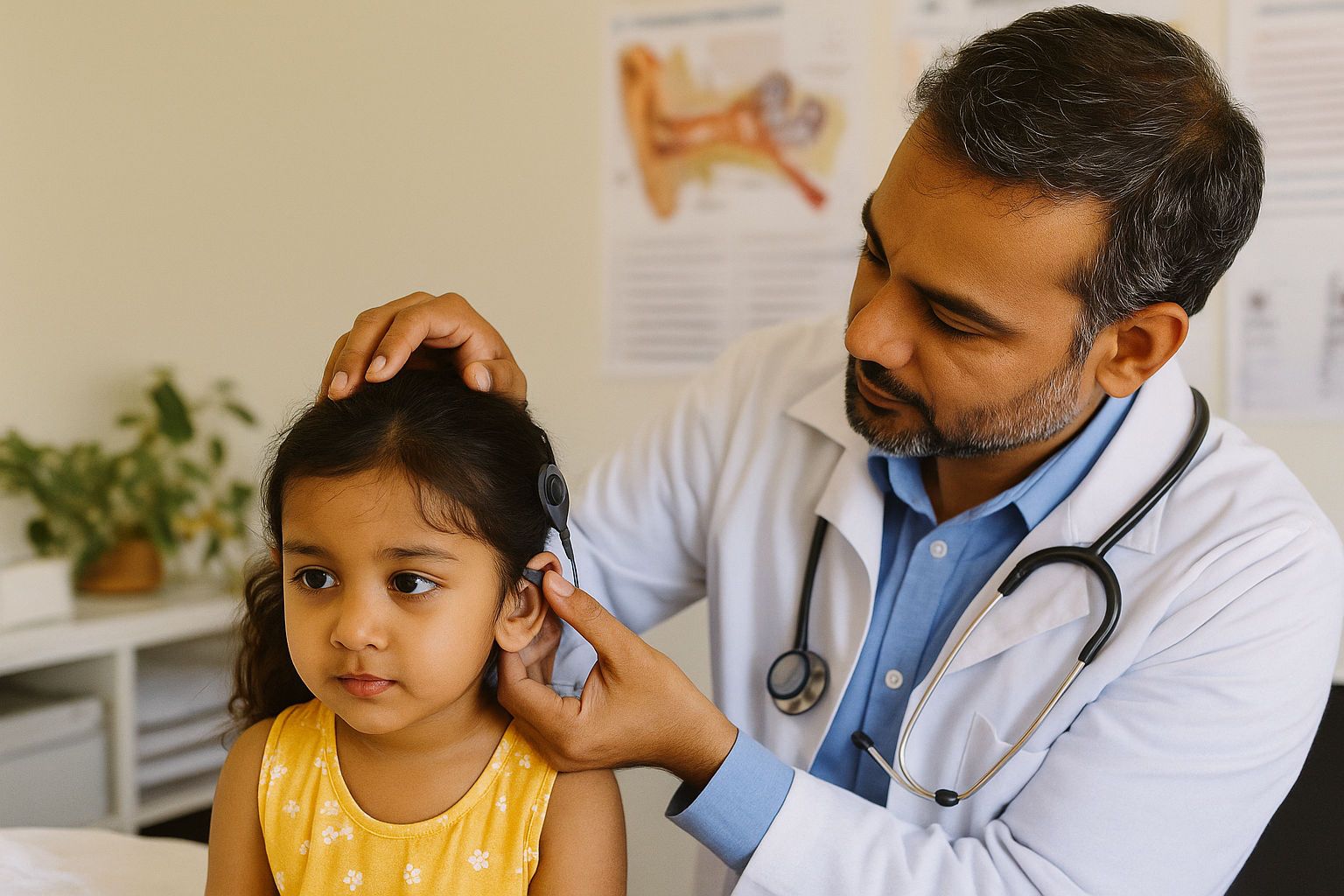
A cochlear implant is a revolutionary medical device designed to help people with severe hearing loss or deafness experience sound again. Unlike traditional hearing aids that amplify sound, a cochlear implant directly stimulates the auditory nerve, offering a clear and natural hearing experience. In this blog, we’ll explore how cochlear implants work, their benefits, and what patients can expect before and after the surgery.

Published By microcareenthospitals.com / Updated: 15 OCT , 2025

What Is a Cochlear Implant?

A cochlear implant is a small, complex electronic device that provides a sense of sound to individuals who are profoundly deaf or severely hard of hearing. It consists of two main parts:

External Processor: Captures and processes sound from the environment.

Internal Implant: Sends electrical signals directly to the auditory nerve.

This allows sound signals to bypass damaged parts of the inner ear and reach the brain directly.

How Does a Cochlear Implant Work?

Sound Detection: The external processor captures sound.

Signal Conversion: It converts sound into digital signals.

Transmission: The implant sends electrical impulses to the auditory nerve.

Brain Interpretation: The brain translates these impulses into recognizable sound.

This advanced hearing technology has changed millions of lives across the world.

Benefits of Cochlear Implants

Improved speech understanding

Better communication in noisy environments

Enhanced awareness of environmental sounds

Support for child language development

Improved quality of life and social interaction

The Cochlear Implant Surgery Procedure

Cochlear implant surgery is performed under general anesthesia and typically takes 2–3 hours.

A small incision is made behind the ear.

The internal device is placed under the skin.

The electrode array is inserted into the cochlea.

The external processor is fitted a few weeks after healing.

Patients often undergo speech therapy and rehabilitation to adjust to their new hearing sensations.

If home remedies don’t help after 7–10 days or symptoms worsen, it’s time to seek professional help. Persistent infections may require a CT scan or nasal endoscopy for proper diagnosis and advanced sinus treatment.

Who Can Benefit from a Cochlear Implant?

Cochlear implants are recommended for:

Adults with severe or profound hearing loss in both ears

Children born with deafness

Patients who receive little or no benefit from hearing aids

Life After Cochlear Implant

Post-surgery, patients experience gradual improvement in hearing clarity as the brain adapts. With consistent therapy and device tuning, most recipients can recognize speech and enjoy music.

Conclusion

A cochlear implant offers a second chance at hearing for those who thought silence was permanent. Whether for a child developing language or an adult reconnecting with loved ones, cochlear implants represent hope, technology, and transformation. If you or a loved one struggles with hearing loss, consult an ENT specialist to explore this life-changing option.

From MicroCare ENT Hospital to your inbox

Sign up for free and stay up to date on research advancements, health tips, current health topics, and expertise on managing health.

📞 Book Your Consultation Now

Call us: +91- 94 94 94 0725
appointments@microcareenthospitals.com
www.microcareenthospitals.com

To learn more about ear, visit our page on advanced ear solutions at MicroCare ENT
learn about How snoring effects your health

Watch our Related Videos

How to Choose the Best Rhinoplasty Surgeon in Hyderabad (and Why It Matters)

Rhinoplasty

Rhinoplasty - Microcare ENT Super Speciality Hospital

When it comes to something as personal and life-enhancing as rhinoplasty — or nose surgery — choosing the right surgeon is everything. Whether you’re searching for a “top ENT doctor in Hyderabad”, or looking for the “best nose surgery hospital near me”, the decision you make can affect not only how you look, but also how you breathe, heal, and feel for the rest of your life.

At MicroCare ENT Super Speciality Hospital, we’ve helped thousands of patients transform their appearance and correct functional nose issues with confidence. In this blog, we’ll guide you on how to choose the right rhinoplasty specialist and explain why MicroCare is considered one of the best ENT hospitals in Hyderabad and India for this life-changing procedure.

Published By microcareenthospitals.com / Updated: Apr 23, 2025

Why Surgeon Experience Matters in Rhinoplasty

Rhinoplasty is a complex procedure that blends art, science, and surgical skill. A good rhinoplasty surgeon understands not just facial aesthetics, but also the internal anatomy of the nose, airflow mechanics, and healing behavior.


Look for a surgeon who:

Has performed hundreds (or thousands) of rhinoplasty procedures

Is trained in both functional and cosmetic ENT surgery

Has positive patient reviews and strong before/after case studies

Practices at a reputed, advanced hospital with full ENT support


At MicroCare, our ENT doctors have 25+ years of experience and are among the top rhinoplasty surgeons in Telangana.

What Makes a Hospital Ideal for Rhinoplasty?

Choosing the right hospital ensures that your surgery is:

Safe and sterile

Backed by modern technology

Monitored by a multi-disciplinary team

Supported by anesthesia, ICU, and post-op recovery facilities


MicroCare ENT Super Speciality Hospital in Hyderabad is fully equipped with:

3D facial scanning and endoscopic surgical tools

ENT-focused surgical theaters

Post-surgical care, monitoring, and support

Affordable pricing with international quality standards

When you search “ENT hospitals near me” or “rhinoplasty centers in Hyderabad”, we want MicroCare to be your first and last stop.

Know these things Before Choosing a Rhinoplasty Doctor

Ask these questions in your consultation:

How many rhinoplasty surgeries have you done?

Do you perform both open and closed rhinoplasty?

Will you show me before/after photos of past patients?

What’s the expected recovery time?

What support will I have after surgery?

At MicroCare, we believe in transparent communication and ensure patients are fully informed before moving forward.

Why People from Across India Trust MicroCare for Nose Surgery

While we’re based in Hyderabad, patients from all across India choose us for rhinoplasty — because they’re looking for:

The best ENT doctor in India

Top ENT hospital with advanced technology

Affordable pricing with premium care

Surgeons who understand both aesthetics and functionality

No matter where you are — from South India to North India — MicroCare ENT Super Speciality Hospital offers results that speak for themselves.

Patient Testimonials Say It All

Final Thoughts: Choose Wisely, Choose MicroCare

When it comes to your nose, don’t compromise. Whether it’s for cosmetic reasons or functional improvement, rhinoplasty is a delicate procedure that requires skill, vision, and experience.

Choose MicroCare ENT Super Speciality Hospital — a name trusted by patients across Hyderabad and India. With experienced ENT surgeons, modern technology, and personalized care, we make your journey smooth, safe, and successful.

More Information

From MicroCare ENT Hospital to your inbox

Sign up for free and stay up to date on research advancements, health tips, current health topics, and expertise on managing health.

📞 Book Your Consultation Now

Call us: +91- 94 94 94 0725
appointments@microcareenthospitals.com
www.microcareenthospitals.com

Your ears matter. Let us help you listen to life again—with clarity and confidence.

Watch our Related Videos

Viral Videos

Playlist

10 Videos