How Weather Changes Affect Your Sinus Health

ENT

How weather changes affect your sinus health during cold, heat, or humidity

How Weather Changes Affect Your Sinus Health

At microcare ent hospital, we often see patients whose sinus symptoms worsen during specific weather conditions. Understanding How Weather Changes Affect Your Sinus Health helps you manage congestion, pressure, headaches, and allergies more effectively. Weather shifts can irritate sinus tissues, inflame nasal passages, and trigger mucus buildup—leading to discomfort, blocked nose, and recurring sinus issues.

Weather has a powerful influence on sinus health. Sinuses are air-filled cavities that rely on proper airflow and drainage to stay healthy. When temperature, humidity, or air pressure changes suddenly, these delicate tissues can become inflamed or irritated.

Published By microcareenthospitals.com / Updated: NOV 24, 2025

⭐ Cold Weather and Your Sinuses

Cold air dries out the nose and sinus lining, causing inflammation. As the mucous membrane becomes dry, it thickens to protect itself, leading to blocked airflow, sinus pressure, and headaches. People with chronic sinusitis often experience flare-ups during winter.

⭐ Heat & Humidity Effects

Hot weather increases moisture in the air, making mucus thicker and slowing drainage. High humidity can also trigger allergies and fungal growth, causing symptoms like sinus pressure, fatigue, and nasal congestion.

⭐ Rainy Weather & Low Pressure

Rainy days increase mold spores, a common sinus irritant. Low atmospheric pressure during storms can cause sinus cavities to feel tight or full, resulting in sinus headaches. Many people experience increased sinus pressure when it rains.

⭐ Seasonal Allergies & Sinus Health

Season transitions—especially spring and winter—bring pollen, dust, and pollution. These allergens can inflame the sinus lining and cause congestion, watery eyes, sneezing, or sinus infections. Children and adults with allergies often notice symptoms worsening during weather shifts.

⭐ Tips to Protect Your Sinus Health During Weather Changes

  • Use a humidifier in dry seasons

  • Stay hydrated to thin mucus

  • Use saline nasal sprays for moisture

  • Limit outdoor exposure on high-pollen days

  • Maintain indoor air quality with air purifiers

  • Wear a mask outdoors during dust or pollution

  • Seek ENT evaluation if symptoms persist

Consistent care avoids long-term sinus complications.

⭐ How Air Pressure Influences Sinus Pain

Changes in air pressure can significantly affect sinus cavities. When atmospheric pressure drops—especially before rain or storms—the pressure inside your sinus cavities remains the same. This creates a pressure imbalance, causing headaches, facial pain, and a feeling of fullness in the cheeks or forehead. People with sinusitis are more sensitive to these changes because their sinus passages are already inflamed.

⭐ Why People With Sinusitis Are More Sensitive to Weather Changes

Individuals with chronic sinusitis or nasal allergies tend to have swollen sinus tissues throughout the year. When weather shifts occur, these tissues react more strongly, causing quick flare-ups. Even mild humidity changes or cool air can trigger symptoms like post-nasal drip, sneezing, or sinus pressure. Consistent care, allergy control, and ENT follow-ups help reduce sensitivity.

⭐ Indoor Air Quality Matters Too

Weather changes not only affect outdoor air but also indoor environments. Air conditioning, heaters, and closed windows reduce ventilation and dry the air. Dry indoor air irritates nasal passages, while stale indoor air increases dust and allergens. Using humidifiers, maintaining AC filters, and improving ventilation can keep your home sinus-friendly.

⭐ Foods That Help During Sinus Flare-Ups

Eating the right foods during weather-triggered sinus discomfort can provide natural relief. Warm liquids, ginger, turmeric, garlic, and vitamin C-rich foods help reduce inflammation. Spicy foods temporarily open nasal passages, helping you breathe better. Staying hydrated thins mucus and prevents blockages.

⭐ When to Visit an ENT Specialist

If sinus symptoms last longer than 10 days, recur frequently with weather changes, or interfere with your daily activities, it’s important to consult an ENT specialist. At microcare ent hospital, our sinus experts evaluate the root cause—whether it’s allergies, structural issues, or chronic infections—to create a personalized treatment plan. Early diagnosis prevents complications like sinus infections, sleep disturbances, and breathing difficulty.

⭐ Long-Term Management for Sinus Health

Managing sinus issues caused by weather involves a combination of lifestyle adjustments, allergy control, hydration, and medical care when needed. Regular saline rinses, steam inhalation, and avoiding sudden temperature exposure help maintain sinus comfort. For chronic sinusitis, advanced treatments such as FESS or Balloon Sinuplasty may be recommended for long-term relief.

From MicroCare ENT Hospital to your inbox

Sign up for free and stay up to date on research advancements, health tips, current health topics, and expertise on managing health.

📞 Book Your Consultation Now

Call us: +91- 94 94 94 0725
appointments@microcareenthospitals.com
www.microcareenthospitals.com

To learn more about ent, visit our page on MicroCare ENT hospital

Watch our Related Videos

Adenoid Problems in Children – Symptoms, Causes & Treatment

ENT

Adenoid Problems in Children ENT examination for diagnosis

Adenoid Problems in Children

At microcare ent hospital, we often meet parents concerned about their child’s breathing or sleep issues. Understanding Adenoid Problems in Children is essential because enlarged or infected adenoids can affect breathing, sleep, speech, and overall health. This guide explains the symptoms, causes, and treatment options to help parents make informed decisions.

Adenoids are small lymphatic tissues located behind the nose. They help fight infections in early childhood but can become enlarged or repeatedly infected. Adenoid Problems in Children are common between ages 2 to 10 and can affect daily life if not treated early.

Published By microcareenthospitals.com / Updated: NOV 21, 2025

⭐ Common Symptoms of Adenoid Problems

Parents should watch for:

  • Mouth breathing instead of nose breathing

  • Loud snoring during sleep

  • Blocked nose

  • Frequent sinus or ear infections

  • Daytime tiredness

  • Sleep apnea or pauses in breathing

  • Nasal-sounding speech

  • Difficulty swallowing

When adenoids are enlarged, they obstruct airflow and can cause sleep, breathing, and speech issues.

⭐ Causes of Enlarged Adenoids

Adenoid enlargement may occur due to:

  • Repeated throat or sinus infections

  • Allergies

  • Exposure to pollutants

  • Viral infections

  • Immune system response in young children

As children grow, adenoids naturally shrink, but severe issues require medical attention.

⭐ How Adenoid Problems Affect Children

Enlarged adenoids can impact:

  • Breathing (leading to the child always breathing through the mouth)

  • Sleep quality (snoring or sleep apnea)

  • Hearing (ear fluid build-up or infections)

  • Speech clarity

  • Facial growth (long face or narrow palate)

Early ENT evaluation prevents long-term issues.

⭐ Diagnosis at microcare ent hospital

Our specialists use:

  • Nasal endoscopy

  • X-ray (lateral neck view)

  • Sleep study (if needed)

  • Hearing tests (for related ear problems)

These help determine the severity of adenoid enlargement.

⭐ Treatment Options

Treatment depends on the severity:

1. Medication

  • Nasal steroid sprays

  • Antibiotics (for infections)

  • Anti-allergy treatment

2. Adenoidectomy (Adenoid Removal Surgery)

A safe, quick procedure recommended when:

  • Breathing is severely affected

  • Recurrent sinus or ear infections occur

  • Sleep apnea is present

  • Hearing is affected due to ear fluid

Recovery is usually smooth, and children breathe and sleep better within days.

⭐ Long-Term Outlook for Children With Adenoid Problems

With proper diagnosis and timely treatment, most children recover fully from adenoid-related issues. Early care helps prevent complications such as speech delays, chronic ear infections, and sleep disturbances. As children grow, their adenoids naturally shrink, reducing the chances of future problems. However, regular monitoring by an ENT specialist ensures your child maintains healthy breathing, hearing, and sleep patterns as they develop.

⭐ Supporting Your Child’s ENT Health

Parents play a vital role in noticing early signs such as loud snoring, mouth breathing, or frequent throat infections. Maintaining good nasal hygiene, managing allergies, and scheduling regular ENT check-ups helps protect your child from recurring problems. If your child continues to face breathing or sleep difficulties, seeking timely care at microcare ent hospital ensures expert evaluation, personalized treatment, and long-term improvement in overall ENT health.

From MicroCare ENT Hospital to your inbox

Sign up for free and stay up to date on research advancements, health tips, current health topics, and expertise on managing health.

📞 Book Your Consultation Now

Call us: +91- 94 94 94 0725
appointments@microcareenthospitals.com
www.microcareenthospitals.com

To learn more about ent, visit our page on MicroCare ENT hospital

Watch our Related Videos

Benefits of Cochlear Implants

ENT

Benefits of cochlear implants for better hearing and communication

Benefits of Cochlear Implants

At microcare ent hospital, we aim to help patients make informed hearing-care decisions. Understanding the Benefits of Cochlear Implants allows individuals with severe hearing loss to explore advanced treatment options that can significantly improve their listening abilities, confidence, and overall quality of life.

Cochlear implants are advanced hearing devices designed for people who cannot benefit enough from traditional hearing aids. Unlike regular hearing aids, cochlear implants bypass the damaged hair cells of the inner ear and send sound signals directly to the auditory nerve. This results in improved sound clarity and better speech understanding.

Published By microcareenthospitals.com / Updated: NOV 21, 2025

⭐ Top Benefits of Cochlear Implants

1. Clearer Speech Understanding

One of the most important Benefits of Cochlear Implants is improved speech clarity. Patients can better understand voices, conversations, and important everyday sounds.

2. Improved Sound Awareness

Cochlear implants make it easier to hear alarms, doorbells, traffic sounds, and environmental noises—helping individuals stay safe and confident.

3. Enhanced Quality of Life

Hearing improvement directly boosts confidence, emotional well-being, and social interaction. Many patients experience reduced frustration and improved communication with family and friends.

4. Better Learning & Language Development for Children

Children who receive cochlear implants early show better speech, language, and communication skills. This leads to improved academic performance and social development.

5. Effective Even When Hearing Aids Fail

When high-power hearing aids do not help, cochlear implants provide a powerful alternative that restores access to sound and speech.

⭐ Who Can Benefit From Cochlear Implants?

  • Children with severe-to-profound hearing loss

  • Adults with sensorineural hearing loss

  • Patients who struggle with speech clarity even with hearing aids

  • People with progressive hearing loss

  • Individuals seeking long-term hearing improvement

A comprehensive evaluation at microcare ent hospital helps determine the right treatment plan.

⭐ What to Expect After Implantation

After activation, patients undergo regular mapping sessions and auditory training. These steps help the brain adapt to new sound signals for the best results. Continuous follow-ups ensure proper device performance and long-term hearing improvement.

⭐ Cochlear Implant Success Rates

Cochlear implants have one of the highest success rates among auditory treatments. Many patients experience remarkable improvement in speech recognition, especially when combined with auditory rehabilitation. Research shows that early implantation in children leads to faster language acquisition and better long-term communication outcomes. Adults who lost hearing later in life also benefit by regaining the ability to understand speech without relying heavily on lip-reading.

⭐ Benefits for Adults With Long-Term Hearing Loss

Adults who struggle with communication at work, home, or social gatherings often find cochlear implants life-changing. The implants help reduce communication barriers, increase productivity, and restore independence. Many recipients report feeling more confident, less isolated, and more active in social interactions.

⭐ Cochlear Implants and Brain Development in Children

One of the greatest Benefits of Cochlear Implants is the impact on a child’s brain development. The early years of life are critical for language growth, and cochlear implants provide access to sound during this crucial stage. Children who receive implants before the age of three often develop speech and language skills comparable to their hearing peers when supported with consistent therapy.

⭐ Life After Cochlear Implantation

After implantation, patients gradually adapt to new sounds. Many describe hearing birds chirping, music, and voices clearly for the first time. With proper therapy, listening becomes natural, speech becomes clearer, and communication improves significantly.

From MicroCare ENT Hospital to your inbox

Sign up for free and stay up to date on research advancements, health tips, current health topics, and expertise on managing health.

📞 Book Your Consultation Now

Call us: +91- 94 94 94 0725
appointments@microcareenthospitals.com
www.microcareenthospitals.com

To learn more about ent, visit our page on MicroCare ENT hospital

Watch our Related Videos

Stop Snoring in 10 Seconds – Doctor Reveals a Simple Tongue Trick That Works

ENT

Snoring solution – simple tongue exercise to stop snoring and improve sleep quality

Why Snoring Happens

Snoring is common, and it can disturb your sleep as well as your family’s rest. In many people, snoring starts when the tongue relaxes too much during sleep. Because the tongue can fall backward, airflow becomes restricted. As a result, throat tissues vibrate and create the snoring sound.

Fortunately, tongue exercises for snoring can strengthen the muscles that support the airway. Moreover, these exercises are safe, simple, and easy to do at home. So, when you practice daily, you may reduce snoring naturally and sleep more peacefully.

Published By microcareenthospitals.com / Updated: NOV 20, 2025

🧠 Why Tongue Exercises Help Reduce Snoring

To reduce snoring naturally, it helps to understand the cause first. In simple terms, snoring often happens when the upper airway becomes narrow during sleep. Therefore, improving tongue and throat muscle tone can reduce vibration and improve airflow.

Snoring often results from:

  • Weak tongue muscles

  • Mouth breathing

  • A collapsing airway during deep sleep

  • Poor tongue posture

  • An enlarged tongue base

When tongue and throat muscles become stronger, the airway stays more stable. Consequently, vibration reduces and snoring episodes often decrease over time.

✅ Before You Start: Small Habits That Improve Results

For better results, begin with a few supportive habits. Most importantly, practice daily because consistency builds muscle tone. In addition, try to breathe through the nose during practice.

Helpful tips include:

  • Sit upright, because posture improves control

  • Use a mirror initially, so tongue position stays correct

  • Keep movements gentle; if pain occurs, slow down

  • Stay hydrated, since dryness can worsen vibration

If nasal blockage is frequent, treating the nose also matters. Otherwise, mouth breathing may continue and reduce improvement.

⏱️ The 10-Second Tongue Trick (Quick Daily Exercise)

Many people want a fast method, so start with this simple exercise and do it every day.

Tongue Suction Hold (10 seconds)

  • Begin by placing the full tongue on the roof of the mouth.

  • Next, create suction so the tongue “sticks” upward.

  • Then hold the position for 10 seconds.

  • Finally, relax and repeat 5 times.

This activates airway-support muscles. As a result, the tongue becomes less likely to collapse backward during sleep.

👅 Top 10 Tongue Exercises to Reduce Snoring (Step-by-Step)

Exercise 1: Tongue Extension

To begin, gently stick the tongue out as far as comfortable. After that, hold for 5 seconds. Then relax and repeat 5 times. This supports forward tongue posture and can improve airflow.

Exercise 2: Tongue Curl Up

Instead of pushing outward, curl the tongue tip upward toward the palate. Hold briefly, and then release. Over time, this improves flexibility and coordination.

Exercise 3: Tongue Curl Down

Now direct the tongue downward toward the lower teeth. Hold for a moment, and then relax. If strong tightness is present, a tongue-tie could be possible; therefore, an ENT check may help.

Exercise 4: Spoon Resistance Press

For extra strength, use a spoon for resistance. Place the spoon near the mouth and press the tongue against it. Hold for 3–5 seconds, then release. Because resistance increases effort, strength builds faster.

Exercise 5: Side Tongue Press

Push the tongue into the left cheek and hold briefly. Next, switch to the right cheek. Repeat 10 times. This strengthens side muscles and improves airway stability.

Exercise 6: Finger-Assisted Side Press

To increase difficulty, add finger resistance. Press the cheek from outside while the tongue pushes from inside. Hold briefly, then switch sides. Since resistance is higher, this builds tone more efficiently.

Exercise 7: Tongue Drop and Hold

Open the mouth gently and lower the tongue down. Hold for 5 seconds, and then relax. This stretches lower tongue muscles and may increase airway space.

Exercise 8: Push Tongue Behind Upper Teeth

Place the tongue behind the upper front teeth and push firmly. Hold a few seconds, then relax. This improves resting posture and may reduce mouth breathing at night.

Exercise 9: Roof Press with Calm Breathing

Press the tongue to the roof of the mouth while breathing slowly through the nose. Hold for 10 seconds, and then rest. This trains stability during breathing, which supports sleep-time control.

Exercise 10: Swallow While Holding Tongue Up

Keep the tongue behind the upper teeth. Then swallow while keeping the tongue in position. This activates deep throat muscles that support the airway during sleep.


How Often Should You Do These Snoring Exercises?

For best results, practice these tongue exercises to reduce snoring daily for 4–6 weeks. Many people notice improvement around Week 3. However, consistent practice matters most, so aim for daily sessions.

A simple routine is:

  • Morning: 5 minutes

  • Night: 5 minutes

⚠️ When to See an ENT Specialist for Snoring

Tongue exercises help mild to moderate snoring. However, medical evaluation is important if you notice:

  • Loud snoring almost every night

  • Choking, gasping, or breathing pauses during sleep

  • Daytime sleepiness or poor concentration

  • Morning headaches

  • Constant nasal blockage or mouth breathing

These signs may suggest sleep apnea or airway obstruction. Therefore, an ENT consultation is the safest next step.

You can book a consultation at MicroCare ENT Hospital for accurate diagnosis and advanced treatment options.

📍 Snoring Treatment in Hyderabad: Why Choose MicroCare ENT Hospital?

If you are looking for snoring treatment in Hyderabad or the Best ENT Hospital in Telangana, MicroCare ENT Hospital provides expert evaluation and personalized care. Moreover, we focus on identifying the real cause, so your results are more effective and long-lasting.

Depending on diagnosis, your plan may include:

  • Allergy and sinus care for nasal blockage

  • Deviated septum evaluation (and correction if needed)

  • Tonsil and throat assessment

  • Sleep apnea guidance and sleep study support

  • Personalized snoring management options

⭐ Conclusion

The right routine can reduce snoring and improve sleep quality. However, persistent snoring should not be ignored, especially when choking, gasping, or daytime fatigue occurs. Therefore, expert evaluation gives you clarity and safe treatment options.

For trusted care, book your appointment at MicroCare ENT Hospital, Hyderabad, Telangana—a reliable choice for patients seeking the Best ENT Hospital in Telangana, as well as effective snoring treatment in Hyderabad.

From MicroCare ENT Hospital to your inbox

Sign up for free and stay up to date on research advancements, health tips, current health topics, and expertise on managing health.

📞 Book Your Consultation Now

Call us: +91- 94 94 94 0725
appointments@microcareenthospitals.com
www.microcareenthospitals.com

To learn more about ent, visit our page on MicroCare ENT hospital

Watch our Related Videos

Regular ENT Check-ups: Why They Are Important for Adults & Children

ENT

regular ent check-ups for adults and children at ent specialist clinic

Regular ENT Check-ups:

Regular health check-ups are essential, but many people forget to include regular ENT check-ups in their routine medical care. Ear, nose, and throat health affects breathing, hearing, sleep, speech, and overall quality of life. At MicroCare ENT Hospital, ENT specialists recommend routine evaluations for both adults and children to detect early signs of infections, allergies, hearing problems, or structural concerns before they become serious issues.

Published By microcareenthospitals.com / Updated: OCT 19, 2025

🟧 Why Regular ENT Check-ups Matter

ENT issues often begin silently. Most conditions like allergic rhinitis, sinusitis, ear infections, hearing loss, and throat problems worsen gradually. Regular ENT visits help identify these issues early, ensuring quick and effective treatment.

Benefits of Regular ENT Check-ups:

  • Early detection of serious ENT conditions

  • Prevention of chronic infections

  • Improved breathing and sleep quality

  • Better hearing health

  • Early diagnosis of speech delays

  • Reduced risk of complications

🟩 Importance of ENT Check-ups for Children

Children are more prone to ENT issues because their immune systems and ear structures are still developing. Without routine check-ups, small issues can affect their growth, speech, and learning.

Common ENT Problems in Children:

  • Repeated ear infections

  • Hearing difficulty

  • Speech delay

  • Enlarged adenoids or tonsils

  • Snoring or sleep apnea

  • Allergies and sinus infections

Routine visits at MicroCare ENT Hospital help ensure normal hearing, speech development, and healthy breathing.

🟦 Importance of ENT Check-ups for Adults

Adults may develop ENT issues due to stress, pollution, workplace exposure, lifestyle habits, or aging. Many adults ignore symptoms until they become severe.

Common ENT Issues in Adults:

  • Sinusitis & allergies

  • Tinnitus or hearing loss

  • Snoring & sleep apnea

  • Voice problems

  • Persistent throat irritation

  • Blocked nose or reduced smell

Early evaluation prevents chronic problems and improves daily comfort.

🟧 How ENT Specialists Perform Routine Check-ups

ENT doctors at MicroCare ENT Hospital use advanced tools to examine:

✔ Ears

Hearing tests, infection detection, wax buildup.

✔ Nose

Check for allergies, sinus block, deviated septum.

✔ Throat

Inspect vocal cords, tonsils, swallowing function.

✔ Overall Airway Health

Identify snoring, sleep apnea, or breathing issues.

Routine ENT check-ups take only a few minutes but can prevent years of discomfort.

🟦 How Often Should You Schedule ENT Check-ups?

Adults:

  • Once every 6–12 months, even with no symptoms

  • Immediately if you experience frequent colds, nasal block, snoring, or hearing changes

Children:

  • Every 6 months, as growth stages affect ENT health

  • Earlier if symptoms like speech delay, recurring infections, or mouth breathing occur

Regular visits at MicroCare ENT Hospital ensure your family gets preventive care, early diagnosis, and the right treatment at the right time.

🟩 ENT Check-ups and Their Role in Detecting Hidden Infections

Some infections remain unnoticed because their symptoms are mild or intermittent. Children may not express pain clearly, and adults may assume symptoms are temporary. Regular ENT exams help identify:

  • Silent ear infections

  • Fluid in the middle ear

  • Chronic tonsil or adenoid inflammation

  • Allergic swelling in the nose

  • Early stages of sinus infections

  • Throat irritation caused by acid reflux

Treating these hidden infections early prevents speech issues in children and breathing or sleep issues in adults.

🟦 Conclusion

Regular ENT check-ups play a vital role in maintaining overall health for adults and children. With early diagnosis and proper care at MicroCare ENT Hospital, families can prevent serious ENT problems and improve their quality of life through timely treatment.

To learn more about related ENT conditions and treatments, explore our detailed guides on Sinus Treatment Causes & Remedies, Tonsils Treatment in Hyderabad, and our complete range of ENT Services offered at MicroCare ENT Hospital.

From MicroCare ENT Hospital to your inbox

Sign up for free and stay up to date on research advancements, health tips, current health topics, and expertise on managing health.

📞 Book Your Consultation Now

Call us: +91- 94 94 94 0725
appointments@microcareenthospitals.com
www.microcareenthospitals.com

To learn more about ent, visit our page on MicroCare ENT hospital

Watch our Related Videos

Speech Delay in Children—When to Consult an ENT Specialist?

ENT

speech delay in children ent evaluation and hearing check

speech delay in children

Speech delay in children is one of the most common concerns parents face during early childhood. While some children start speaking later than others, significant delays may point to an underlying hearing problem or ENT-related issue. At MicroCare ENT Hospital, specialists evaluate hearing, speech development, and ENT health to determine the exact cause and offer early, effective treatment.

Published By microcareenthospitals.com / Updated: OCT 18, 2025

🟧 What Is Speech Delay in Children?

Speech delay occurs when a child does not meet expected milestones for sound production, word formation, or communication. Early speech development relies on the child’s ability to hear and understand sounds. If hearing is affected, speech development slows down.

🟩 Common ENT-Related Causes of Speech Delay in Children

1. Hearing Loss

Even mild hearing loss affects how children recognize and learn speech sounds. Causes may include fluid in the ear, birth conditions, or recurring infections.

2. Chronic Ear Infections

Frequent ear infections muffle sound and interrupt language learning.

3. Glue Ear (Fluid Behind the Eardrum)

A major cause of speech delay in children, glue ear reduces hearing clarity and delays speech.

4. Tongue-Tie or Oral Structural Problems

Structural issues limit tongue movement and affect clarity of speech.

5. Enlarged Adenoids or Tonsils

Swollen tissues in the throat affect breathing, hearing, and speech development.

🟦 When to Consult an ENT Specialist

Visit MicroCare ENT Hospital if:

  • Your child isn’t using single words by 15–18 months

  • Speech is unclear after age 3

  • They don’t respond to their name or simple instructions

  • They have frequent ear infections

  • They seem to ignore sounds

  • Their speech progress suddenly slows or stops

Early evaluation ensures faster improvement and prevents long-term communication issues.

🟩 Signs Parents Should Watch For

Parents often notice small changes before a problem becomes obvious. The following signs may indicate a speech delay that needs ENT evaluation:

  • The child rarely makes eye contact

  • Minimal babbling as an infant

  • Limited vocabulary for their age

  • Difficulty imitating sounds or actions

  • Inconsistent responses to sounds

  • Prefers gestures over words

  • Hard to understand speech past age 3

  • Avoids social interaction or play

If multiple signs appear together, early evaluation at MicroCare ENT Hospital is recommended.

🟩 Role of Speech Therapy in Child Development

Speech therapy plays a crucial role in improving communication and pronunciation. A trained speech therapist:

  • Helps children build vocabulary

  • Improves clarity of speech

  • Teaches correct sound production

  • Strengthens oral muscles for speaking and feeding

  • Builds confidence in communication

For best results, ENT doctors and speech therapists at MicroCare ENT Hospital work together to provide a complete treatment plan.

🟧 How ENT Specialists Diagnose Speech Delay in Children

ENT doctors at MicroCare ENT Hospital use multiple tests to identify the cause:

  • Hearing evaluation (OAE, BERA, Audiometry)

  • Ear examination for fluid or infection

  • Nasal & throat assessment

  • Evaluation for allergies affecting hearing

  • Speech and language assessment

🟦 Conclusion

Speech delay in children can be managed effectively when diagnosed early. ENT specialists at MicroCare ENT Hospital offer accurate diagnosis and child-friendly treatment, helping children develop clear and confident speech.

To learn more about related ENT conditions and treatments, explore our detailed guides on Sinus Treatment Causes & Remedies, Tonsils Treatment in Hyderabad, and our complete range of ENT Services offered at MicroCare ENT Hospital.

From MicroCare ENT Hospital to your inbox

Sign up for free and stay up to date on research advancements, health tips, current health topics, and expertise on managing health.

📞 Book Your Consultation Now

Call us: +91- 94 94 94 0725
appointments@microcareenthospitals.com
www.microcareenthospitals.com

To learn more about ent, visit our page on MicroCare ENT hospital

Watch our Related Videos

How Allergies Affect Your Nose & Sinuses: Complete Guide

ENT

allergies affecting nose and sinuses explained by ent specialist

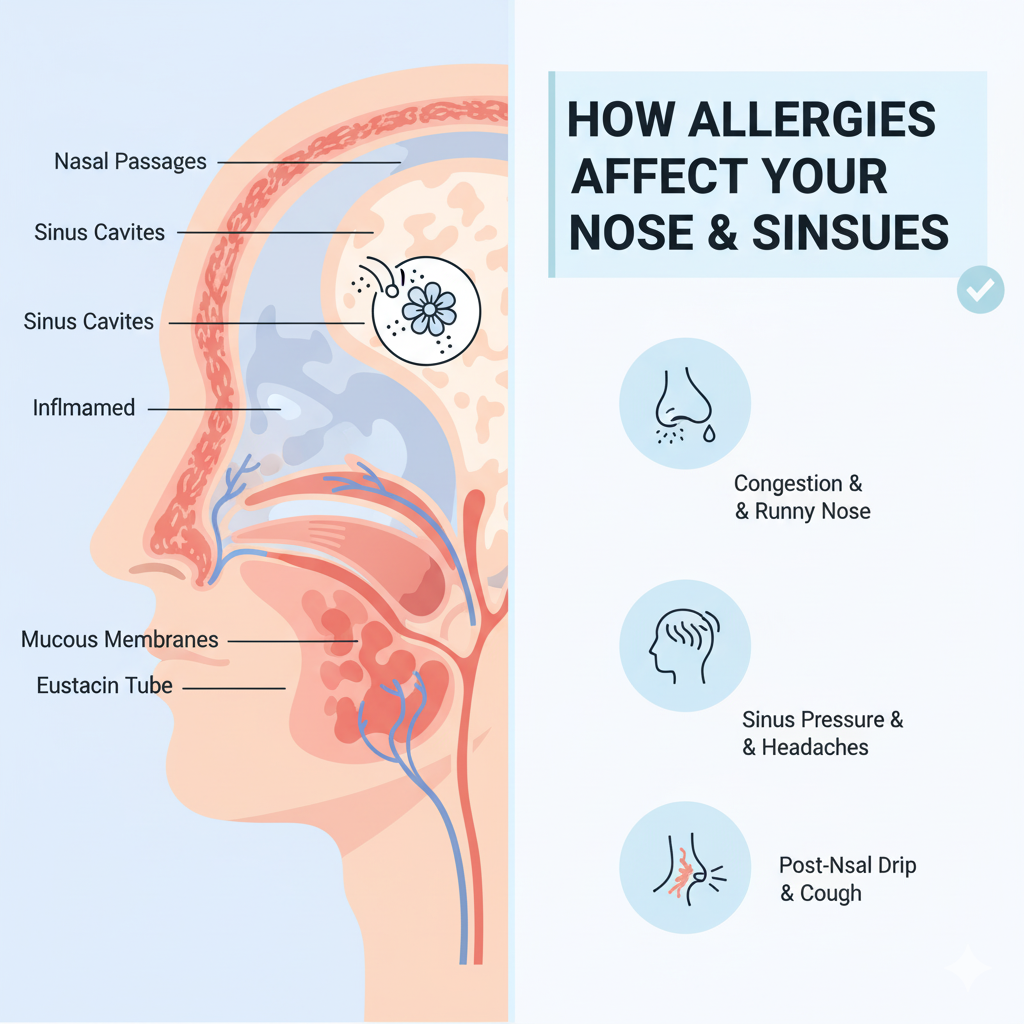
How Allergies Affect Your Nose & Sinuses

Understanding nasal allergy symptoms is essential for anyone who experiences repeated nose block, sneezing, or sinus pressure. Allergies can inflame the lining of your nose and sinuses, making breathing difficult and causing frequent discomfort. At MicroCare ENT Hospital, ENT specialists diagnose allergy-related nasal problems and offer advanced treatments to help patients breathe easier and avoid recurring sinus infections.

Published By microcareenthospitals.com / Updated: OCT 17, 2025

How Allergies Affect Your Nose

When allergens like dust, pollen, or pet dander enter your nose, your immune system reacts. This reaction triggers nasal allergy symptoms such as:

  • Continuous sneezing

  • Itchy or watery eyes

  • Clear, watery nasal discharge

  • Persistent nasal congestion

  • Reduced sense of smell

This condition, known as allergic rhinitis, leads to swelling inside the nasal passages and creates long-term breathing difficulties if untreated.

How Allergies Impact Your Sinuses

If allergies are not treated early, inflammation spreads into the sinuses. The sinus openings become narrow or blocked, trapping mucus inside. This leads to:

  • Sinus pressure

  • Facial heaviness

  • Postnasal drip

  • Headaches

  • Persistent nose block

Over time, untreated allergies can develop into chronic sinusitis, causing constant discomfort and reduced airflow.

Common Triggers of Nasal Allergy Symptoms

Some everyday substances can trigger or worsen nasal allergy symptoms, including:

  • Dust and dust mites

  • Seasonal pollen

  • Animal fur

  • Perfumes and strong smells

  • Air pollution

  • Mold

Identifying specific triggers through allergy testing at MicroCare ENT Hospital helps create a long-term treatment plan.

Diagnosis: How ENT Specialists Evaluate Allergy-Related Sinus Problems

To diagnose nasal allergy symptoms, ENT specialists may perform:

✔ Nasal Endoscopy

A small camera is inserted to examine swelling and blockage.

✔ Allergy Testing

Detects substances that trigger your symptoms.

✔ Sinus CT Scan

Used if sinusitis is suspected.

✔ Physical Examination

Checks nasal lining, mucus flow, and airflow patterns.

Accurate diagnosis ensures effective and lasting treatment.

Treatment Options for Nasal Allergy Symptoms

Based on the severity, your ENT doctor may recommend:

✔ Medications

Antihistamines reduce sneezing and itching.

✔ Nasal Steroid Sprays

Reduce inflammation and swelling.

✔ Saline Nasal Irrigation

Helps clear allergens and mucus.

✔ Immunotherapy

Long-term treatment that reduces sensitivity to allergens.

✔ Sinus-Based Procedures

Balloon Sinuplasty or FESS is recommended if chronic sinusitis develops due to untreated allergies.

MicroCare ENT Hospital offers personalized treatment plans for long-term relief.

Lifestyle Tips to Reduce Nasal Allergy Symptoms

  • Keep your surroundings dust-free

  • Use air purifiers

  • Shower after outdoor exposure

  • Wear masks in polluted areas

  • Avoid strong fragrances

  • Maintain nasal hygiene

These changes help reduce flare-ups and discomfort.

When to See an ENT Specialist

Visit MicroCare ENT Hospital if:

  • Symptoms last more than 2 weeks

  • You struggle with chronic nose block

  • You experience sinus pressure or headaches

  • Medicines only work temporarily

  • You have repeated sinus infections

Early treatment prevents worsening symptoms and improves breathing quality.

To learn more about related ENT conditions and treatments, explore our detailed guides on Sinus Treatment Causes & Remedies, Tonsils Treatment in Hyderabad, and our complete range of ENT Services offered at MicroCare ENT Hospital.

From MicroCare ENT Hospital to your inbox

Sign up for free and stay up to date on research advancements, health tips, current health topics, and expertise on managing health.

📞 Book Your Consultation Now

Call us: +91- 94 94 94 0725
appointments@microcareenthospitals.com
www.microcareenthospitals.com

To learn more about ent, visit our page on MicroCare ENT hospital

Watch our Related Videos

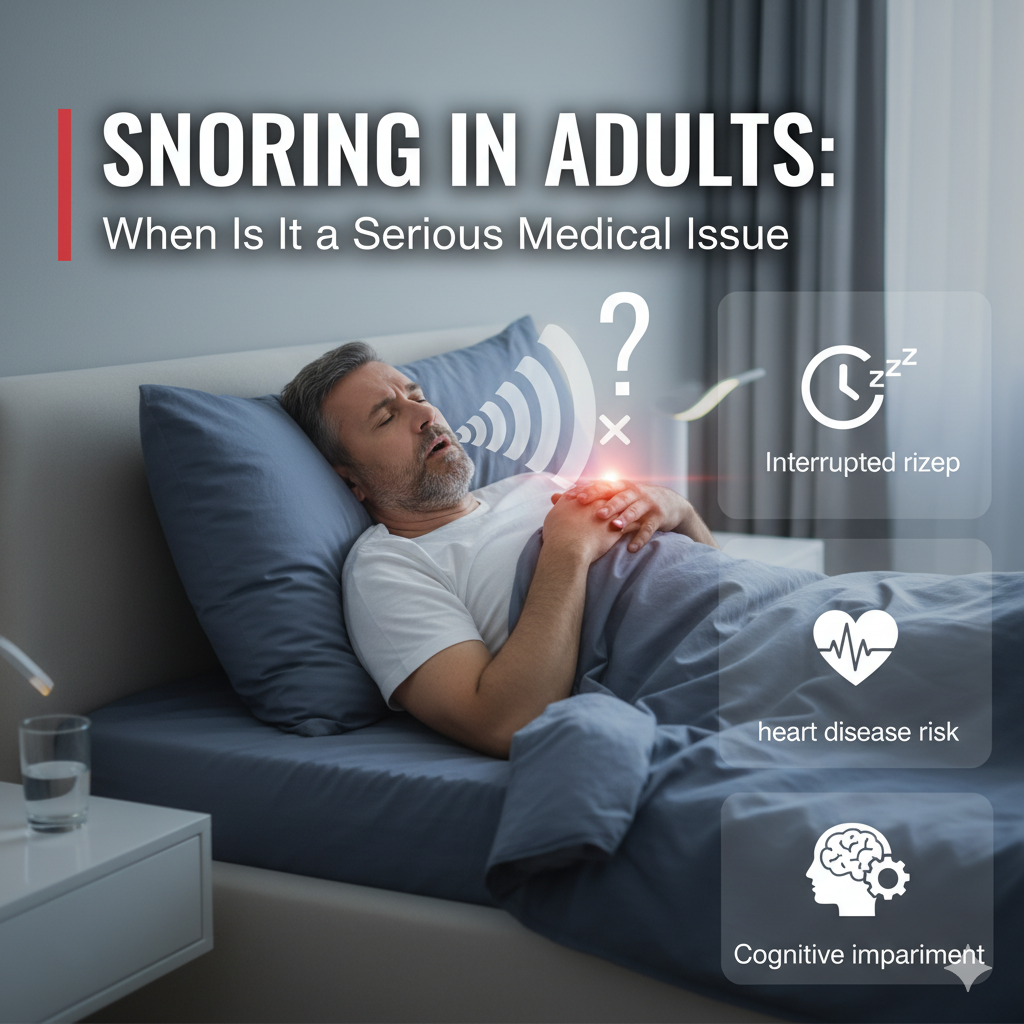
Snoring in Adults: When Is It a Serious Medical Issue

ENT

snoring in adults serious medical issue ent evaluation

Why Snoring in Adults Should Be Taken Seriously

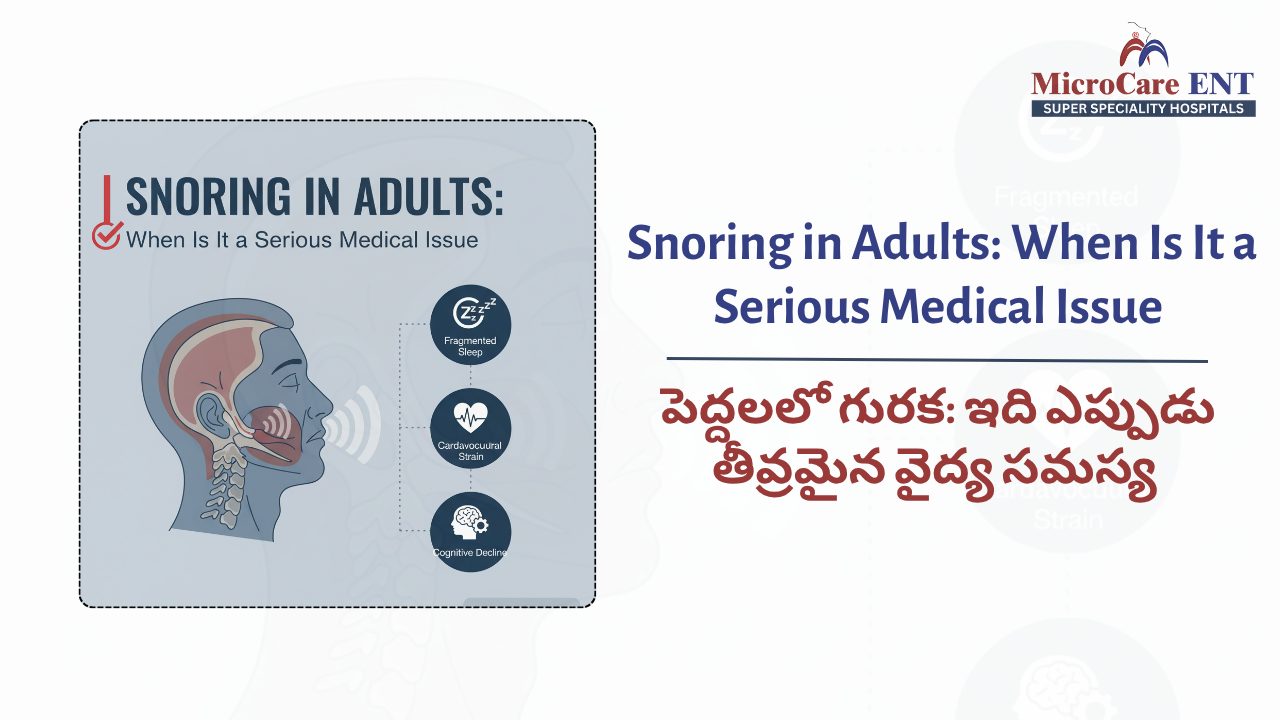
Snoring is often seen as a harmless annoyance, but in many cases, snoring in adults can be a warning sign of underlying airway problems. When the tissues in the nose, throat, or soft palate vibrate due to restricted airflow, loud snoring occurs. Over time, this can affect sleep quality, oxygen levels, and overall health. Ignoring these symptoms may lead to fatigue, low productivity, and chronic health issues.

Published By microcareenthospitals.com / Updated: OCT 15, 2025

🟩 Health Risks Linked to Snoring in Adults

Snoring is not only about sound—it can signal more serious medical concerns. Some adults develop long-term complications such as:

1. Sleep Apnea

Sleep apnea is one of the most common conditions connected to snoring in adults. This disorder causes breathing to stop temporarily during sleep. Low oxygen levels can increase the risk of high blood pressure, stroke, and heart problems if untreated.
2. Increased Blood Pressure

Poor breathing during sleep forces the heart to work harder. This can elevate blood pressure and strain the cardiovascular system.

3. Chronic Fatigue

Snoring adults often wake up tired, even after 7–8 hours of sleep. Poor sleep quality affects focus, memory, and mood.

4. Reduced Productivity

Daytime drowsiness caused by disturbed sleep makes it difficult to stay alert and energetic during work or daily tasks.

🟦 Lifestyle Factors That Worsen Snoring in Adults

Some daily habits may worsen snoring in adults without you realizing it:

  • Sleeping on your back

  • Alcohol consumption before bed

  • Smoking

  • Overeating at night

  • Irregular sleep schedule

Changing these habits often reduces the severity of snoring.

🟧 Home Remedies to Reduce Snoring in Adults

While medical treatment may be required in some cases, these home remedies can offer relief:

1. Steam Inhalation

Opens nasal passages and reduces congestion.

2. Elevating the Head While Sleeping

Improves airflow and prevents throat collapse.

3. Maintaining a Healthy Weight

Reduces pressure on the airway.

4. Avoiding Alcohol Before Sleep

Prevents excessive relaxation of throat muscles.

5. Saline Nasal Washes

Keeps the nasal passages clear.

These remedies may reduce snoring, but persistent symptoms require medical attention.

🟦 How MicroCare ENT Hospital Helps Adults With Snoring

ENT specialists at MicroCare ENT Hospital perform detailed airway evaluations to identify the exact cause of snoring. Using nasal endoscopy, sleep studies, and advanced imaging, they develop personalized treatment plans. Options include nasal treatments, allergy management, CPAP therapy, and minimally invasive ENT procedures—all aimed at improving sleep quality and airflow.

🟩 Treatment Options for Snoring in Adults

Treatment depends on the cause and severity:

1. Lifestyle Modifications

Weight loss, sleep position changes, and avoiding alcohol can help reduce snoring.

2. Nasal Treatments

Decongestants, nasal sprays, and allergy management improve airflow.

3. CPAP for Sleep Apnea

A Continuous Positive Airway Pressure device keeps the airway open during sleep.
4. ENT Procedures

  • Septoplasty for deviated septum

  • Turbinate reduction

  • Tonsillectomy

  • Soft palate surgery

  • Uvulopalatopharyngoplasty (UPPP)

MicroCare ENT Hospital provides advanced, minimally invasive solutions for long-lasting results.

When Snoring Becomes a Medical Issue

You should not ignore snoring if it is loud, frequent, or accompanied by choking, gasping, or severe daytime tiredness. These signs often indicate sleep apnea or airway obstruction that needs ENT care. Addressing snoring in adults early helps protect long-term health, improves sleep quality, and prevents serious complications.

🟦 When to Visit an ENT Specialist

Seek medical help if:

  • Snoring disrupts your or your partner’s sleep

  • You feel extremely tired during the day

  • You stop breathing during sleep

  • Snoring worsens over time

  • You have nasal blockage or sinus problems

Early diagnosis prevents complications like heart strain, hypertension, and sleep apnea.

To learn more about related ENT conditions and treatments, explore our detailed guides on Sinus Treatment Causes & Remedies, Tonsils Treatment in Hyderabad, and our complete range of ENT Services offered at MicroCare ENT Hospital.

From MicroCare ENT Hospital to your inbox

Sign up for free and stay up to date on research advancements, health tips, current health topics, and expertise on managing health.

📞 Book Your Consultation Now

Call us: +91- 94 94 94 0725
appointments@microcareenthospitals.com
www.microcareenthospitals.com

To learn more about ent, visit our page on MicroCare ENT hospital

Watch our Related Videos

Cochlear Implant Benefits Explained – Hearing Improvement & Outcomes

ENT

Cochlear Implant Benefits Explained with a child wearing a cochlear implant during an ENT consultation

Cochlear Implant Benefits

At microcare ent hospital, we want every patient to understand their hearing options clearly. Cochlear Implant Benefits Explained helps individuals with severe or profound hearing loss discover how cochlear implants can restore hearing, improve communication, and enhance daily life. This guide explains how they work and why they are often life-changing.

Published By microcareenthospitals.com / Updated: OCT 14, 2025

Cochlear implants are advanced hearing devices designed for people who do not benefit enough from regular hearing aids. Instead of amplifying sound, cochlear implants directly stimulate the auditory nerve, allowing the brain to interpret sound signals more accurately. Understanding how cochlear implants work and their advantages can help patients and parents make informed decisions.

How Cochlear Implants Work

Cochlear implants bypass damaged parts of the inner ear and deliver sound signals directly to the hearing nerve. This modern technology helps individuals access clearer sound, speech, and environmental awareness.

⭐ Top Benefits of Cochlear Implants

1. Improved Speech Understanding

One of the greatest benefits is the significant improvement in speech clarity, especially in quiet environments. Patients learn to recognize sounds better and communicate more fluently.

2. Better Sound Awareness

Cochlear implants help individuals detect important sounds such as alarms, doorbells, traffic, and voices—improving safety and independence.

3. Enhanced Quality of Life

Many patients experience emotional relief as communication becomes easier, reducing frustration and social withdrawal.

4. Support for Language Development in Children

Children who receive cochlear implants early often see faster development in speech, language, and cognitive skills.

5. Effective Even When Hearing Aids Fail

Cochlear implants are often recommended when advanced hearing aids no longer provide benefits.

⭐ Who Can Benefit from Cochlear Implants?

  • Children with severe-to-profound hearing loss

  • Adults with sensorineural hearing loss

  • Individuals who struggle even with high-power hearing aids

  • Patients with difficulty understanding speech

Proper assessment at microcare ent hospital ensures the best treatment plan.

⭐ What to Expect During a Cochlear Implant Evaluation

Before receiving a cochlear implant, patients undergo a detailed assessment to determine eligibility. At microcare ent hospital, this includes a complete hearing test, speech recognition assessment, imaging scans such as CT or MRI, and a consultation with an ENT surgeon and audiologist. These evaluations help identify the extent of hearing loss and ensure the implant will provide maximum benefit.

⭐ Cochlear Implant Surgery – A Safe & Reliable Procedure

Cochlear implant surgery is a well-established procedure with a high success rate. It is usually performed under general anesthesia and takes about 1–2 hours. Most patients return home the same day or the next day. Recovery is generally smooth, and children typically resume normal activities quickly.

⭐ Activation & Mapping of the Cochlear Implant

Four to six weeks after surgery, the implant is activated. During this session, the audiologist programs the device—a process known as “mapping.” Mapping ensures the sound signals delivered by the implant match the patient’s comfort levels and hearing needs. Multiple follow-up sessions fine-tune the implant for the best hearing results.

⭐ Rehabilitation & Training After Cochlear Implantation

Rehabilitation plays a crucial role in maximizing the benefits of cochlear implants. Patients—especially children—participate in auditory training, speech therapy, and listening exercises to improve understanding and communication skills. Consistent therapy helps the brain adapt to new sound signals more efficiently.

⭐ Long-Term Success & Hearing Improvement

Many patients experience continuous improvement in hearing over months and even years. Cochlear implants allow users to understand speech better in conversations, follow classroom instructions, enjoy music, and participate confidently in social activities. For children, early implantation often leads to better language, academic performance, and communication development.

⭐ Potential Risks & Considerations

Like any medical procedure, cochlear implants come with some risks, such as infection, dizziness, or device failure, but these are uncommon. Regular follow-ups at microcare ent hospital help ensure the implant continues to work safely and effectively.

To learn more about related ENT conditions and treatments, explore our detailed guides on Sinus Treatment Causes & Remedies, Tonsils Treatment in Hyderabad, and our complete range of ENT Services offered at MicroCare ENT Hospital.

From MicroCare ENT Hospital to your inbox

Sign up for free and stay up to date on research advancements, health tips, current health topics, and expertise on managing health.

📞 Book Your Consultation Now

Call us: +91- 94 94 94 0725
appointments@microcareenthospitals.com
www.microcareenthospitals.com

To learn more about ent, visit our page on MicroCare ENT hospital

Watch our Related Videos

Common Ear Infections in Children – Symptoms, Causes & Treatment

ENT

Common ear infections in children symptoms

Common Ear Infections in Children – Symptoms, Causes & Treatment

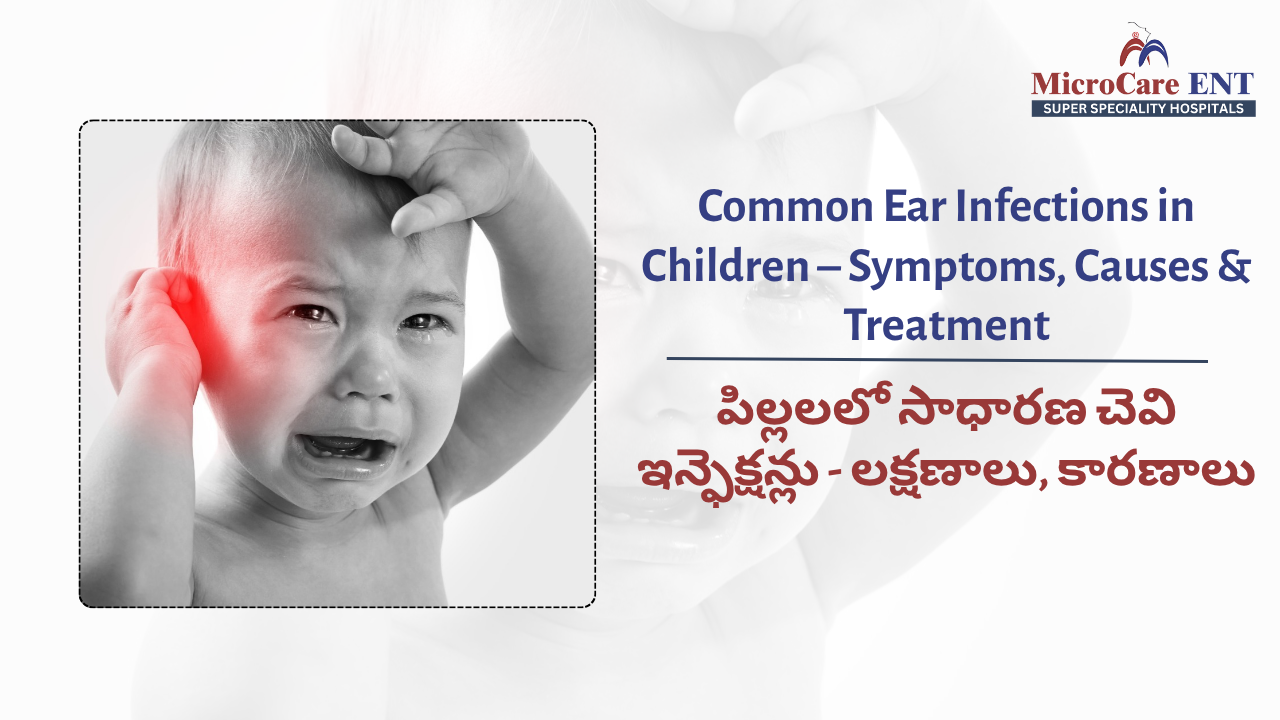
Common Ear Infections in Children are one of the most frequent concerns that parents bring to MicroCare ENT Hospital. Children experience ear infections more often than adults because their immune systems are still developing and their Eustachian tubes are smaller and more easily blocked. Understanding the symptoms and early causes helps parents take timely action and protect their child’s hearing health.

Published By microcareenthospitals.com / Updated: OCT 13, 2025

⭐ What Causes Ear Infections in Children?

Ear infections usually develop when fluid becomes trapped behind the eardrum. Some of the most common triggers include:

  • Allergies or seasonal colds

  • Sinus infections

  • Exposure to pollutants or cigarette smoke

  • Bottle feeding while lying down

  • Enlarged adenoids

  • Recurrent respiratory infections

These factors make children more vulnerable, especially during weather changes and school seasons.

⭐ Symptoms Parents Should Look For

Parents should be alert to the following signs:

  • Ear pain or frequent ear pulling

  • Fever or irritability

  • Trouble sleeping

  • Fluid or pus discharge

  • Reduced hearing

  • Balance problems

  • Decreased appetite

If these symptoms last longer than 24–48 hours, prompt ENT evaluation is recommended.

⭐ How Ear Infections Are Diagnosed

At MicroCare ENT Hospital, specialists use an otoscope to examine the eardrum for swelling, redness, or fluid. In recurring cases, additional tests such as tympanometry or hearing evaluations help determine middle ear pressure and auditory function.

⭐ Treatment Options

Treatments may vary depending on the severity of the infection. Common approaches include:

  • Antibiotics when necessary

  • Pain-relief ear drops

  • Nasal sprays for congestion

  • Allergy management

  • Warm compresses

  • Myringotomy with ear tube placement for chronic cases

Early intervention significantly reduces the risk of complications.

⭐ Prevention Tips for Parents

To reduce the risk of infections:

  • Keep your child away from smoke

  • Maintain good nasal hygiene

  • Breastfeed when possible

  • Ensure proper feeding position

  • Manage allergies early

  • Encourage handwashing and immunity-boosting nutrition

Taking these steps can reduce recurrence and protect long-term ear health.

⭐ When to Visit an ENT Specialist

If your child shows ongoing signs of Common Ear Infections in Children—such as persistent ear pain, repeated fevers, fluid discharge, or difficulty hearing—it’s important to visit an ENT specialist without delay. You should also seek immediate care if infections occur frequently, last longer than expected, or begin affecting your child’s sleep, balance, or speech development. Early evaluation by an ENT expert ensures the right diagnosis, prevents long-term complications, and helps your child recover comfortably and quickly.

To learn more about related ENT conditions and treatments, explore our detailed guides on Sinus Treatment Causes & Remedies, Tonsils Treatment in Hyderabad, and our complete range of ENT Services offered at MicroCare ENT Hospital.

From MicroCare ENT Hospital to your inbox

Sign up for free and stay up to date on research advancements, health tips, current health topics, and expertise on managing health.

📞 Book Your Consultation Now

Call us: +91- 94 94 94 0725
appointments@microcareenthospitals.com
www.microcareenthospitals.com

To learn more about ent, visit our page on MicroCare ENT hospital

Watch our Related Videos